Business case to refit a Tanker to use Onshore Power Supply (OPS)
Techno-economic guidance for shore power retrofit of a Crude Oil Shuttle Tanker - Toril Knutsen
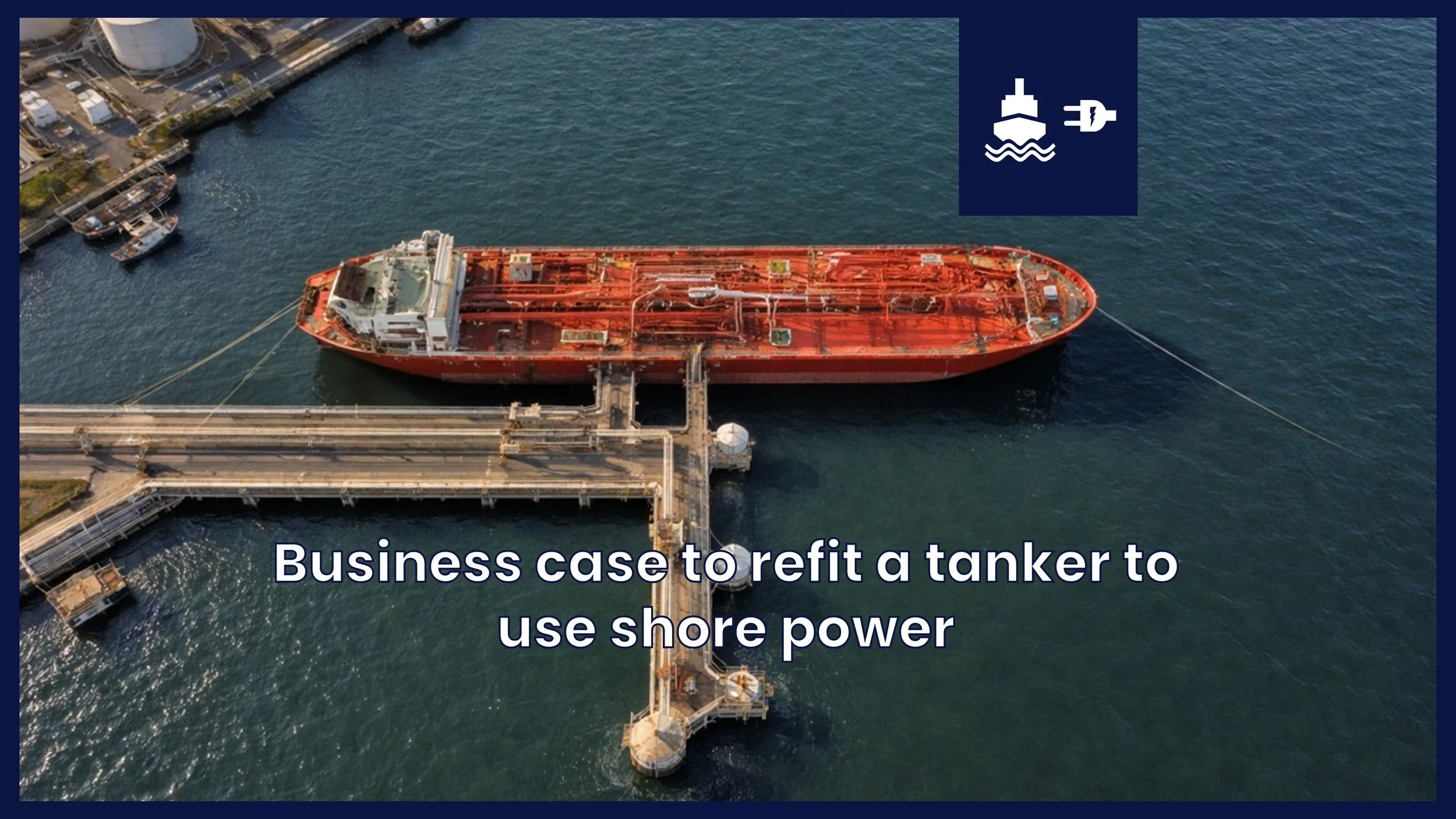
This case study explores how a crude oil shuttle tanker can be retrofitted to use Onshore Power Supply (OPS) safely and economically. Using Torill Knutsen as the reference vessel - a large Aframax-sized crude oil shuttle tanker of 122,842 DWT - the analysis examines onboard retrofit requirements, expected berth power demand, retrofit CAPEX, regulatory impact, and the electricity price at which OPS starts to make economic sense.
Making that business case is not straightforward. Compared with many other ship types, OPS for Tankers is more complex due to the hazardous cargo environment, interface location and cable handling, and the limited level of safety standardisation in IEC/IEEE 80005. In practice, the location of the shore connection is often the defining challenge, as ATEX and safety constraints shape both the technical design and the economics, and real-world experience remains limited.
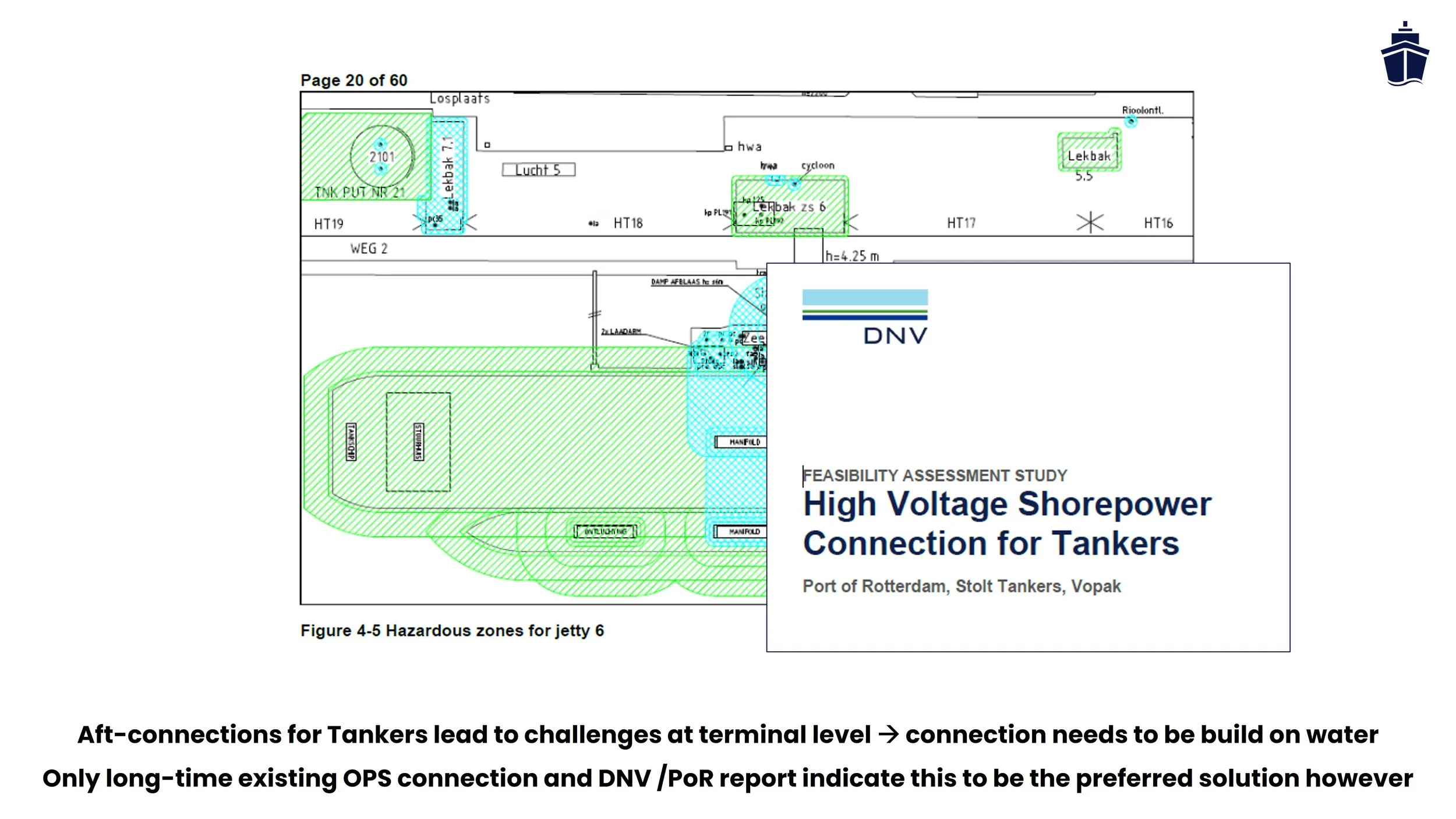
For many years, the Alaska-class tanker installation at Port of Long Beach Berth T121 was the only operational tanker OPS system, using an aft connection rather than a midship interface to keep high-voltage equipment outside the main hazardous cargo zone. More recent tanker OPS studies in Rotterdam, including DNV-led work, point in a similar direction: aft connections are often among the most practical solutions for tanker layouts, though not yet a universal standard.
This analysis uses Torill Knutsen as a reference tanker because it was already part of a real techno-economic OPS feasibility called Project BOEI, performed with consortium partners including Knutsen, Dutch Government and Port of Rotterdam.
100% CO2 reduction is achieved at berth, a total of ~3% when compared to year-round emissions that include sailing.
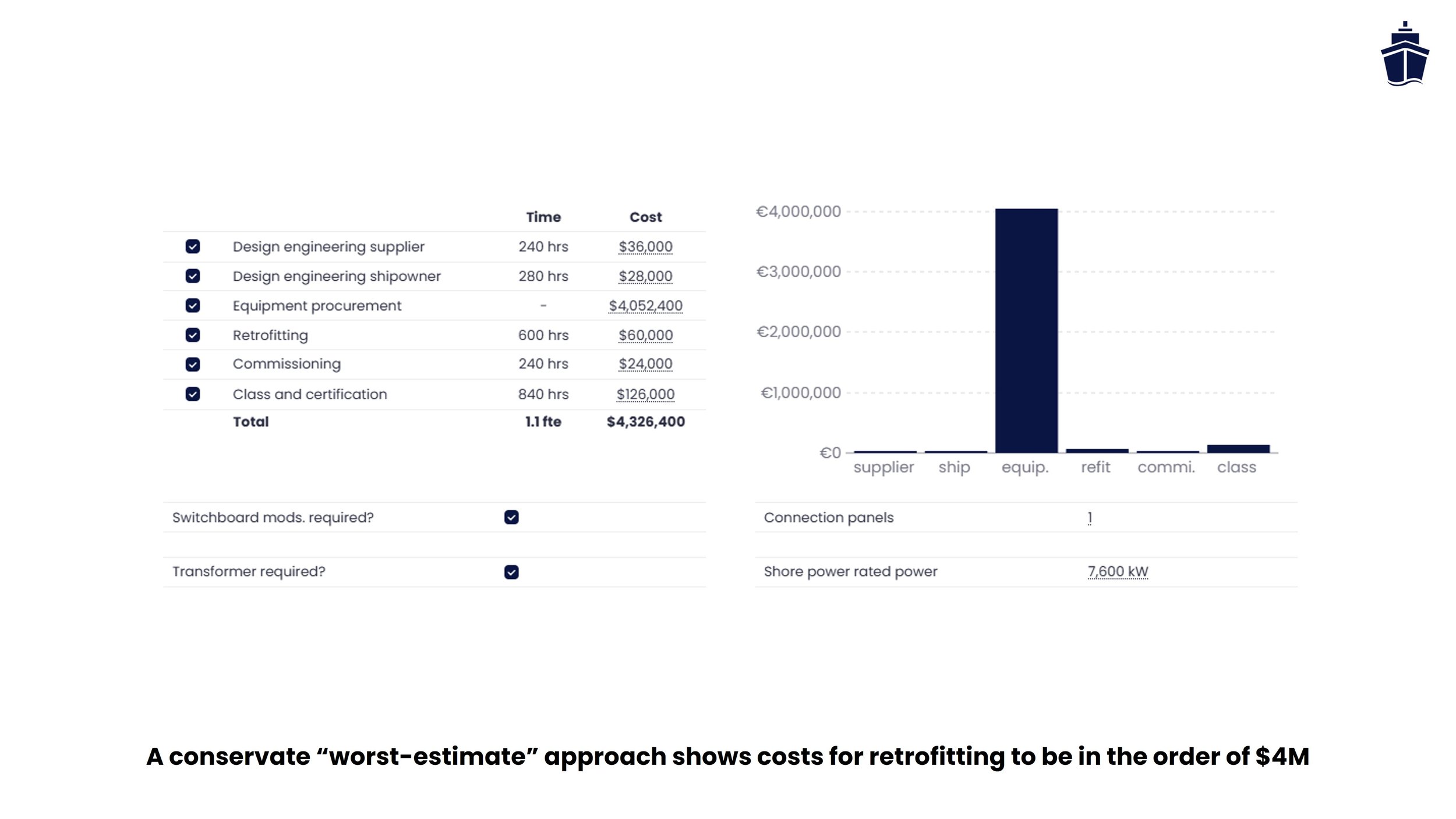
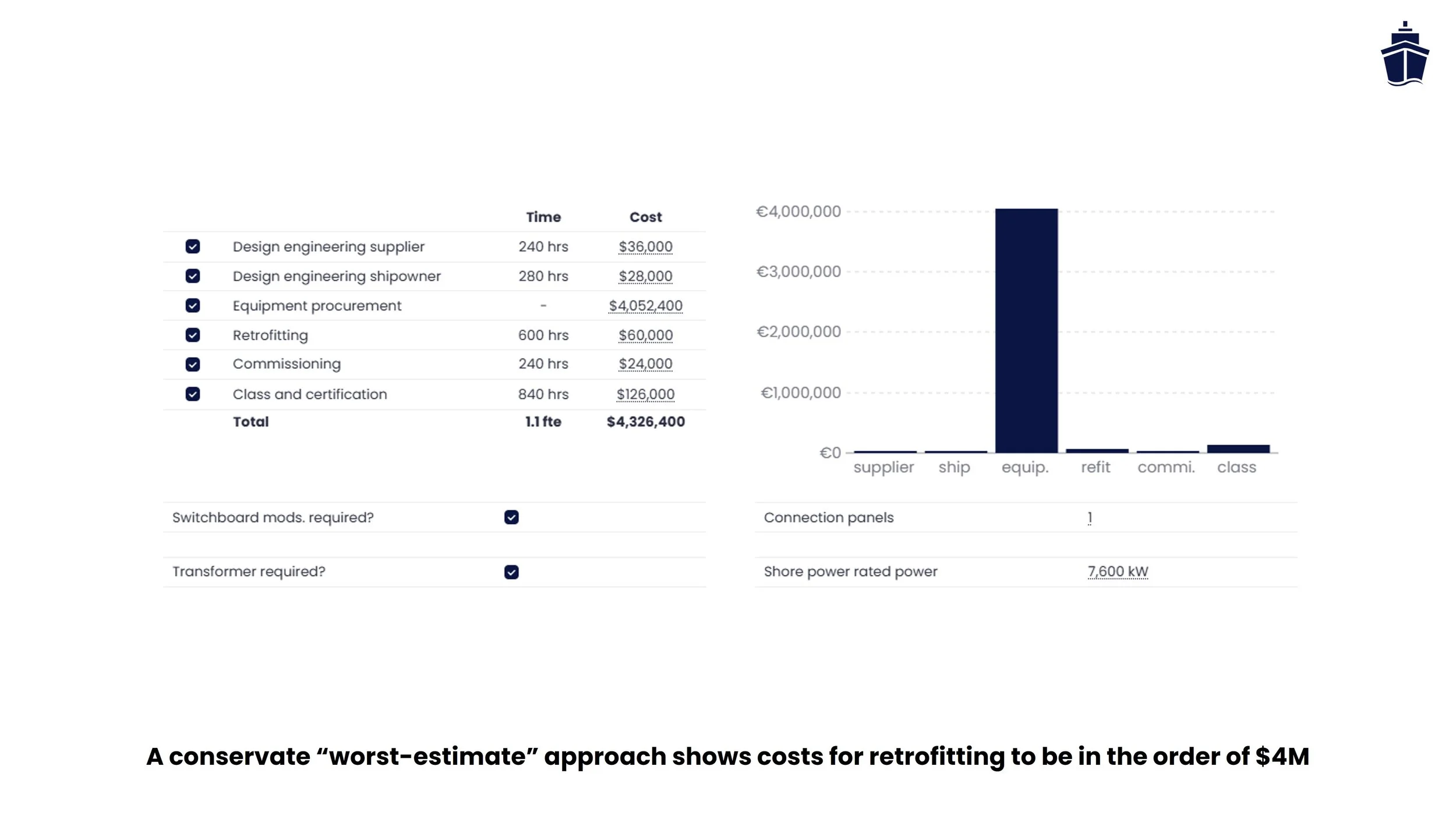
CAPEX costs are estimated at around $4M based on project BOEI results.
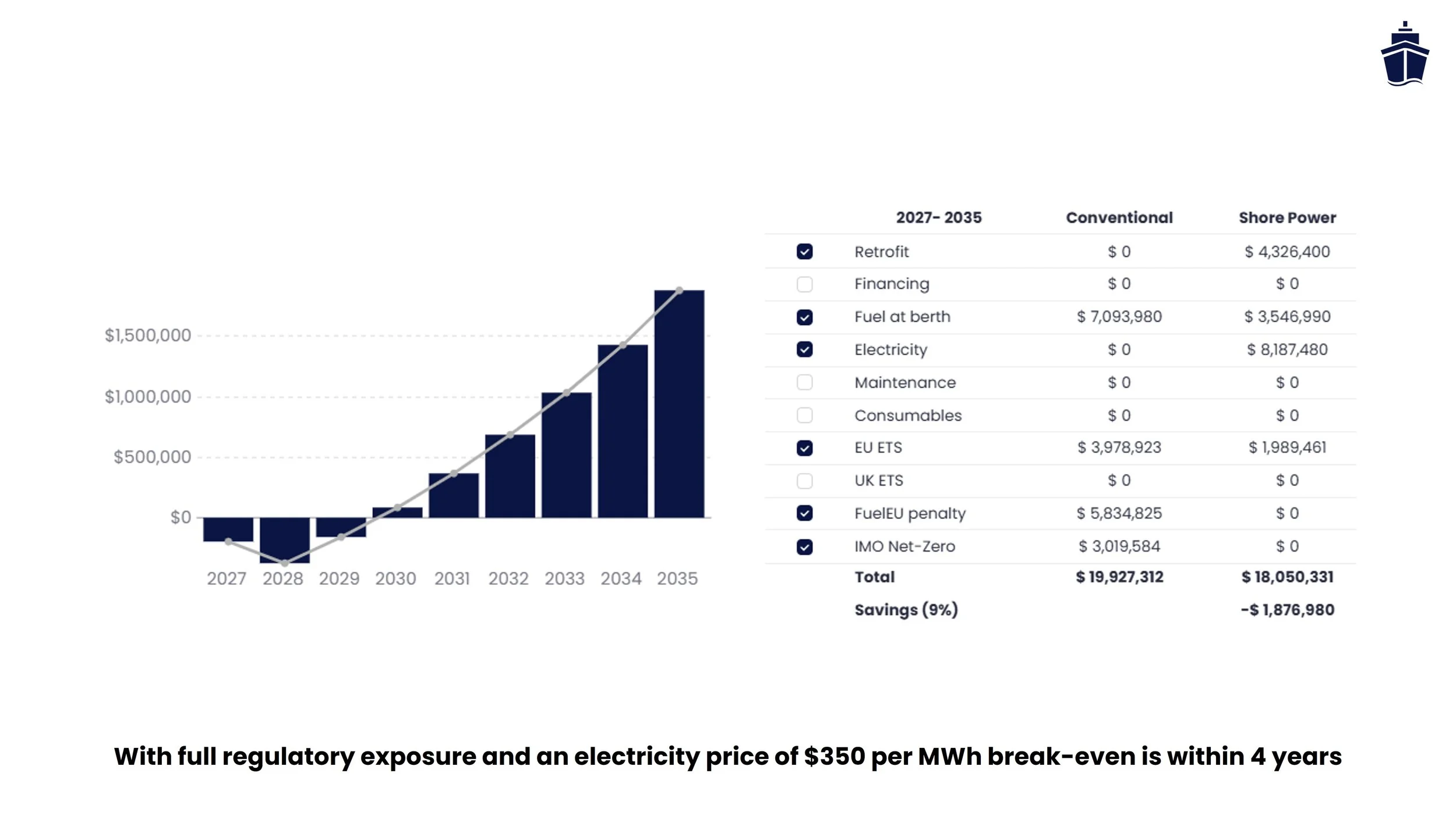
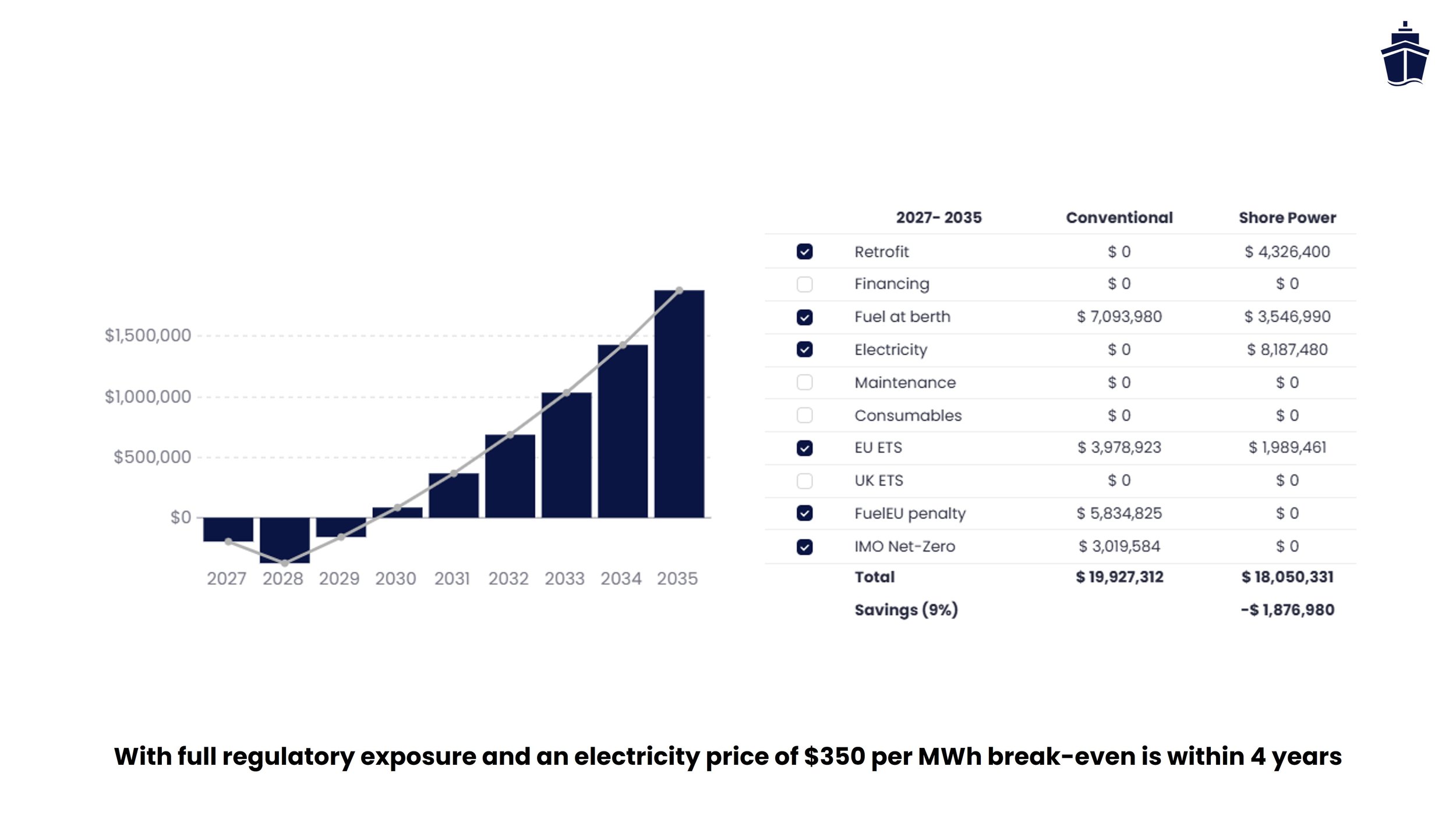
Payback time is approximately 1-4 years, assuming full regulatory exposure of FuelEU, EU ETS and IMO Net-Zero. FuelEU Maritime savings in the first 10 years are approx. $6M.
Use or download the Shore Power Quickscan to make your own business case - scroll down below and have fun!
About the Ship
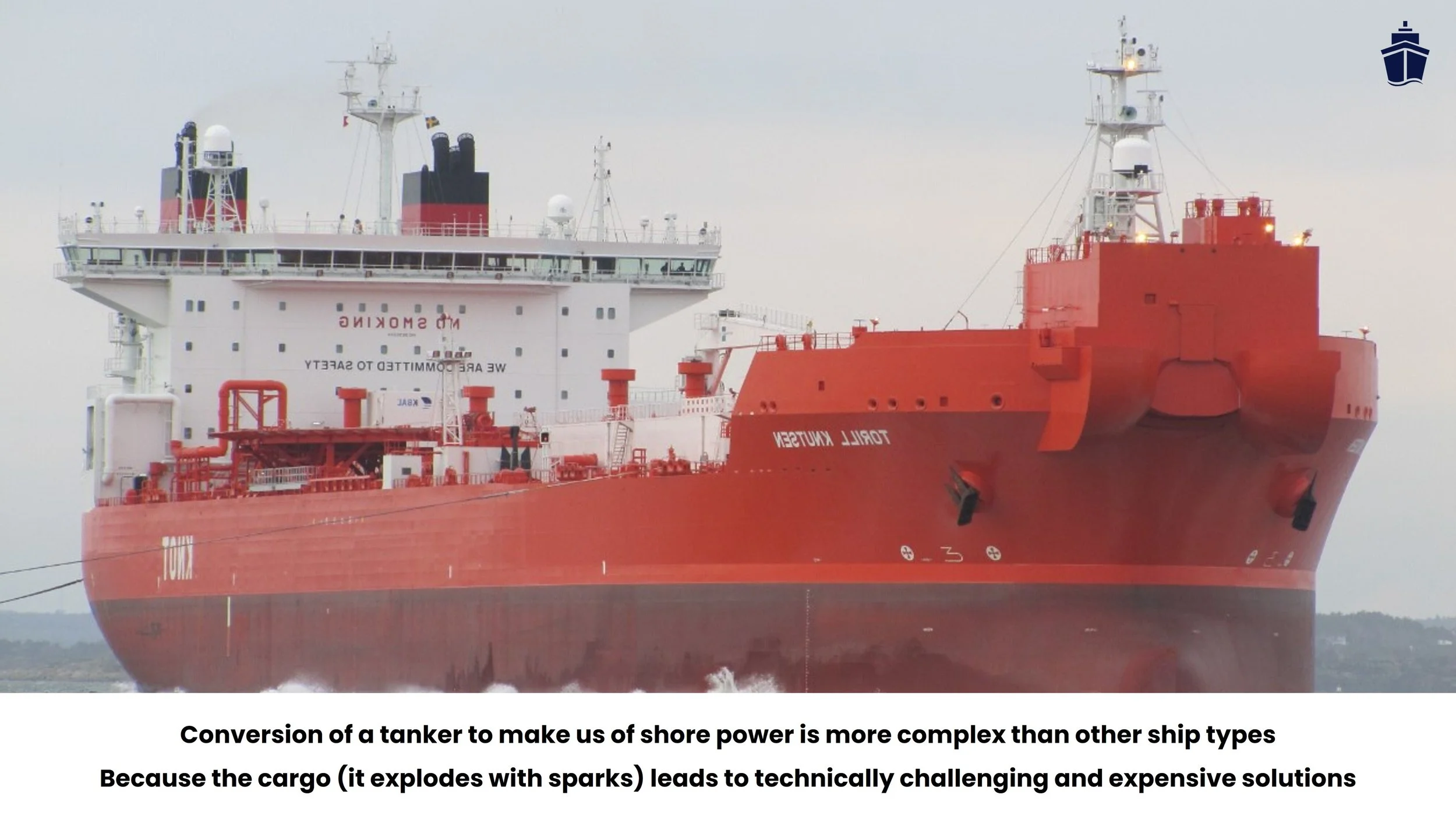
Toril Knutsen - Aframax - Crude Oil Shuttle Carrier
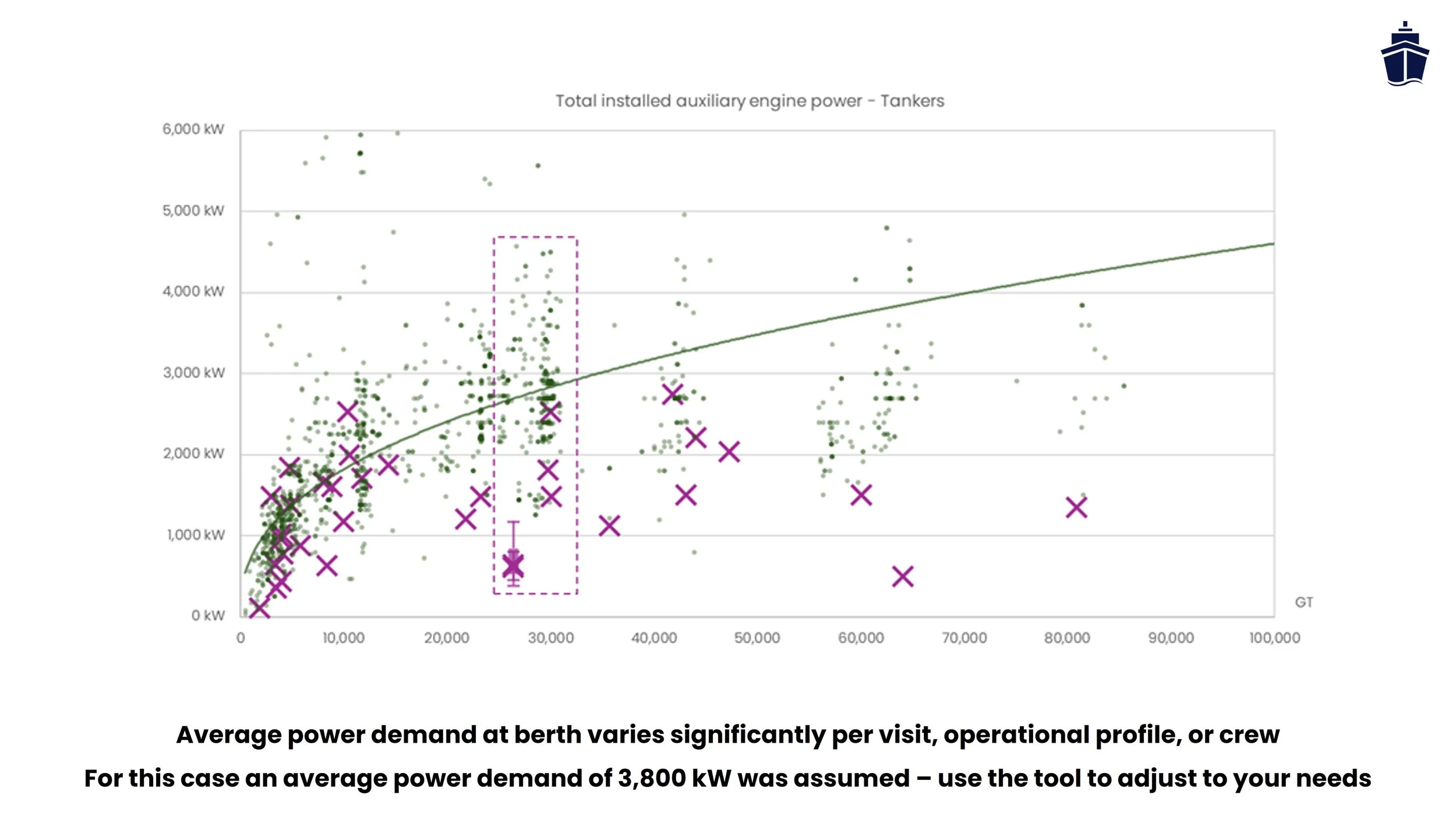
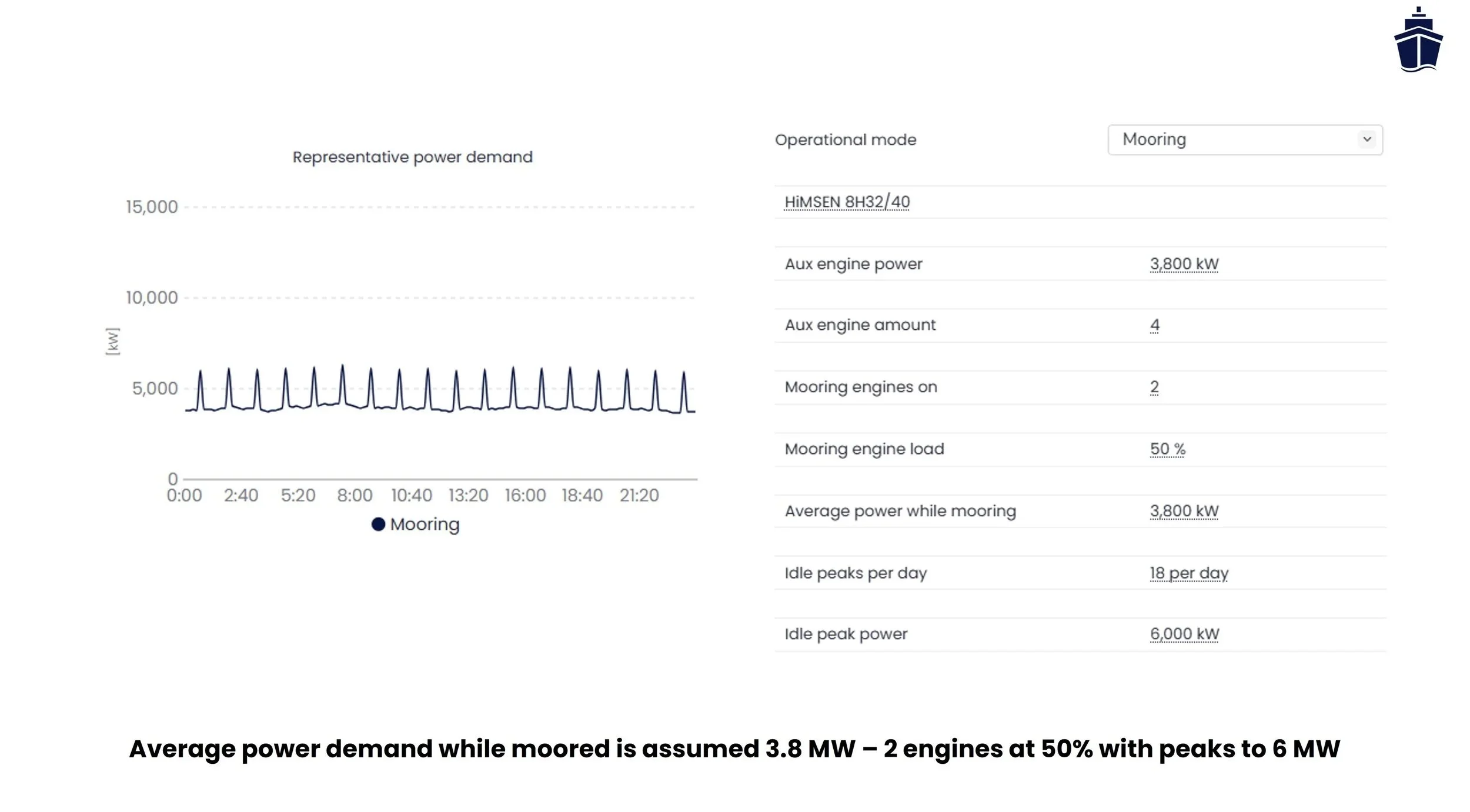
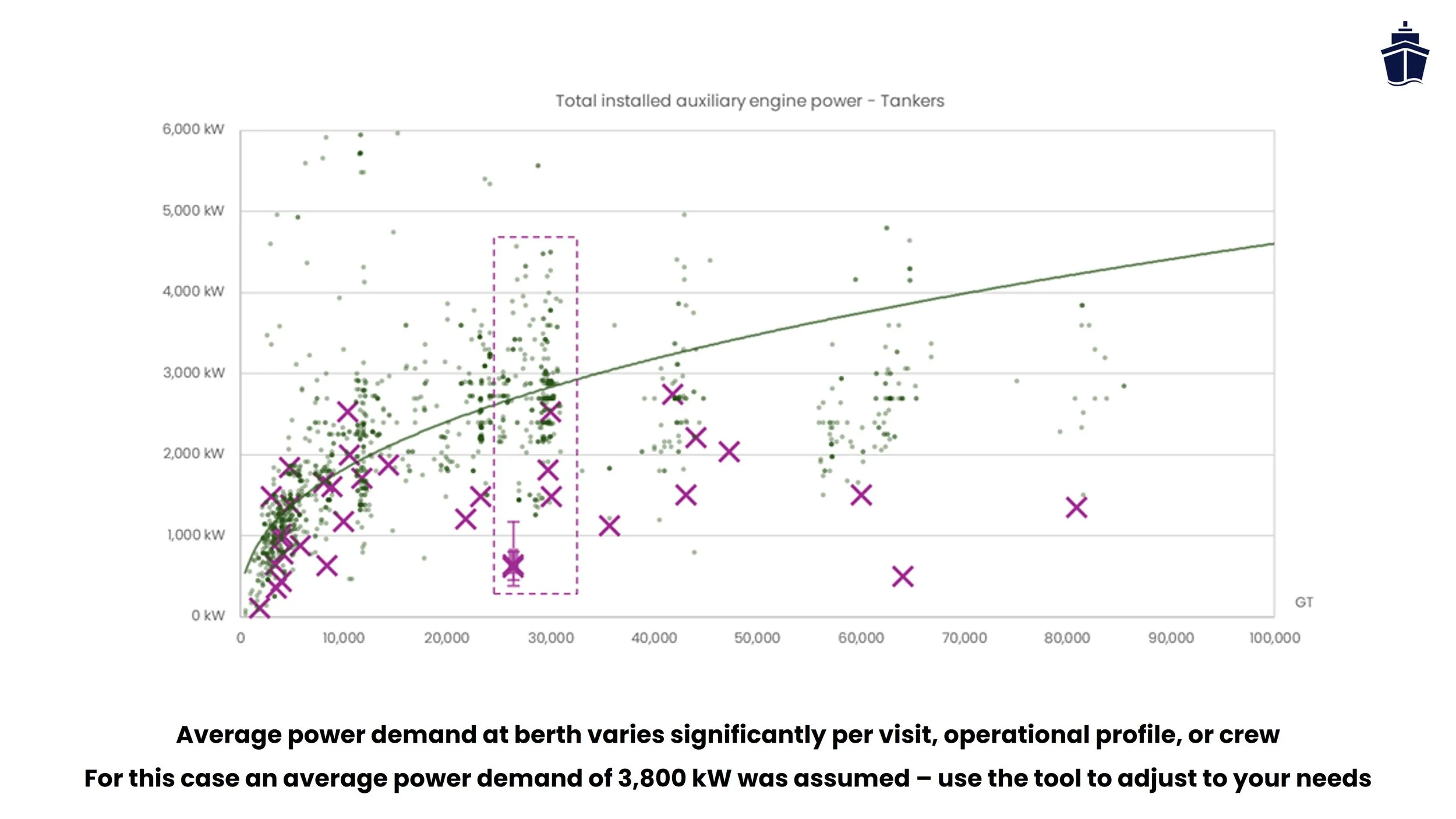
Torill Knutsen is used in Project BOEI as the reference vessel for evaluating tanker electrification at anchorage off the coast in Scheveningen, a project executed by Sustainable Ships and as such the ship is well-known. She is a 2013-built crude oil shuttle tanker under Norwegian flag, with a deadweight of approximately 122,842 tonnes, a gross tonnage of 80,850, a length overall of 257.7 m, and a beam of 46 m. The vessel has a direct-drive propulsion arrangement, with separate auxiliary power generation, a 6.6 kV main busbar, and an average hotel load of around 1.5 MW when idling. When at berth in Rotterdam or other terminals and using onboard pumps, average power demand will rise significantly. For this analysis an average power demand of 3.8 MW at berth is assumed, with power demand peaks up to 6 MW.
Main propulsion is modelled using 2 x MAN 6S50ME-C8.1 engines, while auxiliary generation is represented by 2 x 3,800 kW diesel generators and 2 x 4,300 kW diesel generators. Fuel type for the reference case is MDO, and optimal fuel consumption is assumed at roughly 180 g/kWh for sailing and 190 g/kWh when moored.
Voyage and operational profile
The economics of shore power depend less on port calls frequency and more on time spent at berth. Preferably the same terminal is visited in order to justify both onshore and onboard infrastructure spent and retrofit CAPEX. The Sustainable Ships model allows for on demand changing of operational profile and time spent at berth. For this case study, the vessel is assumed to operate as a North Sea shuttle tanker, loading crude offshore and discharging repeatedly at a Rotterdam-area terminal. A representative base case assumes 20 terminal calls per year, each with an average berth duration of 36 hours, resulting in 720 annual hours during which shore power could be used.
Idle vs. at berth power demand modelling
In the BOEI study, the vessel is assumed to spend 20% of the year idle or moored, of which half is at the Scheveningen anchorage, equivalent to roughly 38 days per year. During mooring, the vessel is modelled with an average electrical demand of about 1,563 kW, daily fuel consumption of about 7,721 litres, and daily conventional OPEX of approximately €8,423, including fuel, maintenance, spares, and EU ETS exposure. Sustainable Ships modelling allows for the use of multiple operational profiles to model idle/anchoring vs. real time spent at berth (with a higher power demand) but for this analysis this operational profile is not considered.
What has to change on board
Refit typically requires onboard transformer, cabling and switchboard adjustments, as well as a connection panel
For the purpose of this tanker case study, it is assumed that the vessel is retrofitted with one aft shore connection point, consisting of a single shore power connection panel, resulting in limited onboard HC cabling length (87 m). A conservative (worst-case) assumption is made where switchboard modifications are required, in addition to the installation of one onboard transformer (for both galvanic protection as well as step-down to 6,6 kV for onboard use).
The configuration reflects a practical tanker-specific arrangement in which the connection is placed away from cargo handling areas and hazardous midship zones, while keeping the onboard retrofit as close as possible to a conventional high-voltage shore power retrofit. The intricacies of this configuration are discussed in more detail below.
Impact of ATEX zones
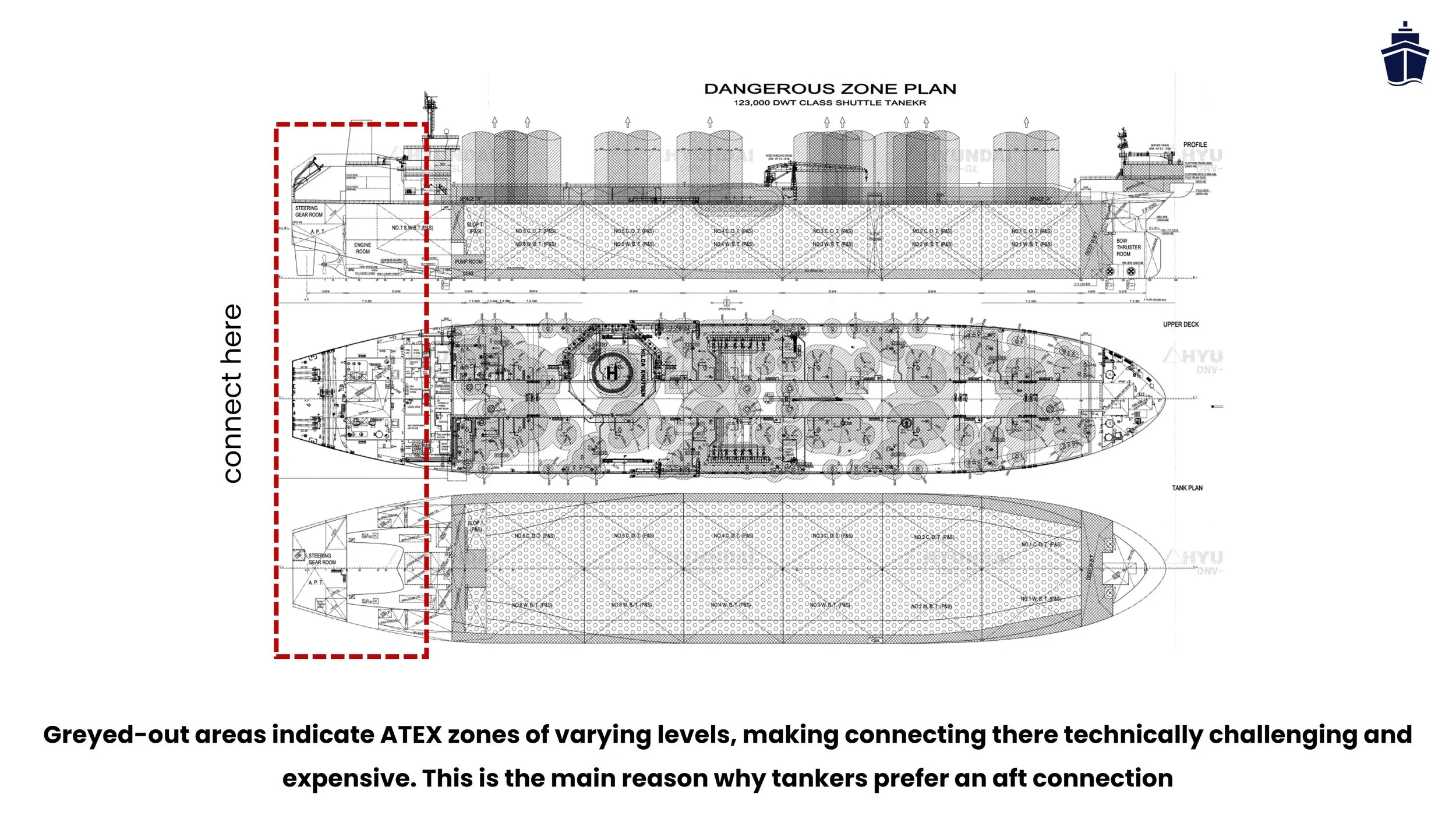
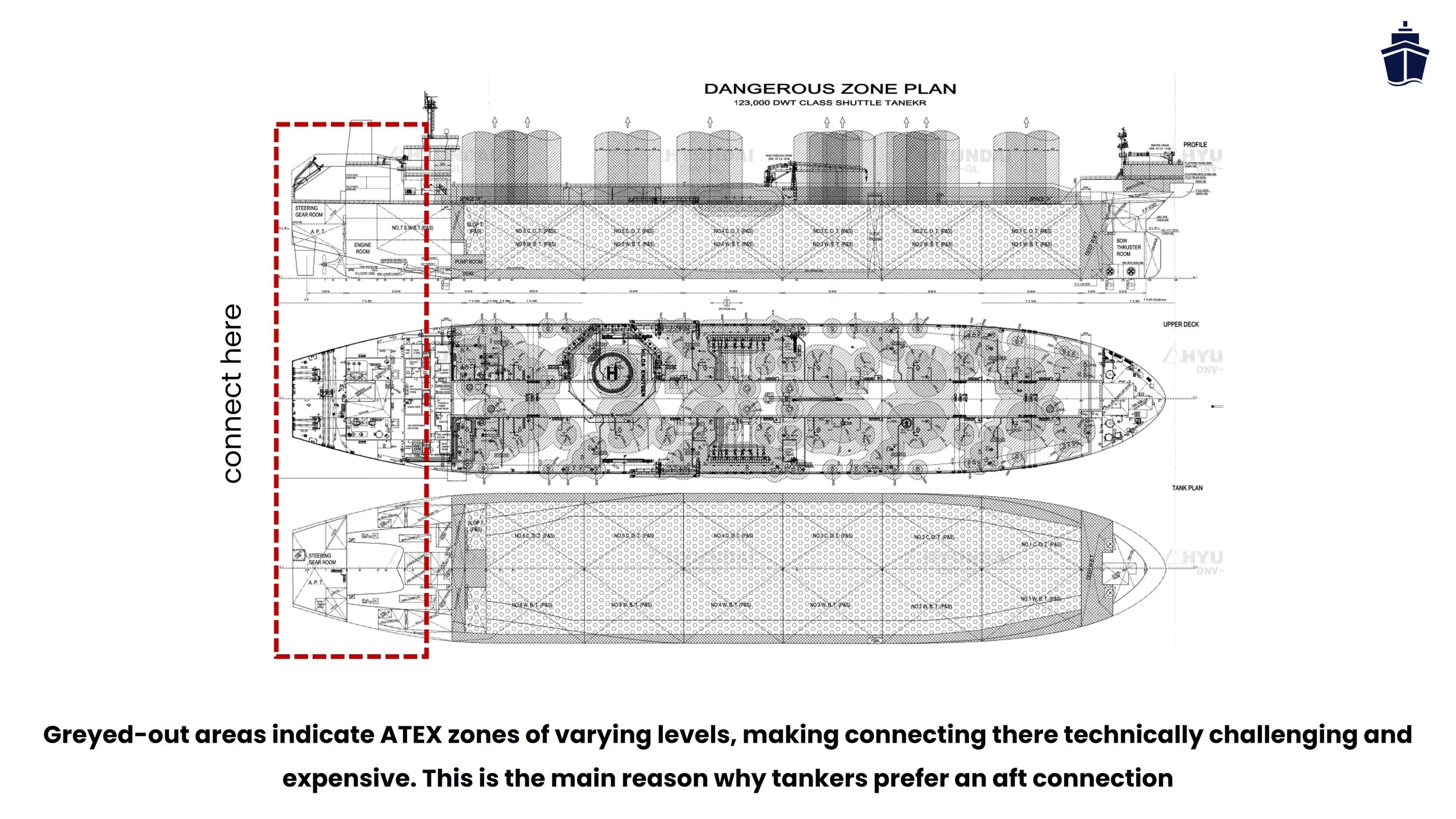
ATEX zones (Atmosphères Explosibles) are hazardous areas classified under European directives (1999/92/EC and 2014/34/EU) where flammable gases or vapours may be present, which is common for Tankers. Any electrical equipment installed in those zones must meet strict explosion-safety requirements. This has a direct impact on shore power design, because the location of the connection panel, cabling, plugs, and associated equipment should be placed outside hazardous zones as much as practical. If somehow this cannot be done or is not preferred, resulting equipment costs can be orders of magnitude higher.
In Project BOEI it was determined that for offshore mooring, a bow connection was preferred for operational reasons, but for conventional berth-side operations (loading-unloading at terminal), an aft connection is often more practical because it is typically easier to keep the interface away from the hazardous cargo area while simplifying retrofit design and safety compliance. More on this is explained in the subsequent sections.
What it costs
Conservative estimate is in the order of $4M for ship retrofit – approximately $666k per MW - twice as high as conventional ships
The CAPEX estimate presented here reflects a conservative, high-end retrofit scenario for a Tanker shore power installation, assuming a single aft connection point, full electrical integration, and inclusion of all major cost components (“all-in” approach). This serves as a baseline reference case for comparison and sensitivity analysis. The structure and order of magnitude of the cost components are aligned with the findings of Project BOEI, where the retrofit of a crude oil tanker was analysed in detail, including engineering effort, equipment scope, installation activities, and class approval requirements. The retrofit assumes the items mentioned in the previous section, of which the highest costs components are the shore connection panel located aft, switchboard and breaker modifications and onboard transformer. This configuration reflects a technically conservative design, where electrical compatibility is ensured onboard rather than relying on shore-side transformation.
Equipment procurement is main driver
Equipment procurement represents the largest share of CAPEX, accounting for the majority of total costs, approximately 90% of all costs. These are listed below and can be readily adjust in the Shore Power Quickscan model, see below.
Transformer (~$1.45M)
Switchboard incl. breakers (~$1.45M)
Connection panel (~$370k)
Foundations and structural modifications (~$650k combined)
About Shore Power for Tankers
Why OPS for tankers is different, technically challenging and (way) more expensive
Shore power (OPS) is increasingly recognised as a key solution for reducing at-berth emissions. While implementation for container and passenger ships is progressing under FuelEU and AFIR, tankers remain one of the most complex and least mature segments.
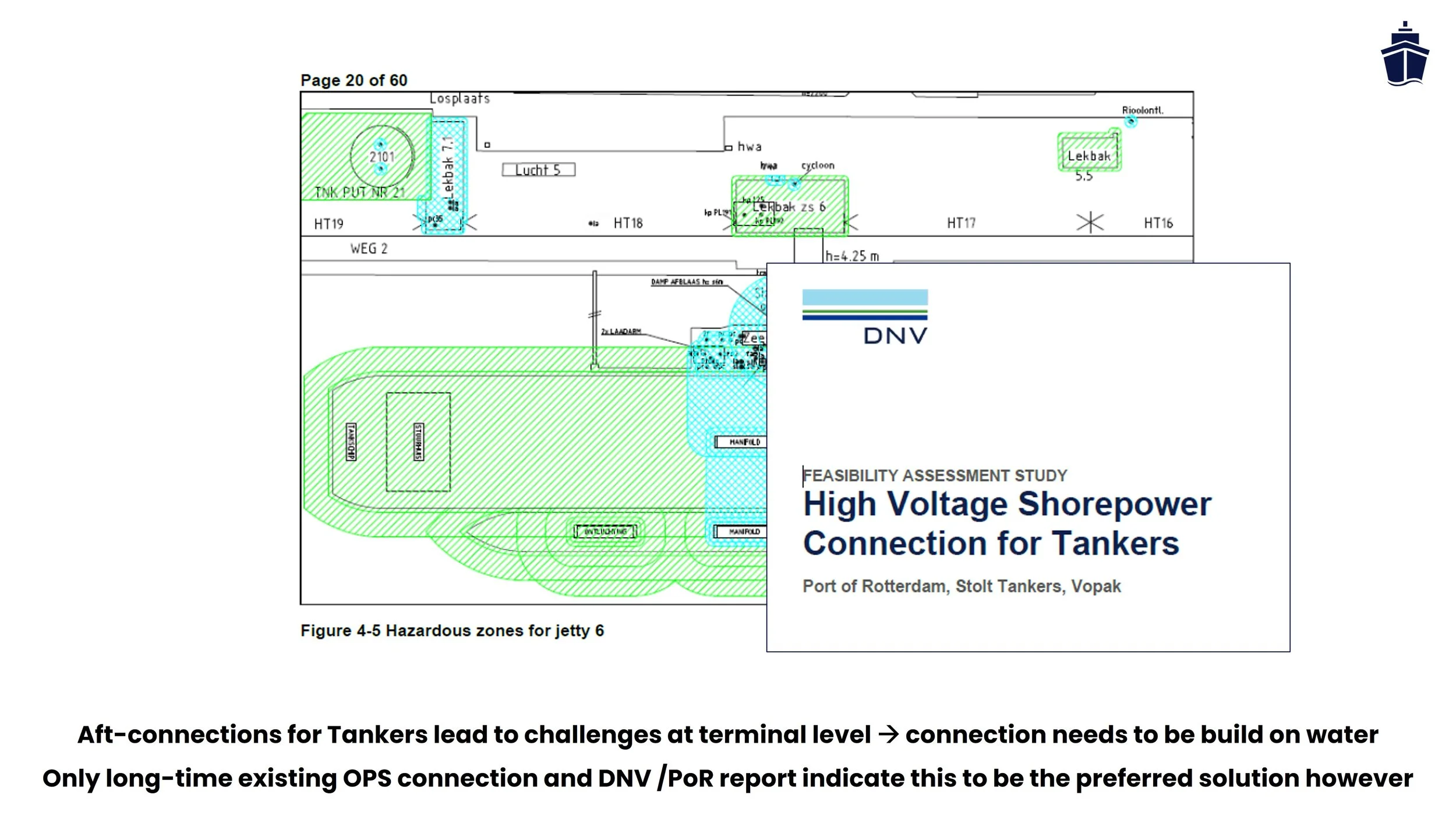
Several studies and pilot projects have attempted to address this challenge. The Sustainable Ships led Project BOEI study provides a detailed technical and economic assessment of electrifying a crude oil tanker, including onboard integration, power demand, and operational assumptions. In parallel, DNV-led feasibility work for the Port of Rotterdam, commissioned by stakeholders such as Vopak and Stolt Tankers, has explored practical high-voltage OPS concepts specifically for tanker terminals.
In practice, only a limited number of real-world implementations exist. A notable example is the Alaska-class tanker installation at Port of Long Beach (Berth T121), where the shore connection is located aft to avoid hazardous cargo areas. More recently, regulatory drivers such as California’s At Berth Regulation are accelerating the need to address tanker OPS from 2025 onward.
Despite all these developments, tanker OPS remains fundamentally different from other ship types. Based on the above-mentioned studies and projects, three key challenges consistently emerge:
1) Hazardous cargo environment
The primary challenge for tanker shore power is the presence of flammable cargo and vapours, which create hazardous (ATEX) zones across large parts of the vessel, particularly around the cargo deck and midship manifold area. In these zones, electrical equipment must meet strict explosion-safety requirements, and in many cases, installation of high-voltage equipment is either highly constrained or not permitted at all. This directly impacts OPS design, as the ship–shore electrical interface must be located outside hazardous areas wherever possible.
A further complication arises from differences in hazardous area classification between ship and terminal. Ships follow maritime classification rules, while terminals apply ATEX/industrial standards. These classifications are not always aligned, meaning that an area considered safe on board may still be treated as hazardous from the terminal perspective. In short, the existence of the many ATEX zones on board lead to natural tendencies to avoid specific connection locations.
2) Cable handling and interface location
The location of the shore power connection and the associated cable management system (CMS) is one of the most critical design challenges.
A midship connection, close to the cargo manifold, would be beneficial from a standardisation and operability perspective, as it aligns with typical loading infrastructure and reduces variability between vessels. However, this area is typically within a hazardous zone (ATEX), making it extremely difficult to implement using currently available electrical equipment and standards.
An aft connection, as seen in the Long Beach installation and supported by DNV/Rotterdam feasibility studies, avoids the main hazardous cargo area and is therefore considered a safer and more practical solution in many cases. However, this introduces a different challenge:
Ships vary significantly in length, draught, and manifold position
Tidal variation and loading condition (laden vs. ballast) further increase variability
As a result, the CMS must therefore be highly flexible to accommodate different geometries, which leads to aft connections shifting complexity from safety compliance (midship) to mechanical and operational flexibility (stern).
The only operational OPS installation for Tankers in the Port of Long Beach uses an aft connection. As stated, all studies beforementioned indicate this to be the most feasible from a ship-perspective. That still does not mean it is the universal standard. As Thomas Hartmann, Senior Principal Engineer of Electrical Systems from DNV points out:
“In theory, the best and safest location for a shore power connection on board a tanker would be the aft section. But that is a challenge because of the way oil terminal jetties are normally designed. This is why we had to define rules allowing safe shore power connections midships – right in the hazardous area of a tanker where the cargo manifolds are located.”
In short, this topic remains a challenge and is to be evaluated on a case by case basis, with a slight bias for aft-connections from a shipowner and safety perspective.
3) Safety and (lack of) standardization
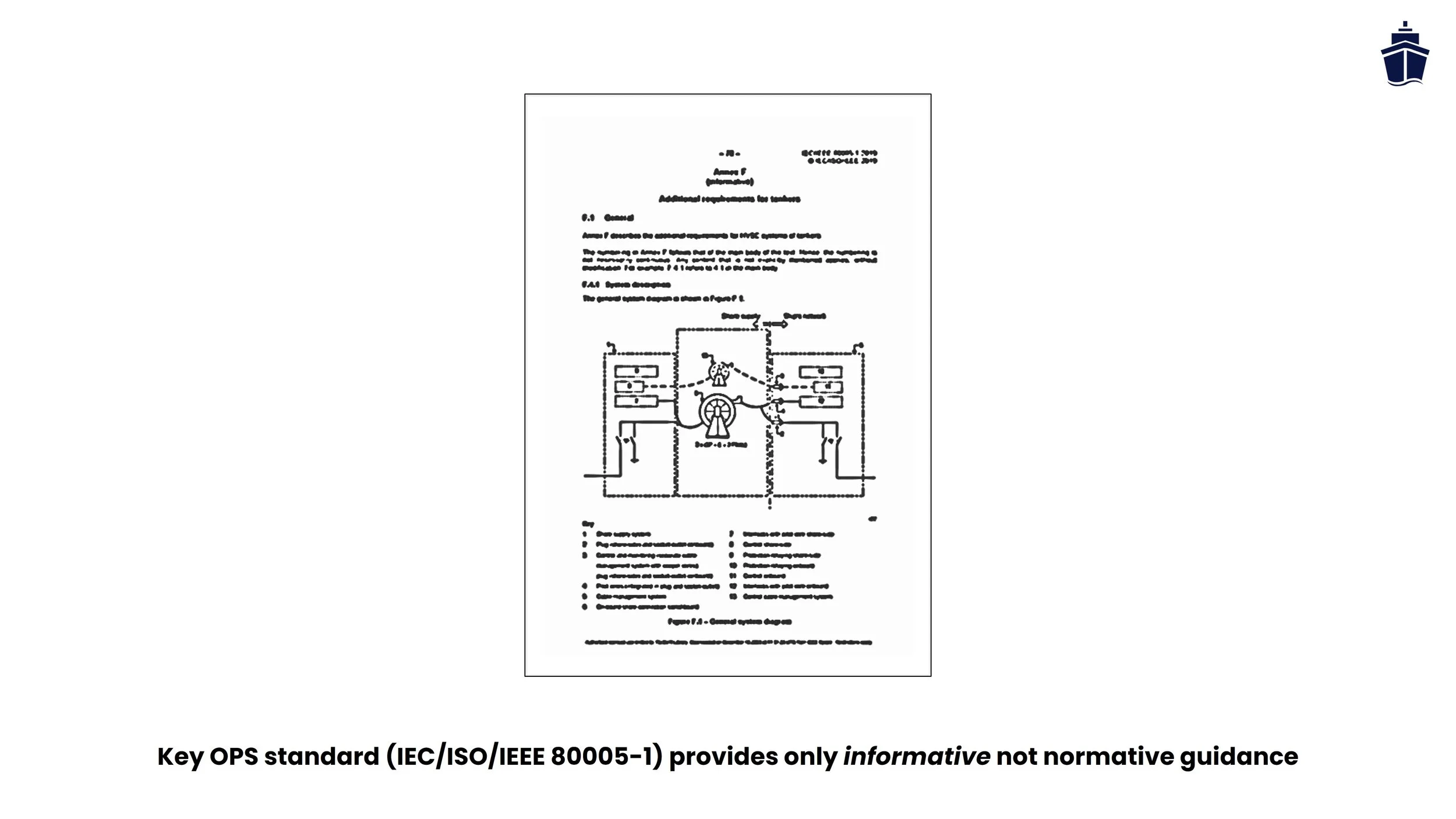
The final major barrier is the lack of a fully developed and widely accepted standard for tanker OPS. While general shore power standards such as IEC/IEEE 80005-1 apply, these are informative only, and they do not comprehensively address tanker-specific challenges, particularly:
Connection within or near hazardous zones
CMS design for large and variable vessels
Integration of safety systems across ship and terminal
For example, connection in hazardous areas is currently not permitted under existing standards, meaning that enabling midship solutions would require significant revisions to international standards, a process that is both complex and time-consuming. As noted in DNV’s work, the ship–shore interface is the most critical and least standardised part of the system. This includes physical connection design, cable handling systems and safety interlocks and procedures.
DNV’s tanker feasibility study therefore treats safety as the central design driver, evaluating multiple concepts (midship vs. stern, different CMS configurations) but ultimately highlighting that the absence of a clear, standardised solution remains one of the biggest barriers to large-scale deployment.
Long Beach California
Longest operating Tanker OPS point in the world
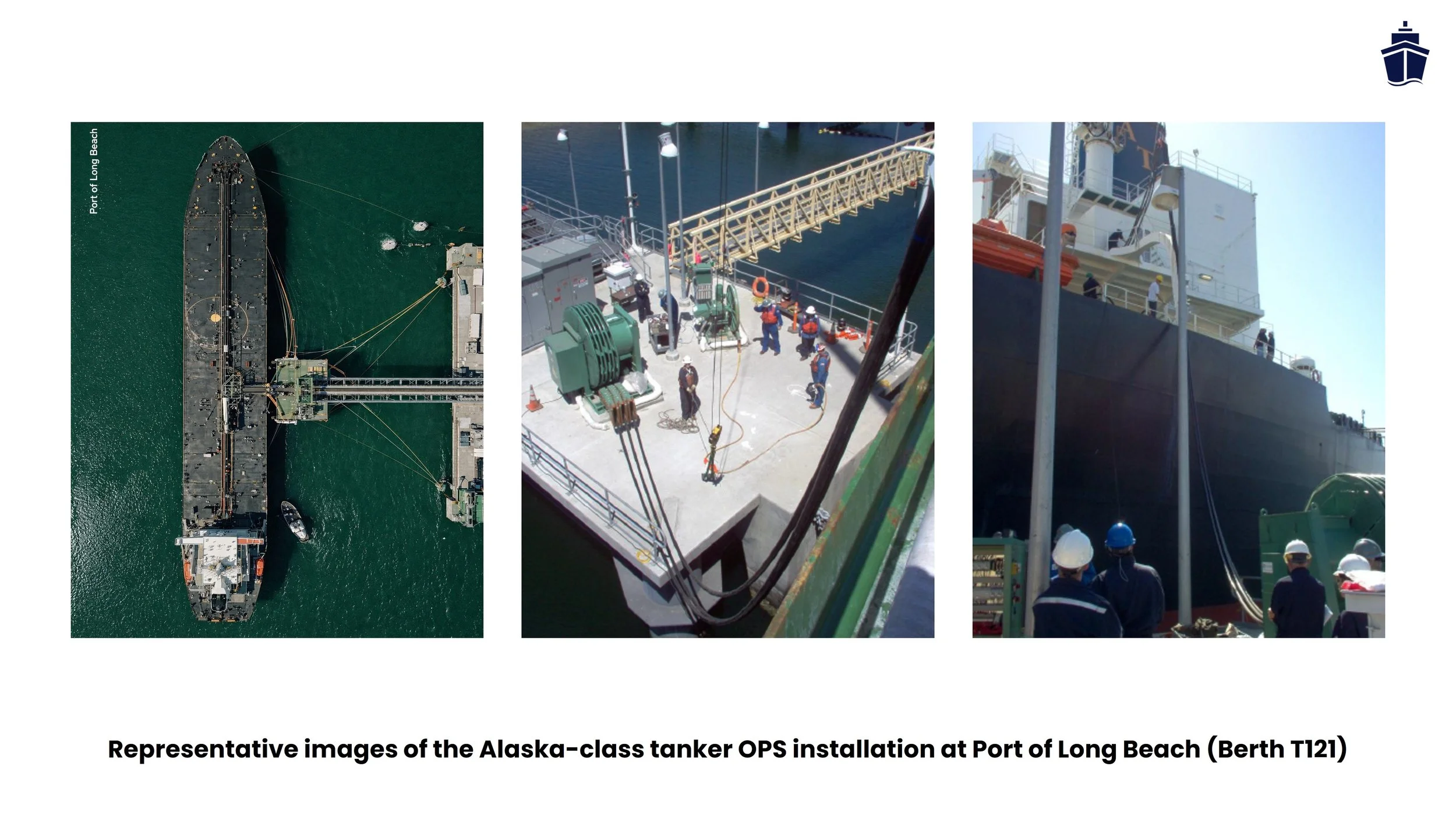
The Port of Long Beach Berth T121 installation for Alaska-class tankers is the strongest real-world benchmark for tanker shore power currently available. A 2022 Journal of Shipping paper notes that, at that time, it was the only operational shore power system for liquid bulk vessels globally. The system was designed in 2007 and entered operation in 2009, making it by far the longest-running tanker OPS case in practice. Key properties include:
What makes the Long Beach case so important is not only that it exists, but how it was implemented. The installation was developed for a specific vessel class - the BP Alaska class - rather than as a universal tanker solution. Power is supplied at 6.6 kV, using three high-voltage cables connected at the aft side of the vessel, with cable handling performed by the ship’s provision crane. In addition, a dedicated pier / platform was constructed to house the shore power facility and support the cable interface.
This is highly relevant for tanker OPS design because it shows that a workable tanker solution does not have to follow the same logic as a container or cruise installation. Instead of using a generic midship cable-management arrangement, the Long Beach system keeps the electrical interface aft, outside the main cargo handling area, thereby reducing exposure to hazardous zones and simplifying the safety case. The fact that this system has reportedly operated for more than a decade without (reported) incidents is perhaps its most important contribution: it demonstrates that tanker shore power is not merely theoretical, but can be implemented safely in an active oil terminal environment.
For this study, the Long Beach example is therefore used as a practical proof point. It does not establish a universal tanker standard, but it does show that aft-side tanker OPS is feasible in practice, and that tanker-specific connection concepts can be operated safely over the long term. This is exactly why later feasibility work - including the Rotterdam tanker OPS studies - continues to treat it as a reference case.
Connection location: aft, not midship
Voltage: 6.6 kV
Cables: three HV cables
Cable handling: ship’s provision crane
Shore arrangement: dedicated platform / extra pier for the OPS system
-
The Shore Power Quickscan is a comprehensive tool designed to provide a business case for a shore power refit onboard vessels, based on IEC/IEEE 80005. It includes CAPEX estimates, operational expenses including fuel costs and engine maintenance, emissions savings as well as key regulatory exposure of FuelEU, IMO Net-Zero and EU ETS. The tool guides users through inputting ship details, operational profiles, equipment details, and input parameters to create a customized business case for implementing shore power on board your vessel. It includes:
The tool accurately calculates Capex, OPEX, and emissions saved based on user inputs.
Users can customize ship details, equipment specifications, and input parameters to create a tailored business case.
The tool provides a detailed report with key outputs, cash flow information, and technical details for reference.
Users can easily navigate through the different sections of the tool, including ship data input, power profiles, and fuel consumption calculations.
The tool offers tooltips and guidance to assist users in understanding the calculations and making informed decisions.
Contacting the helpdesk for assistance is encouraged to ensure users can effectively utilize the tool and optimize their business case.
Download Model
Save and optimize your premium business case, get access to the complete techno-economic feasibility report and customize all calculations.
The Shore Power Quickscan is a comprehensive tool designed to provide a business case for a shore power refit onboard vessels, based on IEC/IEEE 80005. It includes CAPEX estimates, operational expenses including fuel costs and engine maintenance, emissions savings as well as key regulations such as FuelEU and EU ETS. This purchase allows you to store your calculations, work offline anywhere, plus print a comprehensive techno-economic feasibility that you can show off to friends or your management.
Use Apple Pay to purchase the Excel (only on iPhone) - contact helpdesk for payment by invoice
References
Sustainable Ships - Shore Power Quickscan
Sustainable Ships - Project BOEI
Sustainable Ships - Average Shore Power Demand Guide
DNV - A class notation for safe use of shore power
DNV - OPS Feasibility Assessment Report for Tankers
Journal of Shipping - Cold ironing: modelling the interdependence of terminals and vessels in their choice of suitable systems
CARB - Ocean Going Vessels at Berth Regulation
You might also like





How much power does a ship actually draw at berth? The same vessel can vary by 300%, sister ships doing exactly the same can differ by 30%, and Tankers of the same size can differ tenfold in installed capacity. This masterclass explains the methodology we use to estimate average shore power demand per ship category, using GT-based scaling functions and calibrated load factors built on 7,102 ships and 153 measured datasets.