
Impact of reefers on container ship power demand
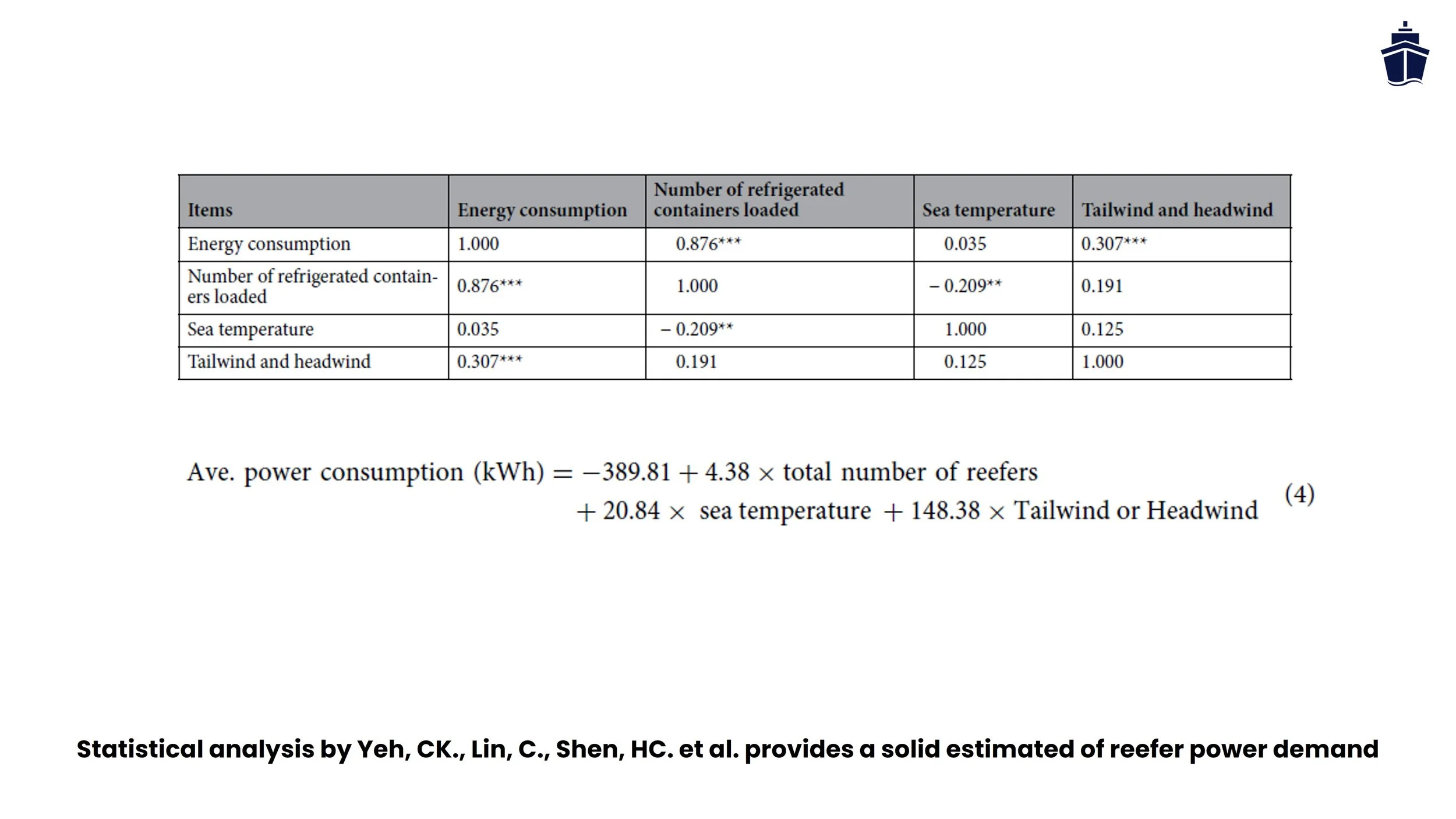
Average power demand increase ≈ 4.38 kW per reefer
Refrigerated containers (“reefers”) are one of the most significant drivers of berth power demand for container vessels. A 2022 study by by Yeh, CK., Lin, C., Shen, HC. et al. on container ship power consumption in Pacific operations shows that, when wind and sea temperature effects are excluded, energy consumption increases by approximately 4.38 kWh per hour for each additional reefer container loaded onboard. Because the study expresses energy use as hourly average generator output (kWh per hour), this figure directly represents the marginal auxiliary generator load of approximately 4.38 kW per reefer.
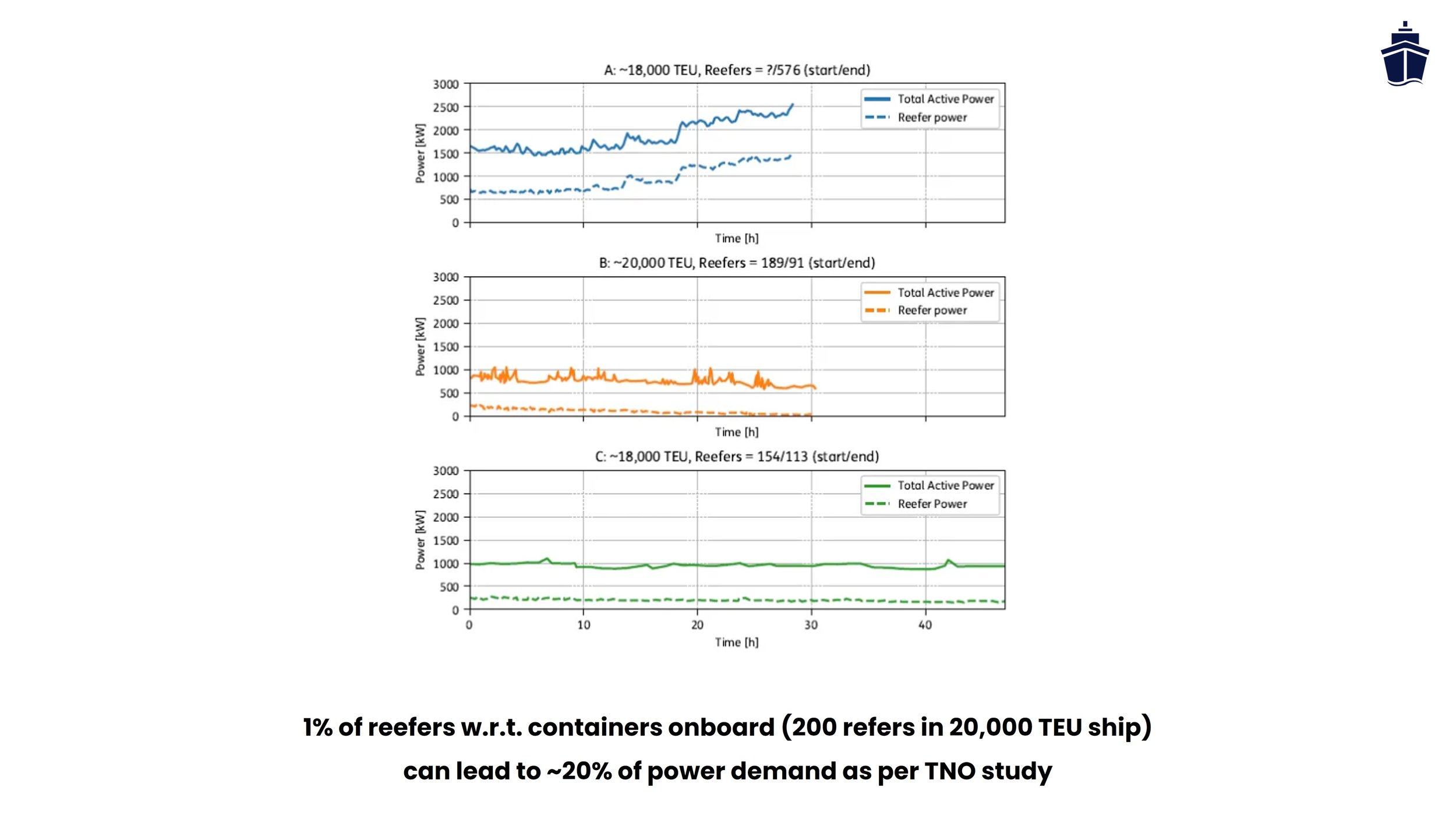
In practical terms, every additional refrigerated container adds a small but structurally consistent electrical demand to the ship’s hotel load. The implication is material: even a relatively small share of reefers can account for a disproportionately large share of total berth power demand. Realtime measurements show that even when 1% of all containers onboard a ship are reefers, it can consume almost 20% of the ship’s total energy demand.
This is reported in a research by TNO, which demonstrated that reefer load is a primary driver of variability in onshore power demand and can explain substantial differences in observed berth consumption for the same vessel under different cargo conditions. For OPS modelling in container ships, reefer share must therefore be treated as a first-order parameter rather than a marginal adjustment.
Explore the results below and sign up to access all premium tools, databases and expert support.
-
If you want to explore challenges related to the average power demand of ships at berth in more detail, the Average Shore Power Demand Guide provides a structured methodology for exactly that.
The guide translates auxiliary engine capacity and measured operational datasets into scalable relationships between ship size (GT) and expected power demand across major ship categories. Rather than relying on generic assumptions, it combines a large ship database, representative measurements, and cross-source benchmarking to derive low, average and high demand envelopes for OPS planning. Inside the guide you will find:
GT-based scaling functions for berth power demand per ship category
Load factor ranges derived from measured datasets and literature
Cross-source comparisons with IMO, DNV and academic studies
Discussion of key uncertainty drivers such as reefer loads, operational modes and ship configuration
Practical guidance for using these estimates in OPS infrastructure sizing and business case development
The result is not a single “correct” number for ship power demand - because such a number does not exist - but a defensible analytical framework that helps developers, ports and investors design shore power projects with greater confidence.
Available for members or pay-per-use
References
Nature.com - Energy Consumption Container Ship Pacific
TNO - Green Deal Validation OPS
Sustainable Ships - Average Shore Power Demand Guide
Downloads available for members and premium users
You might also like
Shore power is becoming mandatory in the EU from 2030, but no regulation says what it should cost. This masterclass explains how an OPS connection is defined, the three pricing models used across EU ports, what shipowners currently pay per kWh, and how that compares to generating electricity onboard.
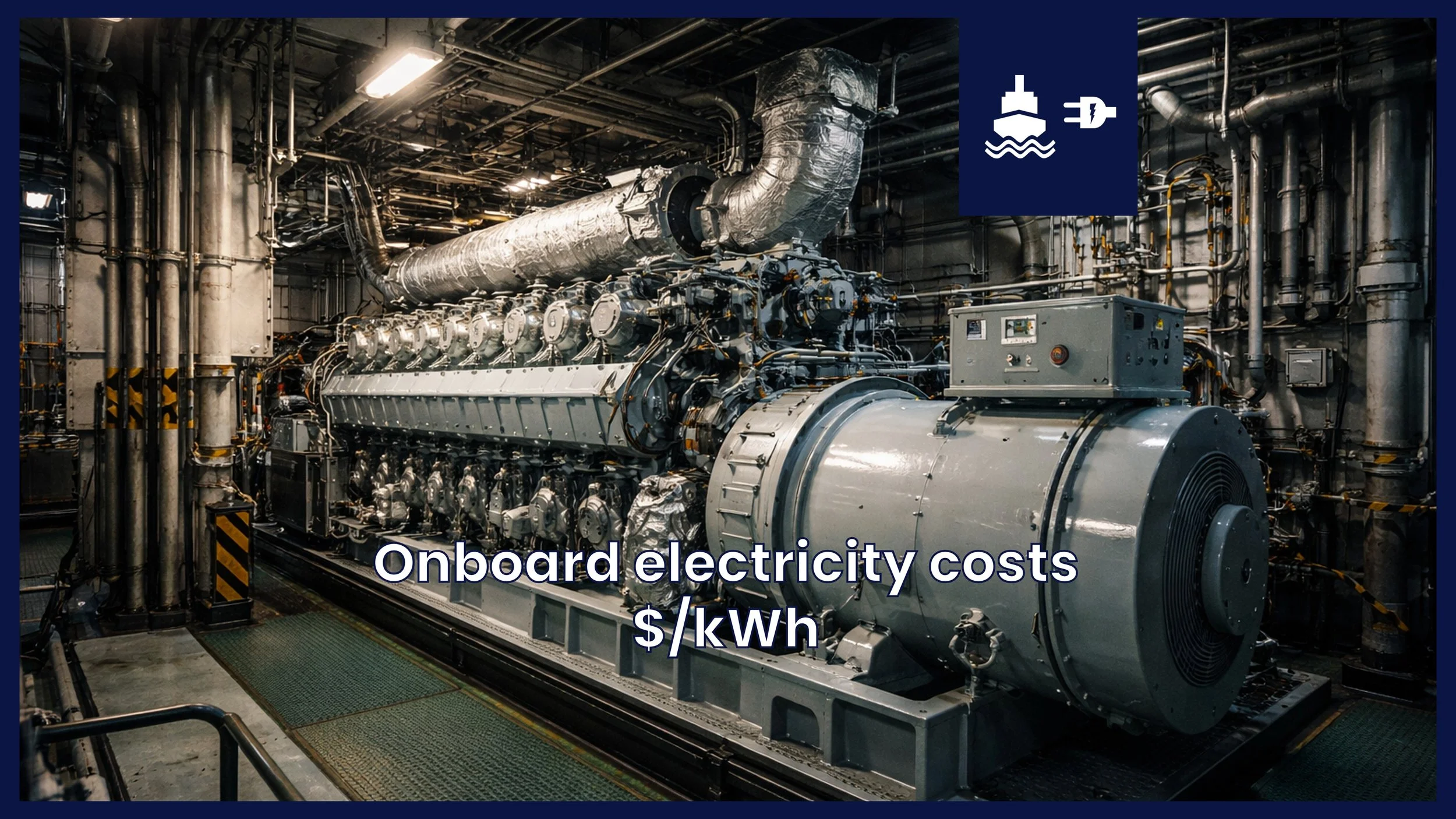
This case study determines the cost of generating electricity onboard a ship using auxiliary diesel engines to determine when it is more cost-effective to purchase electricity from the grid in port. Results show that fuel costs alone sit around $0.20 per kWh, but once regulatory compliance costs are layered on top, the total effective costs rise sharply to $1.00 per kWh by 2040.
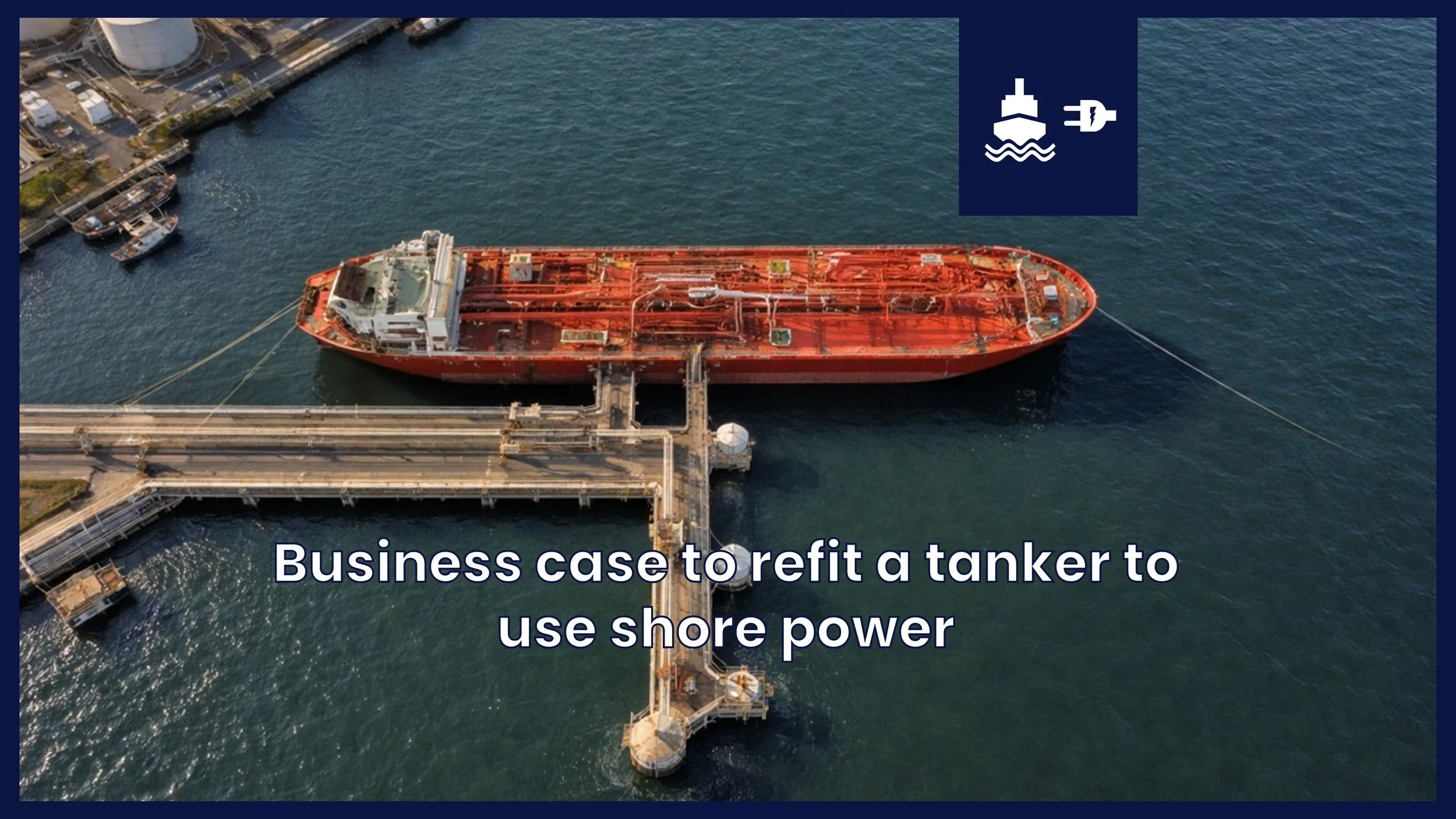
This case study explores the retrofit of the crude oil shuttle tanker Toril Knutsen to use onshore power supply (OPS) during port stays. The analysis assesses onboard retrofit requirements, power demand at berth, CAPEX, and the resulting business case. Total CAPEX is estimated at around $4M for a conservative tanker-specific configuration. Payback can fall in the range of 1 to 4 years, with most value driven by reduced FuelEU, EU ETS, and IMO-related compliance costs.
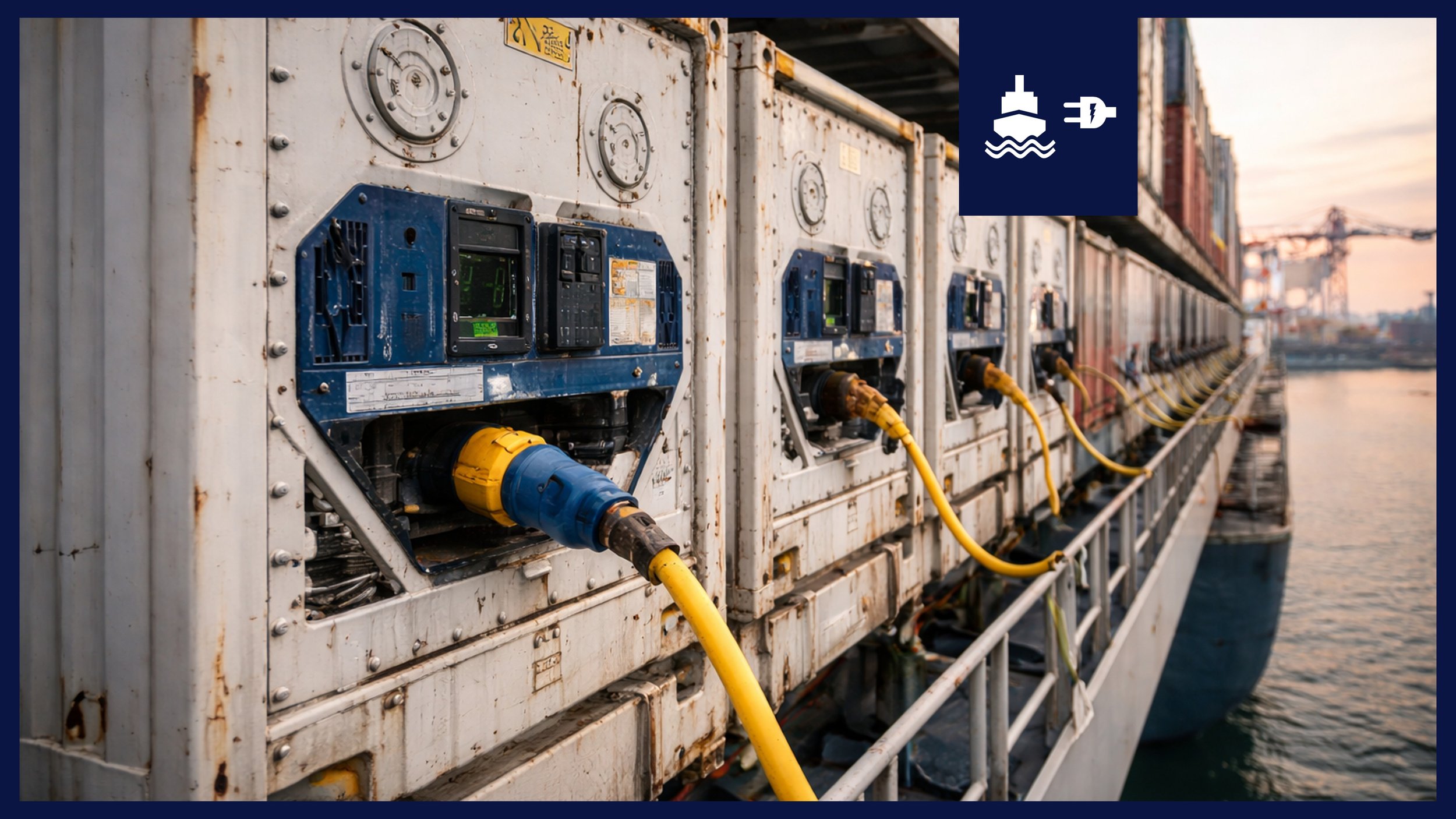
Reefers (Refrigerated Containers) increase power demand onboard container ships by approximately 4.38 kW per reefer container. The implication is material: even a relatively small share of reefers can account for a disproportionately large share of total berth power demand. Realtime measurements show that even when 1% of all containers onboard a ship are reefers, it can consume almost 20% of the ship’s total energy demand.
If shore power projects were easy, every port would already have them. Instead, developers run into the same fundamental challenges: unpredictable vessel power demand, complex infrastructure decisions, and business cases full of question marks. In this blog we look at those problems, and how our tools help you tackle them.
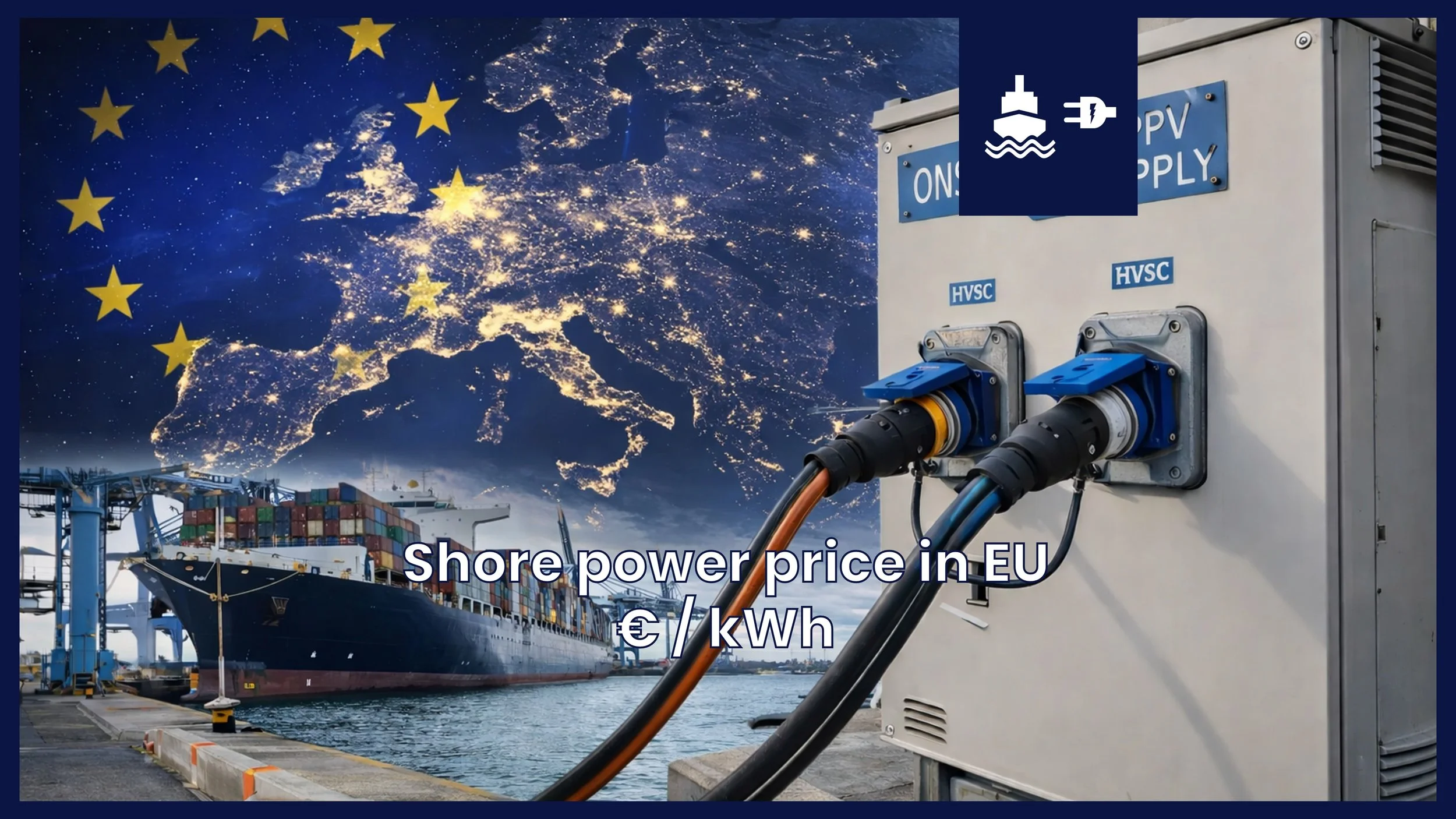
AFIR and FuelEU Maritime make the use of onshore power supply (OPS) effectively mandatory but say nothing about what it should cost or how it should be priced. The result is a patchwork of tariff designs and varying levels of transparency, making like-for-like comparisons difficult for shipowners and operators. This blog aims to provide at least some guidance on the matter.
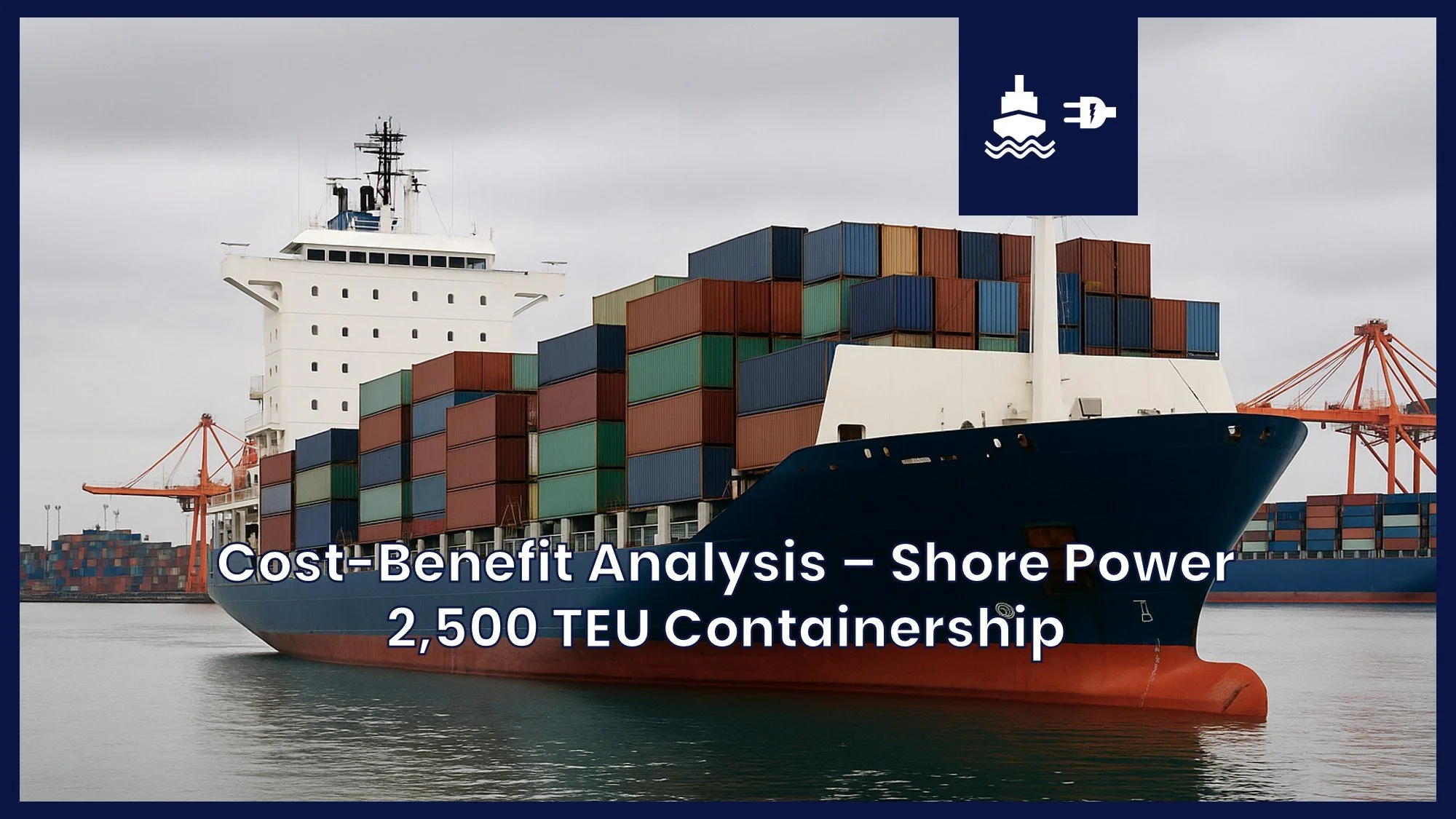
When does the use of shore power become cost-effective for shipowners under new EU and IMO regulations? Using the Shore Power Quickscan, this article breaks down key cost components such as fuel, electricity, EU ETS, FuelEU Maritime, and the upcoming IMO Net-Zero framework and compares cost impact of different routes on a 2,500 TEU containership. Results show that while shore power can already deliver savings from 2025 onwards (!), its competitiveness strengthens sharply after 2030 as compliance costs rise.

Accurate estimation of shore power demand at EU ports has become essential due to strict regulations like AFIR, which requires electrification for 90% of port calls by container and passenger ships at TEN-T ports by 2030. This blog evaluates three methods—using EU MRV fuel data, Sustainable Ships’ ship-specific power database, and ICCT research—to estimate the Total Addressable Market (TAM) for shore power. Results show the total annual electricity demand across EU ports is between approximately 6 and 13 TWh, highlighting the significant scale of infrastructure investment ahead.

This case study evaluates a mobile shore power battery barge designed for an offshore construction vessel in the Port of Rotterdam. An average power demand of 2.4 MW and a peak demand of 5 MW is assumed. This results in the requirement of twelve 20-ft containerized batteries integrated into a High Voltage Shore Connection (HVSC) system. Total costs of the power barge are estimated at $9.5M with a yearly revenue of approx. $2.5M.
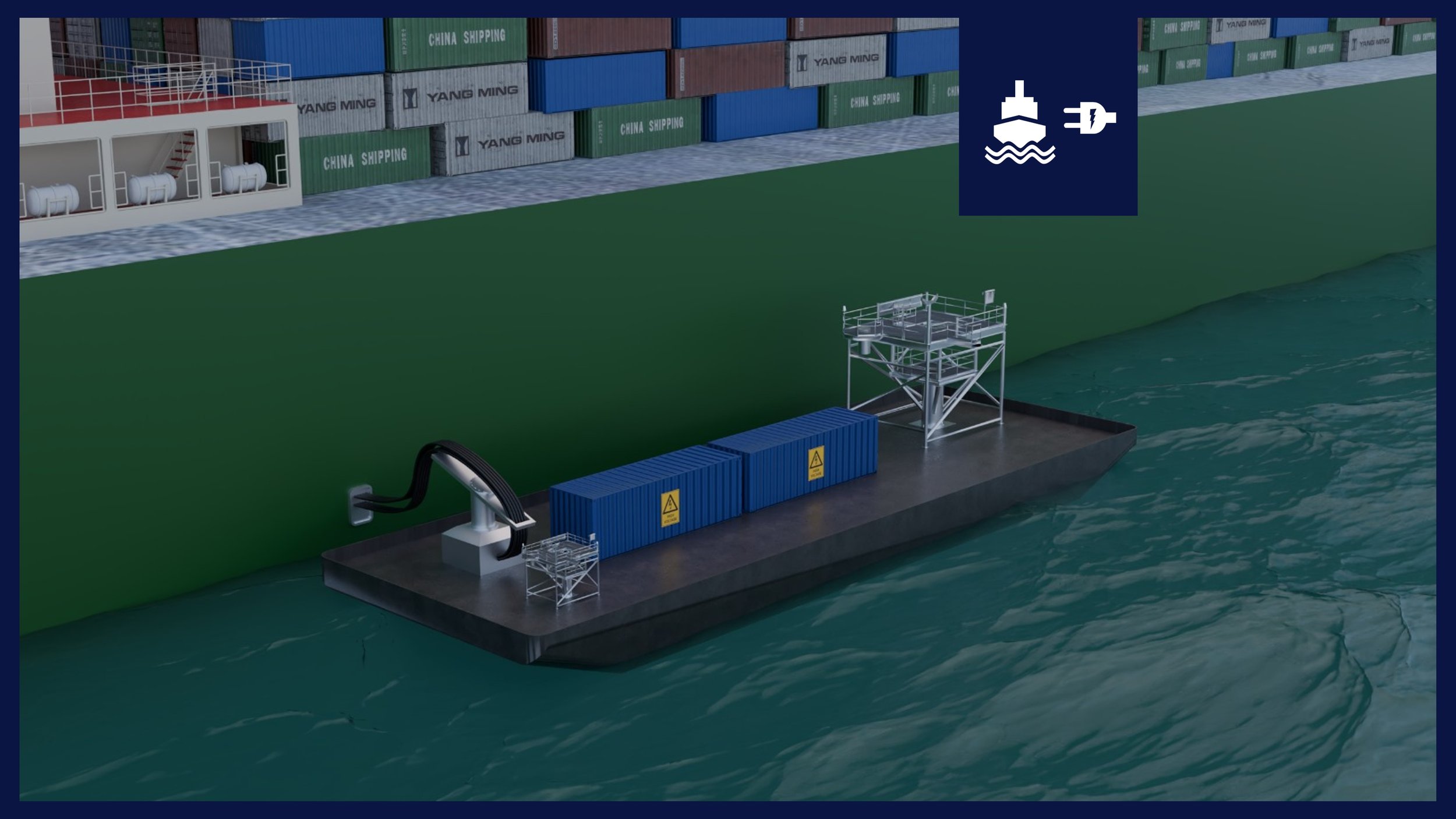
This case study evaluates a mobile shore power battery barge designed for a 1,730 TEU containership in the Port of Rotterdam. An average power demand of 329 kW and a peak demand of 1 MW is assumed. This results in the requirement of two 20-ft containerized batteries integrated into a Low Voltage Shore Connection (LVSC) system. Estimated savings for the ship reach €500 per 24-hour period, primarily due to reduced FuelEU compliance costs, which could exceed €600,000 over 10 years.

Accurate estimates of containership power demand are becoming increasingly critical due to stringent regulations, such as FuelEU Maritime, in combination with technical complexities. Ship power demand varies significantly depending on size, onboard equipment installed, and operational profile. These uncertainties places considerable pressure on terminal owners, port authorities, and developers to design and implement shore power infrastructure. This blog aims to provide guidance on this issue.

This case study determines the impact of FuelEU Maritime on a shore power refit for a RoRo Cargo ship under multiple loading and operational conditions. Pending on the amount of days connected to the grid and the average load while moored, it is estimated that shore power can save €250,000 per year.

This is a case study that determines the impact of FuelEU Maritime on a shore power refit business case up to 2050, taking several ships and varying input parameters to determine the impact under multiple conditions. As FuelEU Maritime will make shore power mandatory in 2030 for passenger- and containerships, this tool will help to determine the impact of that regulation on your business case.

This is a techno-economic case study that provides guidance for decarbonizing a feeder by means of a shore power refit. Shore power will be made mandatory by 2030 for these ship types as per FuelEU Maritime regulation. A step-by-step approach is given to estimate costs, analyse technical feasibility, and create a business case for the shore power refit in general.
How do we deal with the challenges surrounding shore power? Why is standardization so important? And what will we achieve with collaboration? Find out together with Fanni Arvai, Innovation & Sustainability Manager at International Car Operators and passionate about changing the maritime industry in a positive way with a vision for a more inclusive and environmentally conscious future.
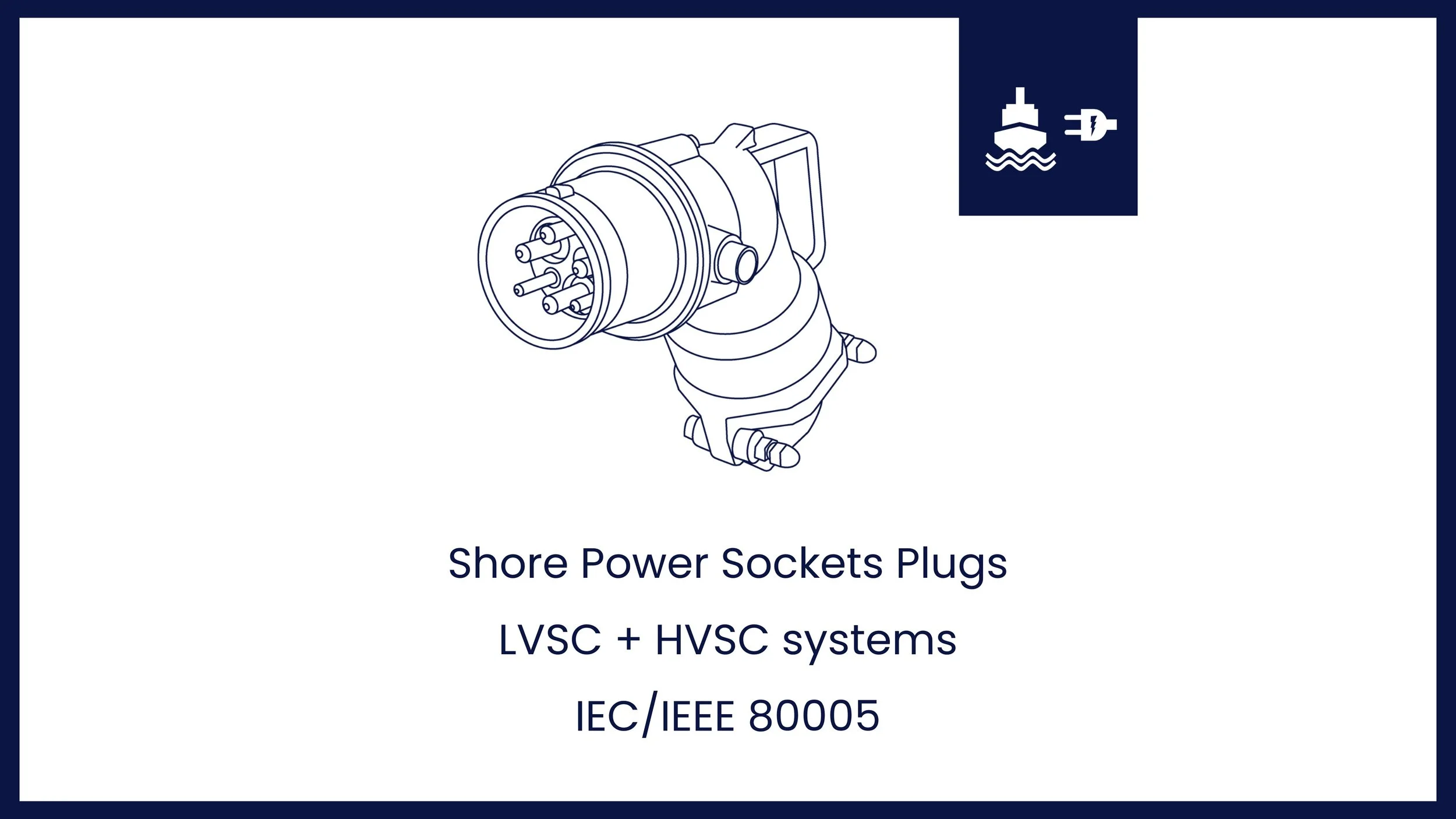
IEC/IEEE 80005 is the main standard for shore power. This standard categorically divides shore power plugs and sockets into low voltage shore connection systems (LVSC < 1 MVA) and high voltage shore connection systems (HVSC > 1 MVA). LVSC systems are governed by IEC/IEEE 80005-3 for operability and IEC 60309-5 for dimensions. HVSC systems are governed by IEC/IEEE 80005-1 for operability and IEC 62613-2 for dimensions.

On behalf of the Province of South-Holland, Sustainable Ships has been project leader of 'Project BOEI’, a techno-economic feasibility study on the electrification of tankers off the coast of Scheveningen, Netherlands. The study was performed with consortium members InnovationQuarter, Bluewater, Knutsen, EOPSA, Rijkswaterstaat, Campus@Sea, Port of Rotterdam, KVNR and Cavotec. This lunch and learn is the recording of the close-out session in which main findings were presented.

Project BOEI is a techno-economic feasibility study on behalf of the Province of South-Holland on the electrification of tankers at the Scheveningen anchorage. The goal is to identify the most feasible technical solutions and risks, in addition to cost and emissions reduction estimation. Primary drivers are reduction of NOx and CO2 emissions. Total costs for all scopes combined is €14M (~€12M for infra and ~€2M for ship). E-anchor and subsea cabling are approximately 50% of all cost. Break-even price parity for shipowner and provider of power is at around €0.20-€0.25 per kWh.

Renewable Energy Units - Hernieuwbare Brandstof Eenheden - are a Dutch system of certificates based on the EU Renewable Energy Directive (RED). Under the system, parties that produce liquid fossil fuels for transport have an obligation from the government to purchase REUs. Per year, €1 billion REUs are traded in the Netherlands. You can earn between 4.5 and 18 eurocents per kWh ‘sold’ to a vessel, for example when using shore power.

Maersk’s Stillstrom and North Star have signed a Memorandum of Understanding (MoU) to accelerate the adoption of offshore charging and vessel electrification technologies for Offshore Support Vessels (OSVs) in the offshore wind sector. Offshore charging hubs will enable the vessels to recharge their battery systems using wind energy while in the field.

This is a case study on how to decarbonize a fishing trawler - the Jacobus Maria - using shore power, battery hybrid EES and biofuels. 20% CO2 reduction is achieved, half of which stems from the use of biofuels (HVO). The hybrid battery pack is economically not feasible with the assumptions used and the operational profile. The Jacobus Maria has 1 MW installed engine capacity. Total cost would be at least €1M. 10% CO2 reduction can be achieved with approx. €50k.
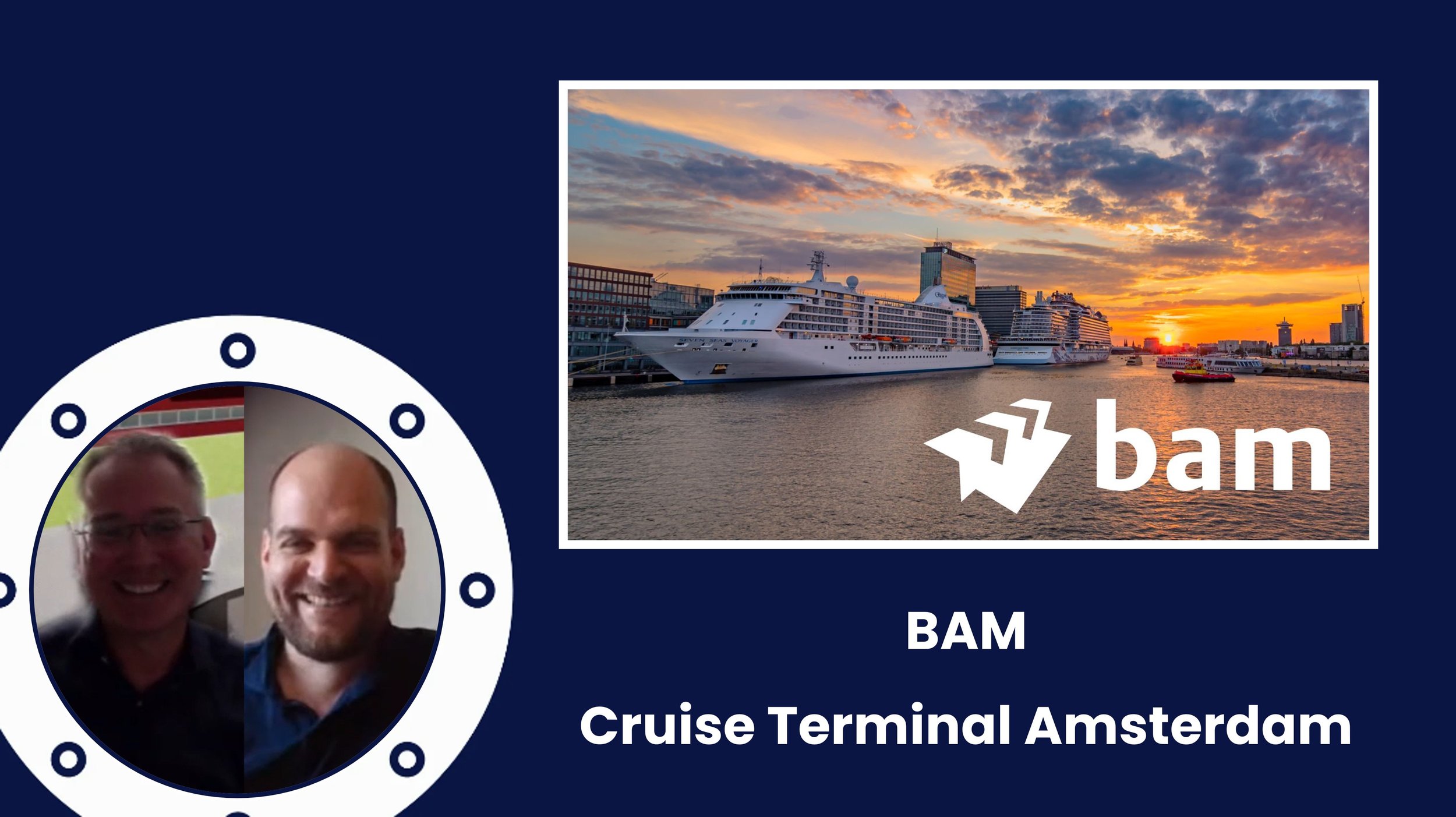
On May 10th, Port of Amsterdam awarded the contract for the realization of shore power at Cruise Port Amsterdam (CPA) to Powercon A/S and with BAM as subcontractor. Dick van Veen and Rick van Akkeren - BAM Business Unit Heavy Duty Charging - explain in detail about the project and the challenges that they are facing. Building the infrastructure that can host large cruise vessels and support the heavy electrical equipment is therefore a daunting task, all of which is discussed in this video.

Watch this lunch and learn by EOPSA together with General Electric, in which we discuss the onshore and vessel aspects of shore power, including microgrids and using the Decarbonizer to determine the costs for shore power for your vessel.

Ports are the start and end of every vessel’s journey. Because of this, onshore power supply undeniably plays a big part of the decarbonization of the maritime industry. Creating a network of onshore power supply in ports around the world is a tremendous but necessary task. One of the companies providing the technology for this transition is ShoreLink. Watch this lunch and learn by Shorelink, presented by Levan Chikviladze, to learn more.
Watch this lunch and learn with EOPSA Founding President Roland Teixeira de Mattos, who will tell all about EOPSA, its growth, its advocacy, its outlook and the broader topic of Port Energy.

This blog provides an overview of (European/Dutch) shore power sockets and plugs. They are categorized into three groups, depending on a ship’s installed power: below 100 kW, below 2.000 kW and above 2.000 kW. Especially below 100 kW, there is great diversification of plugs which would merit the creation of a ‘universal adapter’ for ships. Share your experience to help other shipowners.

This is a story about how the shore power connection for Heerema in the Port of Rotterdam was realized from idea to reality. It is told from the perspective of Heerema, but could not be realized without help from Eneco, Siemens, Port of Rotterdam, the City Council of Rotterdam and InnovationQuarter. This story portrays the power of open collaboration for a sustainable future, and shows what can be achieved when working together on a common cause.

Maersk and Ørsted are building a ‘power-buoy’ that can act as both a mooring point and a charging station for vessels, enabling them to turn of their engines when laying idle.

Stena Line realized a shore power connection for sea-going ferries of two times 3 [MW] in Hoek van Holland in 2012.
How much power does a ship actually draw at berth? The same vessel can vary by 300%, sister ships doing exactly the same can differ by 30%, and Tankers of the same size can differ tenfold in installed capacity. This masterclass explains the methodology we use to estimate average shore power demand per ship category, using GT-based scaling functions and calibrated load factors built on 7,102 ships and 153 measured datasets.