
Royal Roos
Royal Roos is dedicated to providing the highest quality engineering services to our customers in the maritime industry. They strive to exceed expectations by delivering innovative solutions that are tailored to our clients’ needs and that are designed to maximise the value of their assets by making them fit for 2030/2050 and beyond.
They are committed to going above and beyond to ensure that our clients’ expectations are met and exceeded. They do so with a focus on investing in the future of greener shipping, and we are thoroughly ahead in our efforts to make the maritime industry more sustainable.
Royal Roos products
The Grid Services Guide provides a structured reference for navigating the markets that determine battery storage revenue across Northwest Europe. Drawing on TenneT, ENTSO-E, EPEX SPOT, GOPACS, and the EU Network Codes (EB-GL, SO-GL, RfG), the guide documents the three main grid service categories balancing, trading, and congestion management and sets each market side-by-side with its technical requirements, revenue mechanics, and access models, showing where opportunities lie, where the constraints bind, and what the differences mean for asset economics.
Use Apple Pay to purchase the Excel (only on iPhone) - contact helpdesk for payment by invoice

The Ship Types Guide provides a structured reference for navigating ship classification across regulatory and commercial frameworks. Drawing on IMO MARPOL Annex VI, EU MRV, IHS StatCode5, DNV, World Ships, and Ship Knowledge, the guide maps the Sustainable Ships classification: 20 categories, 72 types, and 52 sizes, against each source framework and documents where they agree, where they diverge, and why.
A downloadable spreadsheet with more detailed information on ship types is included
Use Apple Pay to purchase the Excel (only on iPhone) - contact helpdesk for payment by invoice

This Excel contains a database of almost 7,000 ships with detailed information on the auxiliary engines, backed by studies from IMO, EMSA and DNV-GL. It allows you to understand different shore power requirements for different ships types and sizes. It is meant for suppliers and Port Authorities to be able to understand the power demand estimate shore power infrastructure needs accordingly.
Use Apple Pay to purchase the Excel (only on iPhone) - contact helpdesk for payment by invoice
The Average Shore Power Demand Guide provides a transparent methodology to estimate auxiliary power demand of ships at berth across major vessel categories. Using GT-based scaling relationships derived from installed auxiliary engine data and calibrated against measured datasets, the guide produces defensible low, average, and high demand envelopes for OPS planning.
Use Credit card, Stripe, PayPal or Apple Pay (only on iPhone). Contact the helpdesk for payment by invoice.
The Shore Power Quickscan is a comprehensive tool designed to provide a business case for a shore power refit onboard vessels, based on IEC/IEEE 80005. It includes CAPEX estimates, operational expenses including fuel costs and engine maintenance, emissions savings as well as key regulations such as FuelEU and EU ETS. The tool guides users through inputting ship details, operational profiles, equipment details, and input parameters to create a customized business case for implementing shore power on board your vessel.
Use Apple Pay to purchase the Excel (only on iPhone) - contact helpdesk for payment by invoice

This Excel model enables shipowners, operators, and fleet managers to assess the total compliance costs of their fleet under FuelEU Maritime, EU ETS, and IMO Net Zero regulations. It aggregates multiple ship specific data such as fuel consumption, emission factors, and operational profiles to calculate costs under business-as-usual conditions and compare them with different mitigation strategies. The tool provides fleet and ship projections, penalty assessments, and long-term compliance cost forecasts across multiple vessels, allowing users to evaluate and optimize their decarbonization pathways. Easily generate detailed fleet compliance reports to support strategic decision-making, investment prioritization, and regulatory reporting.
Use Credit card, Stripe, PayPal or Apple Pay (only on iPhone). Contact the helpdesk for payment by invoice.

The Fuel Properties Datasheet is an authoritative reference compiling verified data on marine fuels, their energy content, emission factors, and life-cycle footprints. Drawing from IMO guidelines, FuelEU Maritime, EU ETS, and the EU Renewable Energy Directive (RED II/III), it consolidates all key parameters needed for compliance modelling and strategic fuel assessments.
Use Credit card, Stripe, PayPal or Apple Pay (only on iPhone). Contact the helpdesk for payment by invoice.
The Fuel Properties and Cost Guide is a technical reference and strategic planning tool for evaluating marine fuels under today’s evolving regulatory landscape. Aligned with FuelEU Maritime, EU ETS, and the IMO Net-Zero Strategy, it benchmarks 22 fuels from HFO and MGO to e-methanol and bio-LNG on properties such as LCV, GHG intensity, flash point, CH₄/N₂O emissions, and VLSFO-equivalent cost.
Use Credit card, Stripe, PayPal or Apple Pay (only on iPhone). Contact the helpdesk for payment by invoice.

This Excel model helps shipowners, operators, and compliance officers assess a vessel’s alignment with IMO’s net-zero targets by calculating greenhouse gas intensity, expected penalties, and compliance status based on fuel mix and operational data.
The tool supports scenario-based analysis, enabling users to compare fuel strategies, energy-saving measures, and technology pathways until 2050 where the framework applies. With flexible inputs for fuel properties, prices, and regulatory baselines, this calculator offers a practical framework for evaluating IMO Net-Zero alignment, tracking GFS trajectories, and identifying cost-effective mitigation options.
Use Credit card, Stripe, PayPal or Apple Pay (only on iPhone). Contact the helpdesk for payment by invoice.

This model estimates voyage costs based on fuel use, distance, and emissions under different operational scenarios. It helps shipowners and charterers compare route and fuel options to identify the most cost-efficient voyage setup.
Use Credit card, Stripe, PayPal or Apple Pay (only on iPhone). Contact the helpdesk for payment by invoice.
This Excel model enables utilities, developers, and energy planners to assess the operational performance and fuel consumption of power barges deployed for remote, coastal, or emergency power applications. It simulates energy generation across various operational modes such as full load, partial load, or standby and supports scenario-based analysis of fuel usage, efficiency, and emissions.
Users can adjust site-specific parameters, load profiles, and operating strategies to evaluate energy output, optimize performance, and plan for different deployment contexts. The tool is ideal for strategic decision-making around mobile power generation, temporary grid support, disaster response, and off-grid electrification.
Use Credit card, Stripe, PayPal or Apple Pay (only on iPhone). Contact the helpdesk for payment by invoice.

This Excel model enables shipowners, operators, charterers, and technical managers to assess the energy output and fuel savings potential of solar photovoltaic (PV) systems, based on location, season, and system configuration. It compares baseline energy performance with mitigation strategies such as solar integration in hybrid setups, shore-based installations, or auxiliary power applications.
It offers scenario-based PV output forecasts, fuel offset calculations, and the flexibility to analyse different locations, performance ratios, and system sizes. Effortlessly generate solar energy and fuel saving projections to support strategic decision-making, investment planning, and decarbonisation initiatives.
Use Credit card, Stripe, PayPal or Apple Pay (only on iPhone). Contact the helpdesk for payment by invoice.

This Excel model enables shipowners, operators, charterers and ship managers to assess the compliance costs under FuelEU Maritime, EU ETS and IMO MEPC 83, comparing business-as-usual costs with mitigation strategies such as biofuels, shore power, and wind-assisted propulsion. It offers scenario-based regulatory cost projections, penalty assessments, and the flexibility to analyse different compliance pathways and scenarios. Effortlessly generate compliance cost forecasts to support strategic decision-making and investment planning.
Use Credit card, Stripe, PayPal or Apple Pay (only on iPhone). Contact the helpdesk for payment by invoice.

This Excel model allows you to calculate the CAPEX, OPEX, and kWh price for shore power at a single berth terminal, creating a tailored business case. Input quay and ship details, operational profiles, and cost factors to assess infrastructure costs, fuel savings, compliance expenses (FuelEU, EU ETS), and financing options. The tool aligns with ISO 80005 standards, includes TtW and WtW emissions calculations, and offers downloadable reports and Excel exports for further customization. Expert support is available for validation or consultancy.
Use Apple Pay to purchase the Excel (only on iPhone) - contact helpdesk for payment by invoice
This purchase allows you to compare the cost of Very Low Sulphur Fuel Oil (VLSFO) with other fuels on an energy-equivalent and total cost basis. It includes scenario-based fuel price projections, regulatory cost assessments for EU ETS and FuelEU Maritime, and the ability to define custom price trends. Easily generate operational cost forecasts and investment case reports to support strategic decision-making.
Use Credit card, Stripe, PayPal or Apple Pay (only on iPhone). Contact the helpdesk for payment by invoice.
This Excel gives you an overview of all sustainable organizations in our database. It includes information like company type, website and phone numbers. The goal of this tool is to get you in to contact with sustainable organizations and to find local suppliers that will help you. This is categorised by specific technologies. The database is updated constantly and accessible to members, or the latest version can be purchased by pay per use.
Use Apple Pay to purchase the Excel (only on iPhone) - contact helpdesk for payment by invoice
The RegulAitor Q&A is a comprehensive Excel designed to help shipowners and operators navigate complex maritime regulations. This Excel compiles frequently asked questions related to compliance with critical regulations such as FuelEU and EU ETS. The Excel includes features that allow you to filter questions by country, regulation, and vessel type, making it easy to find the information most relevant to your operations.
Use Apple Pay to purchase the Excel (only on iPhone) - contact helpdesk for payment by invoice
The Battery Hybrid Single Engine Tool allows you to determine a business case for a battery hybrid pack on board your vessel. The tool is designed for diesel-electric ships with smaller (<1,000 kW) four-stroke engines while at berth. It includes CAPEX estimates and customization features, operational expenses such as fuel costs, engine maintenance and spares, as well as key regulations such as FuelEU and EU ETS. This purchase allows you to store and customize your calculations, work offline anywhere, in order to easily present a positive business case to your management or client.
Use Apple Pay to purchase the Excel (only on iPhone) - contact helpdesk for payment by invoice

This Excel allows you to calculate your EU ETS costs for your fleet in a matter of seconds. It includes an easy to use tutorial, link to the EU ETS guide for free download, in addition to all X other sources used including original EU regulations. This purchase will allow you to estimate and store your calculations, or to compare different ship types and scenarios.
Use Apple Pay to purchase the Excel (only on iPhone) - contact helpdesk for payment by invoice
This Excel allows you to compare up to 10 ships to optimize your pooing strategy for FuelEU. It allows for different fuel options and blending settings, comparing fuel costs, EU ETS and FuelEU penalties after pooling. If needed, you can adjust the sheet to allow for 1,000 ships! The Excel includes a tutorial and the link to our FuelEU guide for free download, in addition to our free to use helpdesk for support. This purchase allows you to store your calculations, work offline anywhere plus compare different ship types and scenarios.
Use Apple Pay to purchase the Excel (only on iPhone) - contact helpdesk for payment by invoice

This Excel quickscan allows you to calculate your FuelEU GHG intensity and penalties in a matter of seconds. It includes an easy to use tutorial, link to the FuelEU guide for free download, in addition to all 7 other sources used including EU regulations on FuelEU, RED, MRV, ClassNK, ECSA and CE Delft. This purchase will allow you to estimate and store your calculations, or to compare different ship types and scenarios. Does not include banking, borrowing or pooling.
Use Apple Pay to purchase the Excel (only on iPhone) - contact helpdesk for payment by invoice

This tool allows you to calculate your CII in a matter of seconds. It includes an easy to use tutorial, link to the CII guide for free download, in addition to all 7 other sources used including IMO, ClassNK, DNV and Bureau Veritas. This purchase will allow you to estimate and store your CII, or to compare different ship types and scenarios.
Use Apple Pay to purchase the Excel (only on iPhone) - contact helpdesk for payment by invoice

This excel provides all the information, content and supplier links that are used for the shore power sockets and plugs tool. Based on IEC/IEEE 80005, it ensures you have all the knowledge you need to determine requirements for shore power sockets and plugs for your ship or fleet. This purchase will quickly reference all requirements and suppliers without being dependent on Sustainable Ships.
Use Apple Pay to purchase the Excel (only on iPhone) - contact helpdesk for payment by invoice
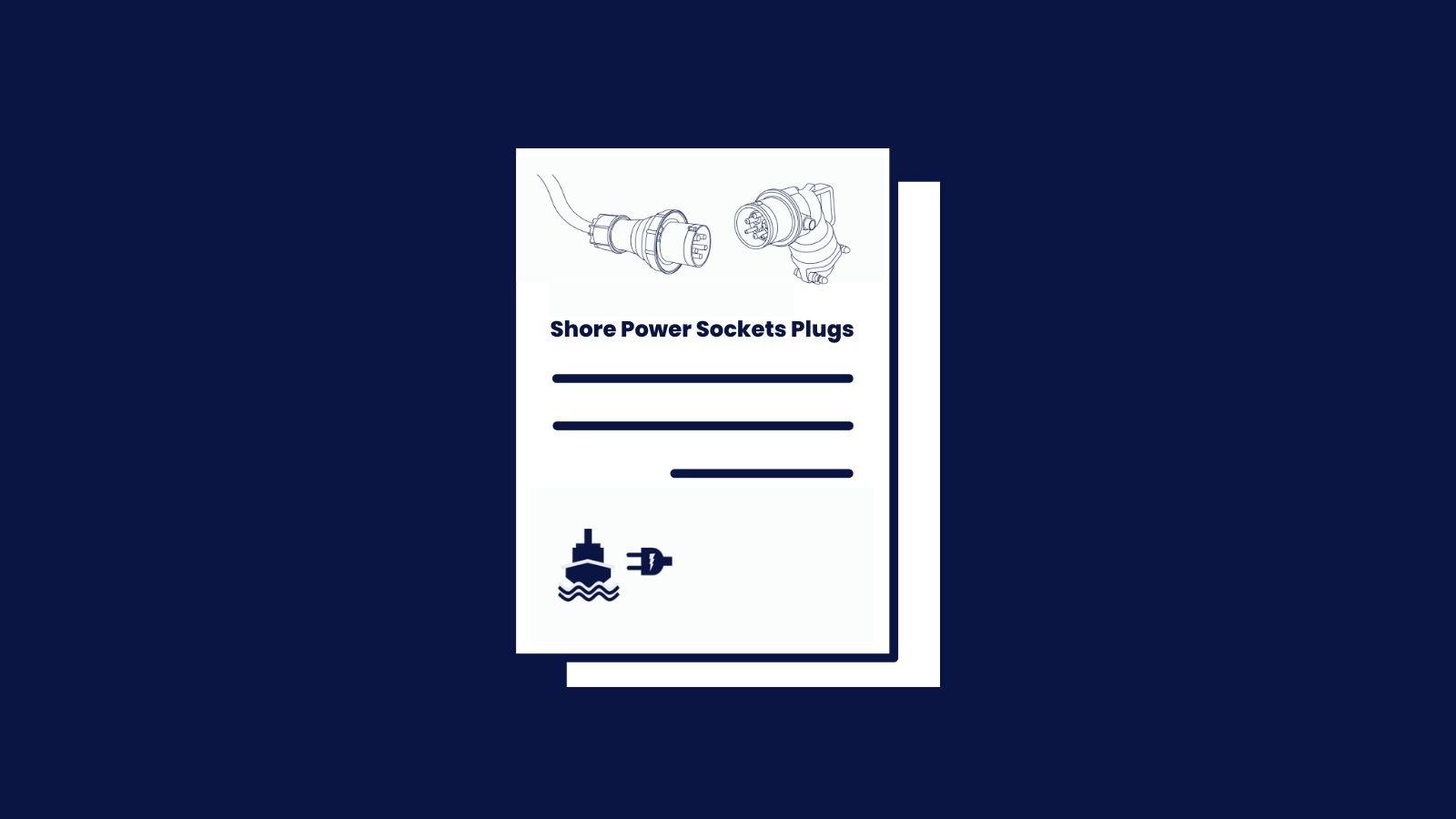
This E-book provides clear technical guidance on shore power sockets and plugs using the governing standard - IEC/IEEE 80005. All information in this E-book is based on this standard, summarized to provide quick and easy insights. This purchase will give you a complete guide on which socket and plug you need, the regulatory framework, ship-specific details where applicable plus a list with potential suppliers.
Use Apple Pay to purchase the Excel (only on iPhone) - contact helpdesk for payment by invoice

This PDF is a copy of the project BOEI report for internal use. Please be aware that the free-to-use version is available publicly online and can be found here. This copy is simply intended for ease of access to those who require a local version of the report.
Use Apple Pay to purchase the Excel (only on iPhone) - contact helpdesk for payment by invoice

This E-book provides techno-economic guidance for Ship-Based Carbon Capture (SBCC) onboard your vessel. It includes information on the workings of SBCC, operational impact and storage requirements for CO2, logistics and of course cost impact. All assumptions, numbers and data are based on 11 case studies, included in the E-book as an Excel, so you can make your own analyses. This purchase will give you a complete guide on ship-based carbon capture and storage for your vessel.
Use Apple Pay to purchase the Excel (only on iPhone) - contact helpdesk for payment by invoice

This e-book provides a comprehensive overview of the technical requirements, standards, HSE and what is required for retrofitting your vessel to methanol. In addition, it includes four case studies for economic reference to provide an estimate of the costs involved. On top of this four additional PDFs are included for further reference and guidance. This purchase will give you a complete guide on the state of methanol for your vessel.
Use Apple Pay to purchase the Excel (only on iPhone) - contact helpdesk for payment by invoice

This excel provides a tool to estimate your EEXI in 10 steps max. It includes references to MEPC, NAPA, ClassNK, Germanischer Lloyd, Bureau Veritas, NeRF and Shipowners Club. Four additional PDFs are included for further reference and guidance. This purchase will allow you to quickly reference and store your EEXI in different scenarios.
Use Apple Pay to purchase the Excel (only on iPhone) - contact helpdesk for payment by invoice

This excel provides a tool and detailed reference information on the carbon footprint of steel. It includes references to the World Steel Organization, IEA, Greenhouse Gas Protocol, CCALC2 and includes an additional reference of the Tony Gee Calculator. This purchase will allow you to quickly reference and store carbon footprint analyses of steel upon production and transportation over sea.
Use Apple Pay to purchase the Excel (only on iPhone) - contact helpdesk for payment by invoice
You might also like
How much power does a ship actually draw at berth? The same vessel can vary by 300%, sister ships doing exactly the same can differ by 30%, and Tankers of the same size can differ tenfold in installed capacity. This masterclass explains the methodology we use to estimate average shore power demand per ship category, using GT-based scaling functions and calibrated load factors built on 7,102 ships and 153 measured datasets.
Shore power is becoming mandatory in the EU from 2030, but no regulation says what it should cost. This masterclass explains how an OPS connection is defined, the three pricing models used across EU ports, what shipowners currently pay per kWh, and how that compares to generating electricity onboard.
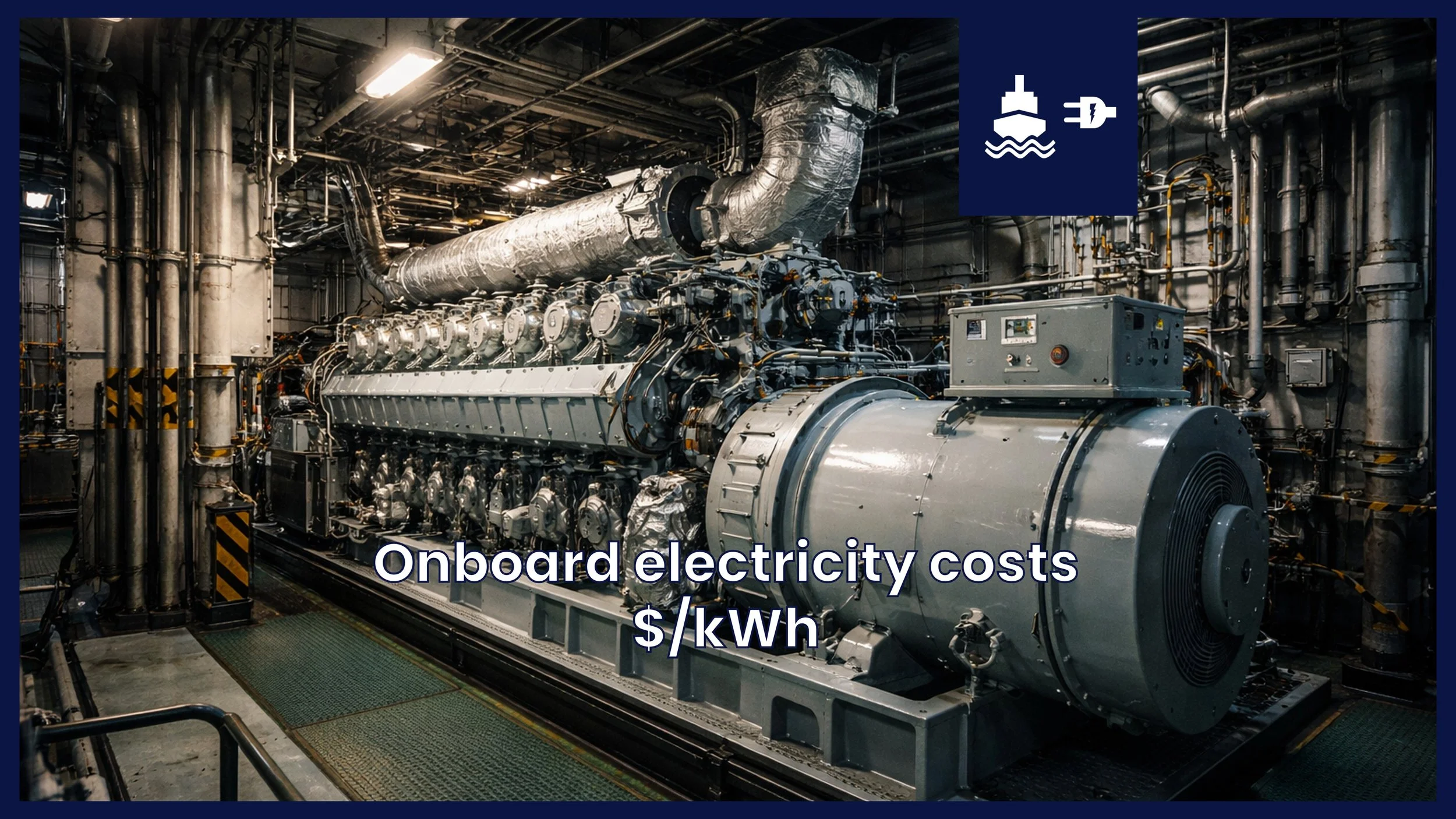
This case study determines the cost of generating electricity onboard a ship using auxiliary diesel engines to determine when it is more cost-effective to purchase electricity from the grid in port. Results show that fuel costs alone sit around $0.20 per kWh, but once regulatory compliance costs are layered on top, the total effective costs rise sharply to $1.00 per kWh by 2040.
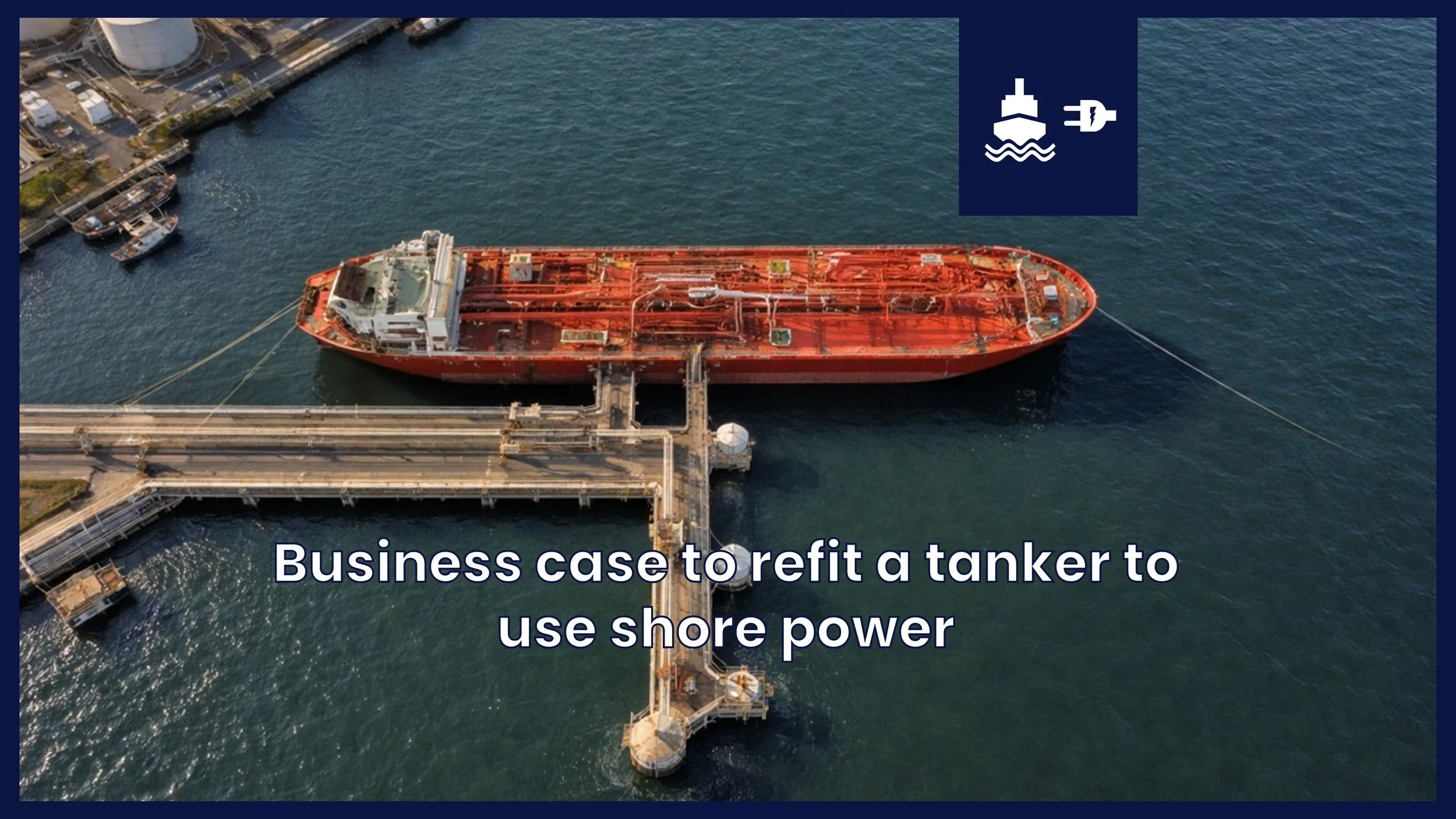
This case study explores the retrofit of the crude oil shuttle tanker Toril Knutsen to use onshore power supply (OPS) during port stays. The analysis assesses onboard retrofit requirements, power demand at berth, CAPEX, and the resulting business case. Total CAPEX is estimated at around $4M for a conservative tanker-specific configuration. Payback can fall in the range of 1 to 4 years, with most value driven by reduced FuelEU, EU ETS, and IMO-related compliance costs.
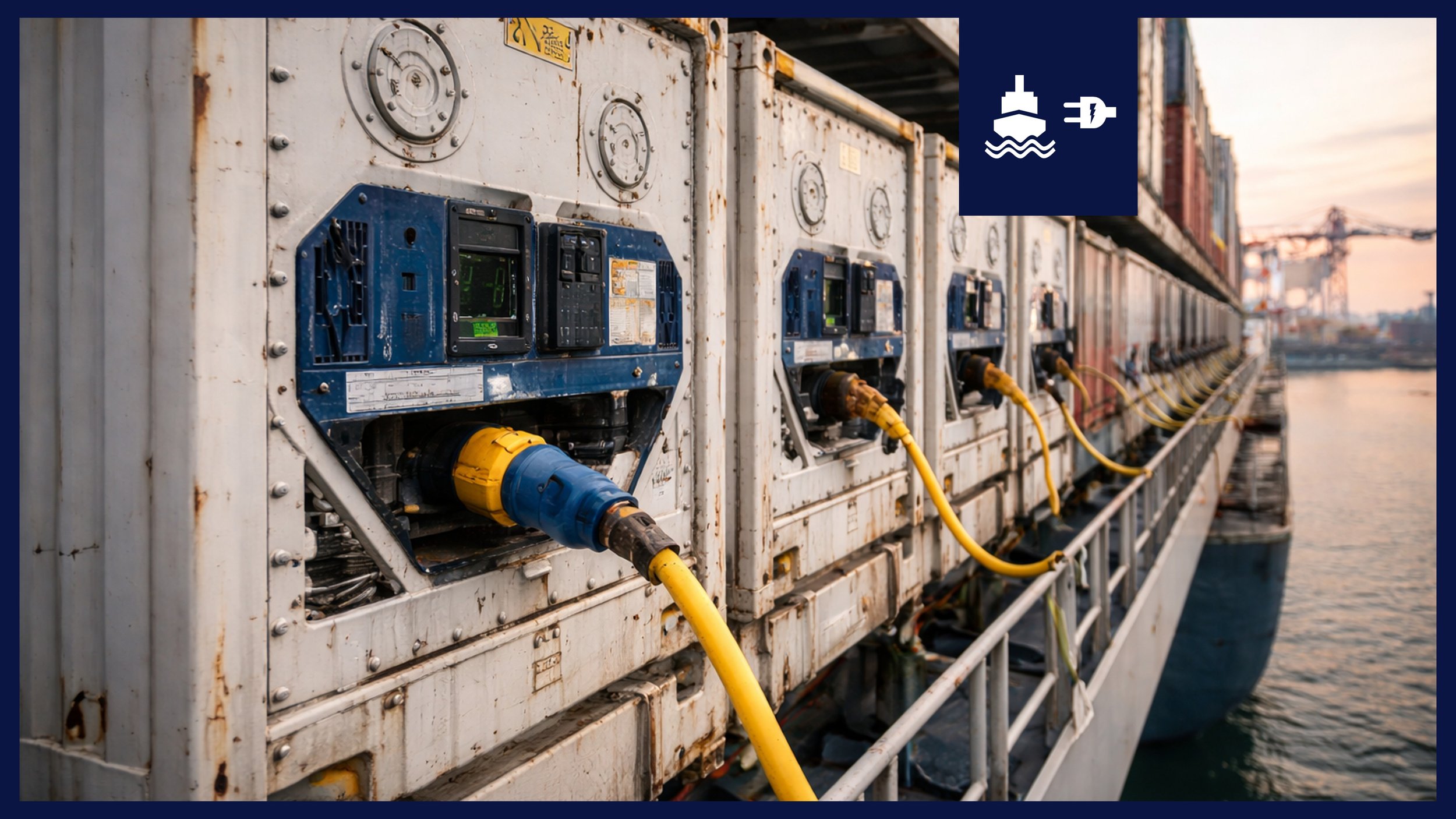
Reefers (Refrigerated Containers) increase power demand onboard container ships by approximately 4.38 kW per reefer container. The implication is material: even a relatively small share of reefers can account for a disproportionately large share of total berth power demand. Realtime measurements show that even when 1% of all containers onboard a ship are reefers, it can consume almost 20% of the ship’s total energy demand.

If shore power projects were easy, every port would already have them. Instead, developers run into the same fundamental challenges: unpredictable vessel power demand, complex infrastructure decisions, and business cases full of question marks. In this blog we look at those problems, and how our tools help you tackle them.
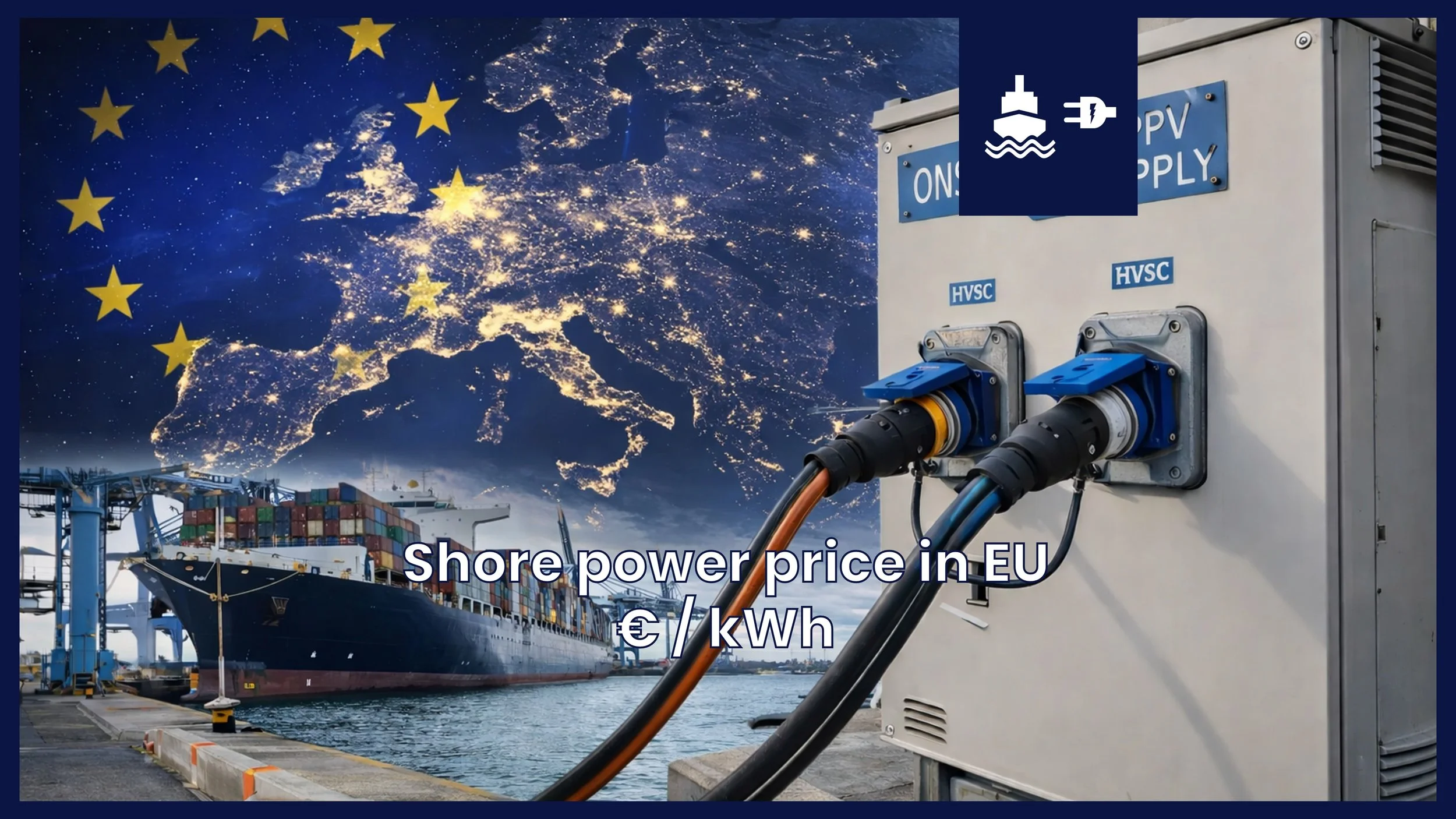
AFIR and FuelEU Maritime make the use of onshore power supply (OPS) effectively mandatory but say nothing about what it should cost or how it should be priced. The result is a patchwork of tariff designs and varying levels of transparency, making like-for-like comparisons difficult for shipowners and operators. This blog aims to provide at least some guidance on the matter.
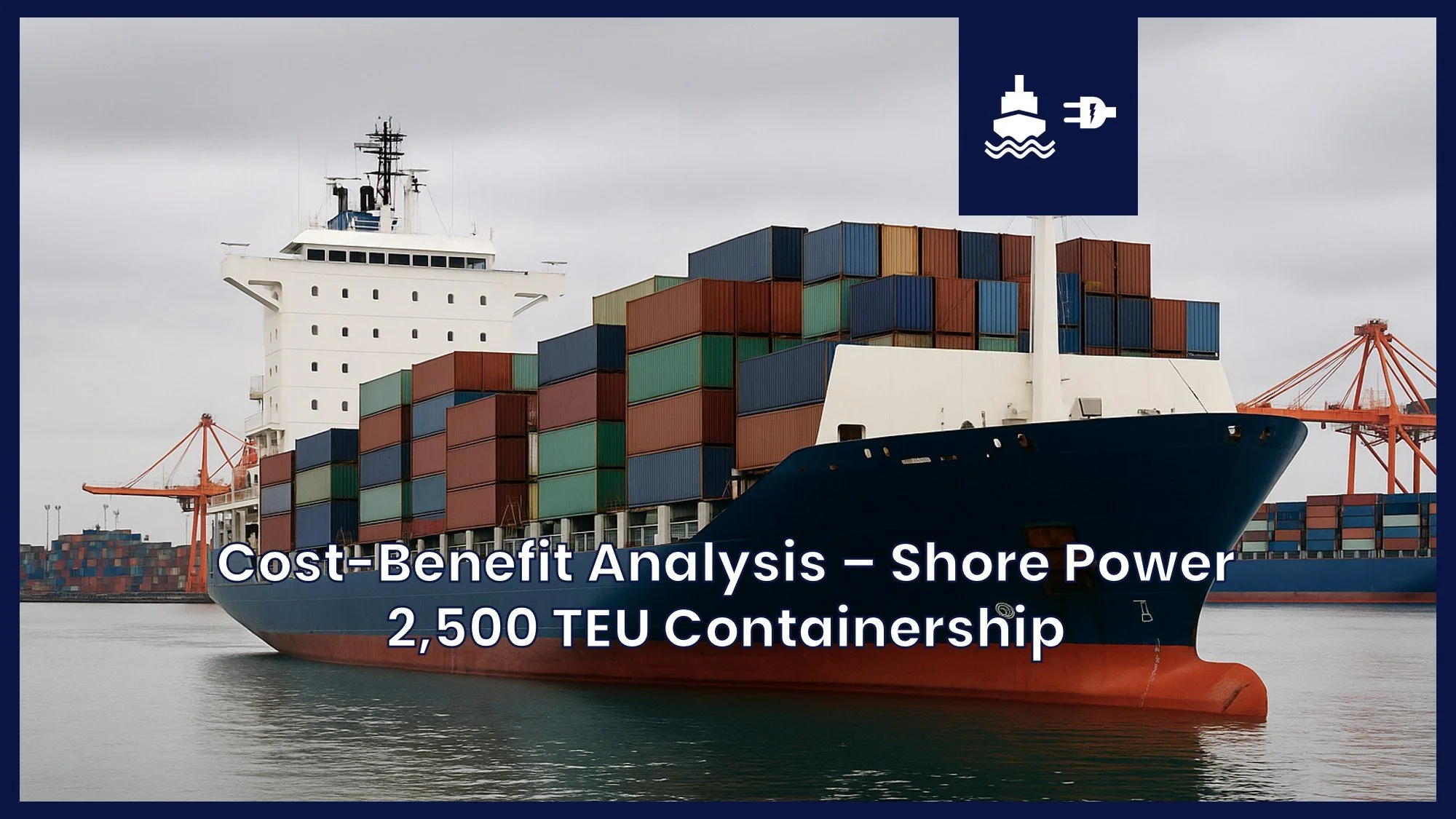
When does the use of shore power become cost-effective for shipowners under new EU and IMO regulations? Using the Shore Power Quickscan, this article breaks down key cost components such as fuel, electricity, EU ETS, FuelEU Maritime, and the upcoming IMO Net-Zero framework and compares cost impact of different routes on a 2,500 TEU containership. Results show that while shore power can already deliver savings from 2025 onwards (!), its competitiveness strengthens sharply after 2030 as compliance costs rise.

Accurate estimation of shore power demand at EU ports has become essential due to strict regulations like AFIR, which requires electrification for 90% of port calls by container and passenger ships at TEN-T ports by 2030. This blog evaluates three methods—using EU MRV fuel data, Sustainable Ships’ ship-specific power database, and ICCT research—to estimate the Total Addressable Market (TAM) for shore power. Results show the total annual electricity demand across EU ports is between approximately 6 and 13 TWh, highlighting the significant scale of infrastructure investment ahead.

This case study evaluates a mobile shore power battery barge designed for an offshore construction vessel in the Port of Rotterdam. An average power demand of 2.4 MW and a peak demand of 5 MW is assumed. This results in the requirement of twelve 20-ft containerized batteries integrated into a High Voltage Shore Connection (HVSC) system. Total costs of the power barge are estimated at $9.5M with a yearly revenue of approx. $2.5M.
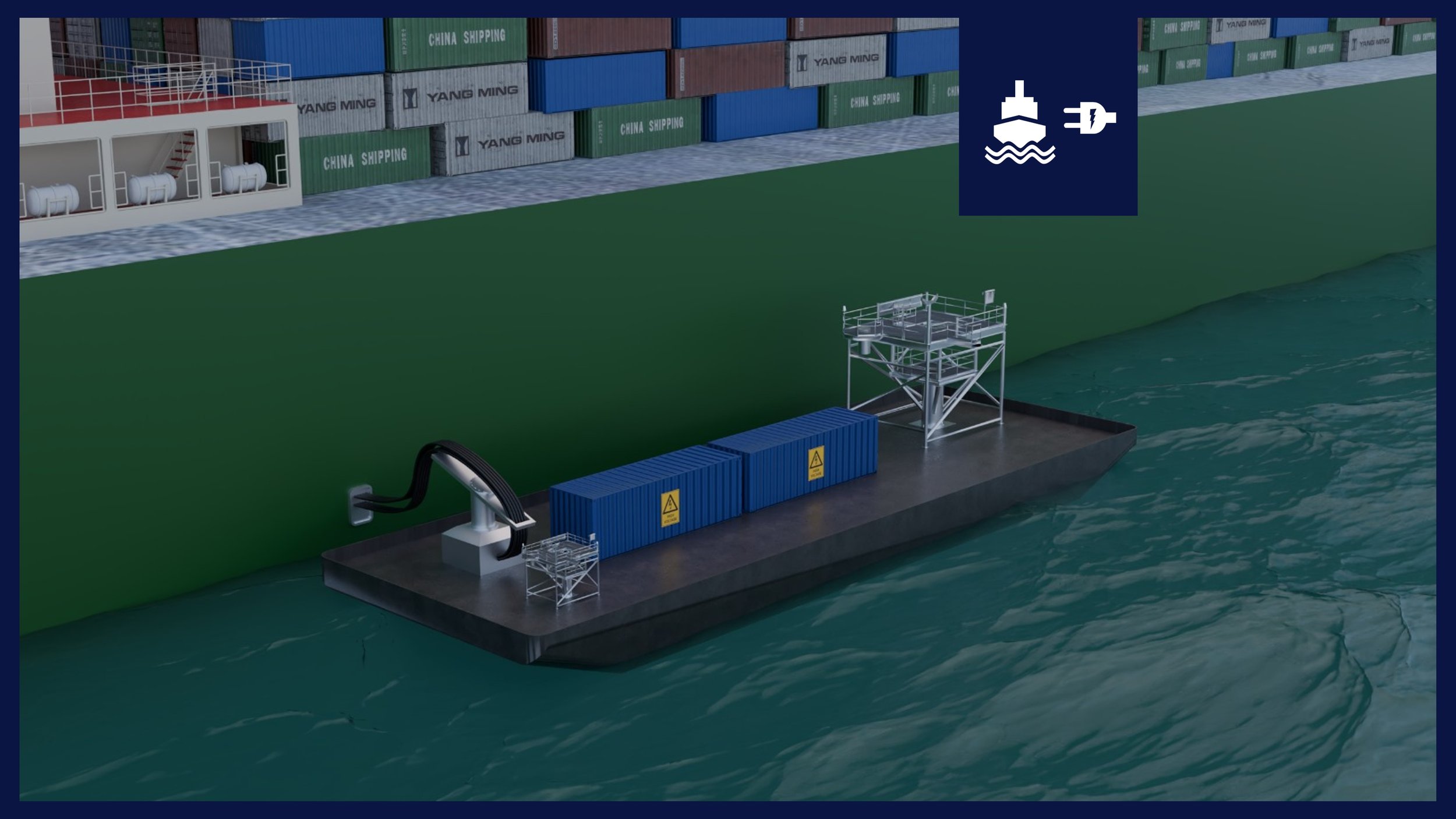
This case study evaluates a mobile shore power battery barge designed for a 1,730 TEU containership in the Port of Rotterdam. An average power demand of 329 kW and a peak demand of 1 MW is assumed. This results in the requirement of two 20-ft containerized batteries integrated into a Low Voltage Shore Connection (LVSC) system. Estimated savings for the ship reach €500 per 24-hour period, primarily due to reduced FuelEU compliance costs, which could exceed €600,000 over 10 years.

Accurate estimates of containership power demand are becoming increasingly critical due to stringent regulations, such as FuelEU Maritime, in combination with technical complexities. Ship power demand varies significantly depending on size, onboard equipment installed, and operational profile. These uncertainties places considerable pressure on terminal owners, port authorities, and developers to design and implement shore power infrastructure. This blog aims to provide guidance on this issue.

This case study determines the impact of FuelEU Maritime on a shore power refit for a RoRo Cargo ship under multiple loading and operational conditions. Pending on the amount of days connected to the grid and the average load while moored, it is estimated that shore power can save €250,000 per year.

This case study also examines a general cargo ship with an auxiliary engine of 116 kW that is outfitted with a battery to make it a ‘battery hybrid’ while at berth. Again the battery pack powers the ship for several hours while idling or moored and is recharged using the auxiliary engines. This time however, engine load is varied in different loading scenarios to determine the impact of different operational profiles on the business case.

This case study examines a general cargo ship with an auxiliary engine of 116 kW that is outfitted with a battery to make it a ‘battery hybrid’ while at berth. The battery pack powers the ship for several hours while idling or moored and is recharged using the auxiliary engines. Cost savings generally occur with an average engine load below 50%, but are mostly dependent on engine maintenance costs, spares and consumables as well as total battery pack costs.

This is a case study that determines the impact of FuelEU Maritime on a shore power refit business case up to 2050, taking several ships and varying input parameters to determine the impact under multiple conditions. As FuelEU Maritime will make shore power mandatory in 2030 for passenger- and containerships, this tool will help to determine the impact of that regulation on your business case.

This is a techno-economic case study that provides guidance for decarbonizing a feeder by means of a shore power refit. Shore power will be made mandatory by 2030 for these ship types as per FuelEU Maritime regulation. A step-by-step approach is given to estimate costs, analyse technical feasibility, and create a business case for the shore power refit in general.
How do we deal with the challenges surrounding shore power? Why is standardization so important? And what will we achieve with collaboration? Find out together with Fanni Arvai, Innovation & Sustainability Manager at International Car Operators and passionate about changing the maritime industry in a positive way with a vision for a more inclusive and environmentally conscious future.
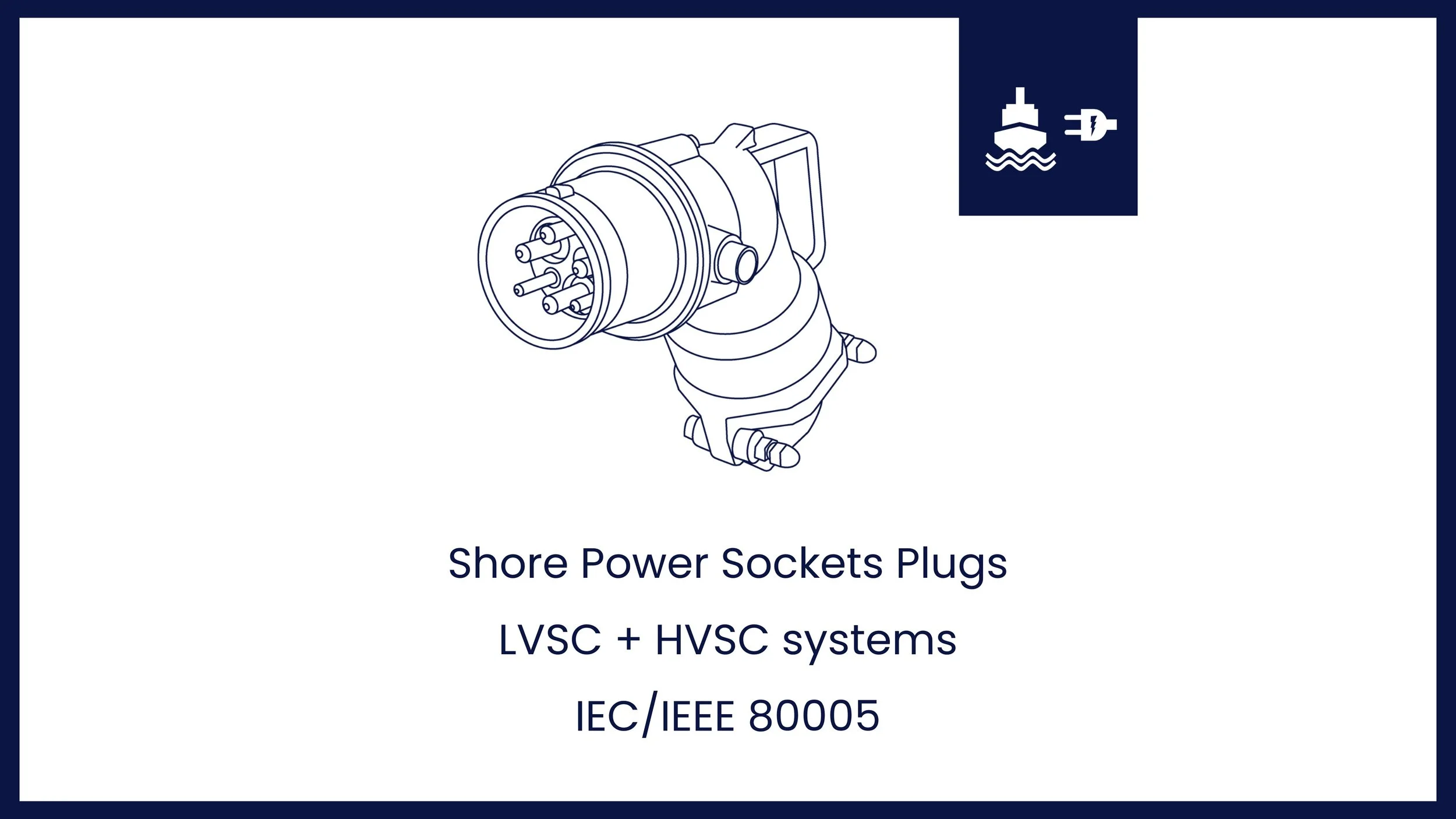
IEC/IEEE 80005 is the main standard for shore power. This standard categorically divides shore power plugs and sockets into low voltage shore connection systems (LVSC < 1 MVA) and high voltage shore connection systems (HVSC > 1 MVA). LVSC systems are governed by IEC/IEEE 80005-3 for operability and IEC 60309-5 for dimensions. HVSC systems are governed by IEC/IEEE 80005-1 for operability and IEC 62613-2 for dimensions.

On behalf of the Province of South-Holland, Sustainable Ships has been project leader of 'Project BOEI’, a techno-economic feasibility study on the electrification of tankers off the coast of Scheveningen, Netherlands. The study was performed with consortium members InnovationQuarter, Bluewater, Knutsen, EOPSA, Rijkswaterstaat, Campus@Sea, Port of Rotterdam, KVNR and Cavotec. This lunch and learn is the recording of the close-out session in which main findings were presented.

Project BOEI is a techno-economic feasibility study on behalf of the Province of South-Holland on the electrification of tankers at the Scheveningen anchorage. The goal is to identify the most feasible technical solutions and risks, in addition to cost and emissions reduction estimation. Primary drivers are reduction of NOx and CO2 emissions. Total costs for all scopes combined is €14M (~€12M for infra and ~€2M for ship). E-anchor and subsea cabling are approximately 50% of all cost. Break-even price parity for shipowner and provider of power is at around €0.20-€0.25 per kWh.

Renewable Energy Units - Hernieuwbare Brandstof Eenheden - are a Dutch system of certificates based on the EU Renewable Energy Directive (RED). Under the system, parties that produce liquid fossil fuels for transport have an obligation from the government to purchase REUs. Per year, €1 billion REUs are traded in the Netherlands. You can earn between 4.5 and 18 eurocents per kWh ‘sold’ to a vessel, for example when using shore power.

This is a case study on the ‘Skoon Skipper’, a general cargo large Rhine vessel, with an average of 40 [kW] power demand while moored to which a shore battery is applied. Batteries can help you comply with shore power regulations where no infrastructure exists with limited to no CAPEX investments. CAPEX is €0 for this case study as the battery pack is rented at an estimated €400 dayrate. Purchase cost for battery pack are approx. €350.000. This case study is powered by our preferred partner Skoon.

Maersk’s Stillstrom and North Star have signed a Memorandum of Understanding (MoU) to accelerate the adoption of offshore charging and vessel electrification technologies for Offshore Support Vessels (OSVs) in the offshore wind sector. Offshore charging hubs will enable the vessels to recharge their battery systems using wind energy while in the field.

This is a case study on how to decarbonize a fishing trawler - the Jacobus Maria - using shore power, battery hybrid EES and biofuels. 20% CO2 reduction is achieved, half of which stems from the use of biofuels (HVO). The hybrid battery pack is economically not feasible with the assumptions used and the operational profile. The Jacobus Maria has 1 MW installed engine capacity. Total cost would be at least €1M. 10% CO2 reduction can be achieved with approx. €50k.
On May 10th, Port of Amsterdam awarded the contract for the realization of shore power at Cruise Port Amsterdam (CPA) to Powercon A/S and with BAM as subcontractor. Dick van Veen and Rick van Akkeren - BAM Business Unit Heavy Duty Charging - explain in detail about the project and the challenges that they are facing. Building the infrastructure that can host large cruise vessels and support the heavy electrical equipment is therefore a daunting task, all of which is discussed in this video.

Watch this lunch and learn by EOPSA together with General Electric, in which we discuss the onshore and vessel aspects of shore power, including microgrids and using the Decarbonizer to determine the costs for shore power for your vessel.

Ports are the start and end of every vessel’s journey. Because of this, onshore power supply undeniably plays a big part of the decarbonization of the maritime industry. Creating a network of onshore power supply in ports around the world is a tremendous but necessary task. One of the companies providing the technology for this transition is ShoreLink. Watch this lunch and learn by Shorelink, presented by Levan Chikviladze, to learn more.

Watch this lunch and learn with EOPSA Founding President Roland Teixeira de Mattos, who will tell all about EOPSA, its growth, its advocacy, its outlook and the broader topic of Port Energy.

This blog provides an overview of (European/Dutch) shore power sockets and plugs. They are categorized into three groups, depending on a ship’s installed power: below 100 kW, below 2.000 kW and above 2.000 kW. Especially below 100 kW, there is great diversification of plugs which would merit the creation of a ‘universal adapter’ for ships. Share your experience to help other shipowners.
The OPS Connections and Prices Database catalogues 200+ shore power connection points across EU ports, capturing system specifications, AFIR designation, tariff structures, and pricing where publicly available. Drawing on port authority tariff publications, AFIR TEN-T designation lists, DNV, EMSA, ICCT, ESPO, and operational data from members and partners, the database documents shore power infrastructure across five layers of granularity: connection point, berth, terminal, port, and country.
Use Apple Pay to purchase the Excel (only on iPhone) - contact helpdesk for payment by invoice