
Case studies | Find examples on decarbonization measures, costs and regulations to benchmark your business case
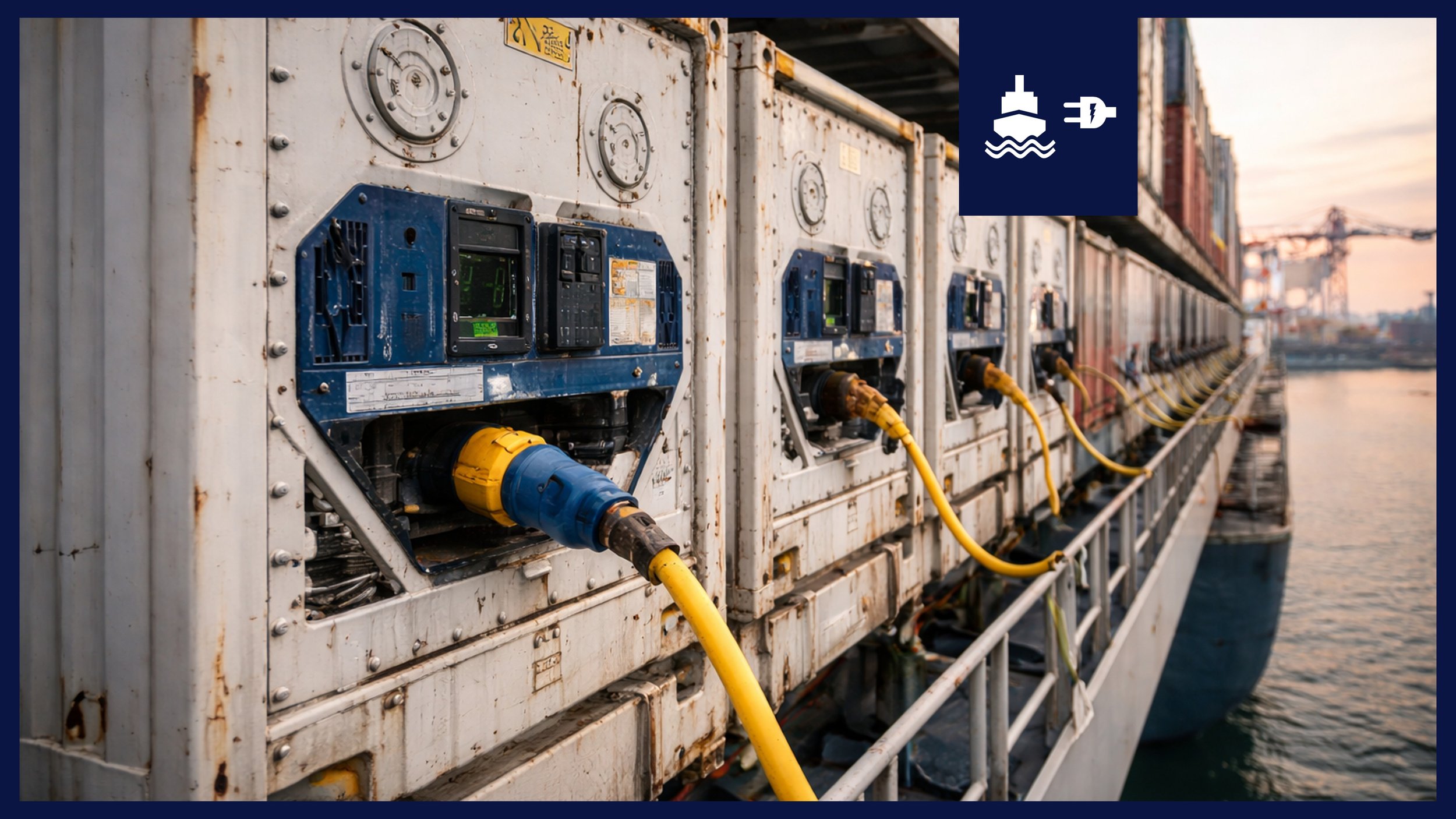
Impact of reefers on container ship power demand
Reefers (Refrigerated Containers) increase power demand onboard container ships by approximately 4.38 kW per reefer container. The implication is material: even a relatively small share of reefers can account for a disproportionately large share of total berth power demand. Realtime measurements show that even when 1% of all containers onboard a ship are reefers, it can consume almost 20% of the ship’s total energy demand.

What is the average shore power demand of a container ship?
Accurate estimates of containership power demand are becoming increasingly critical due to stringent regulations, such as FuelEU Maritime, in combination with technical complexities. Ship power demand varies significantly depending on size, onboard equipment installed, and operational profile. These uncertainties places considerable pressure on terminal owners, port authorities, and developers to design and implement shore power infrastructure. This blog aims to provide guidance on this issue.

How to decarbonize your ship - Feeder + Shore Power
This is a techno-economic case study that provides guidance for decarbonizing a feeder by means of a shore power refit. Shore power will be made mandatory by 2030 for these ship types as per FuelEU Maritime regulation. A step-by-step approach is given to estimate costs, analyse technical feasibility, and create a business case for the shore power refit in general.

COSCO 700 TEU Full Electric Container Ship
The N997 has two propulsion motors with a capacity of 900 [kW] each and a total battery capacity of 50 [MWh] - best estimate currently available. The 120 meter long ship has a fully electric drive, can carry up to 700 TEU and is able to swap battery packs en route. The vessel is designed for Chinese inland and coastal waters, covering over 600 nautical miles of routes on the Yangtze River.
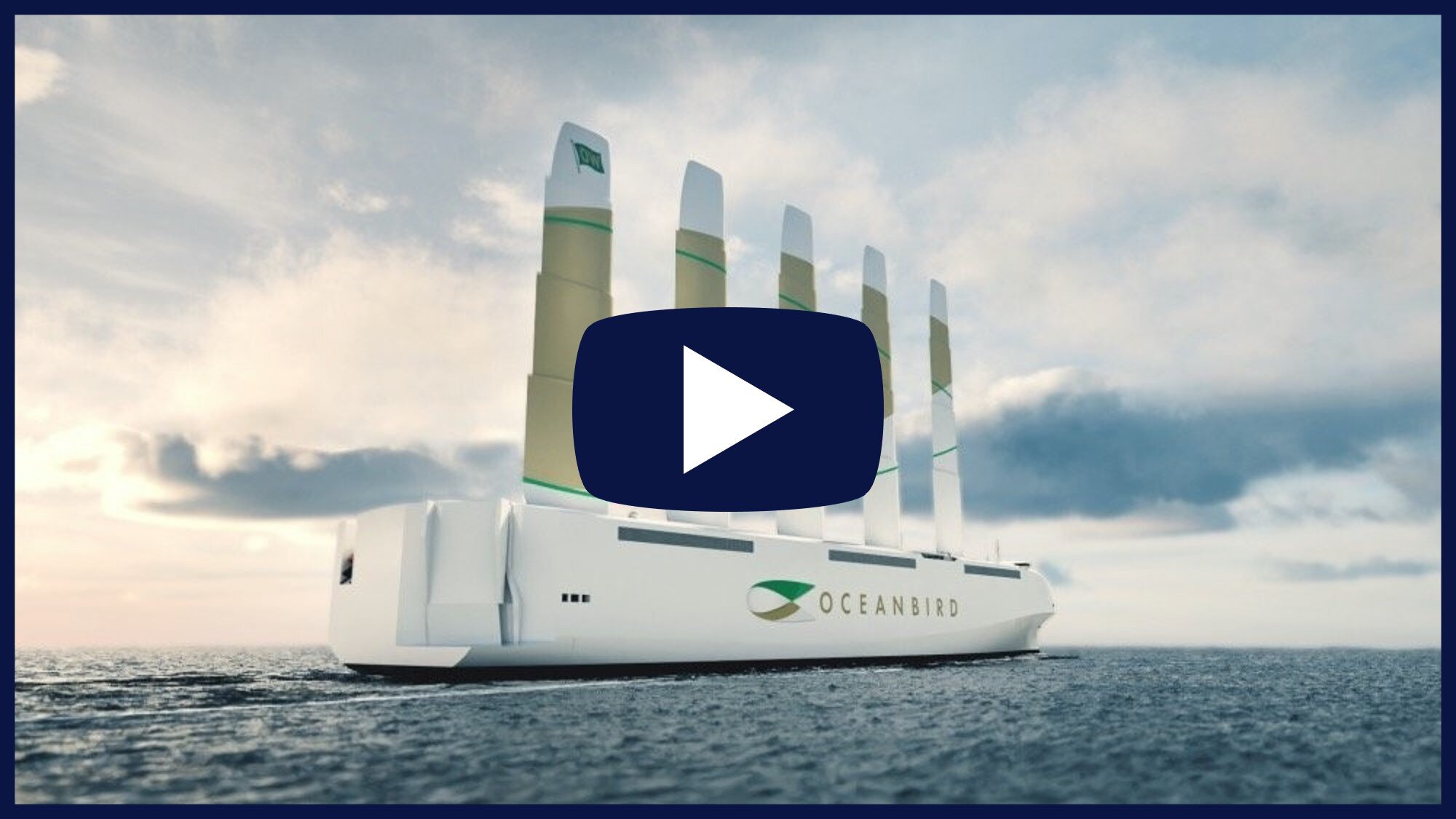
Introducing Oceanbird – the wind powered cargo vessel
Pioneering an innovative wind-powered propulsion technology, Wallenius Marine is launching Oceanbird as a next-generation, sustainable transport vessel. Here’s Carl-Johan Söder Naval Architect & Project Manager for Oceanbird with perspective on how Oceanbird promises to smash the International Maritime Organisation’s climate emission targets.
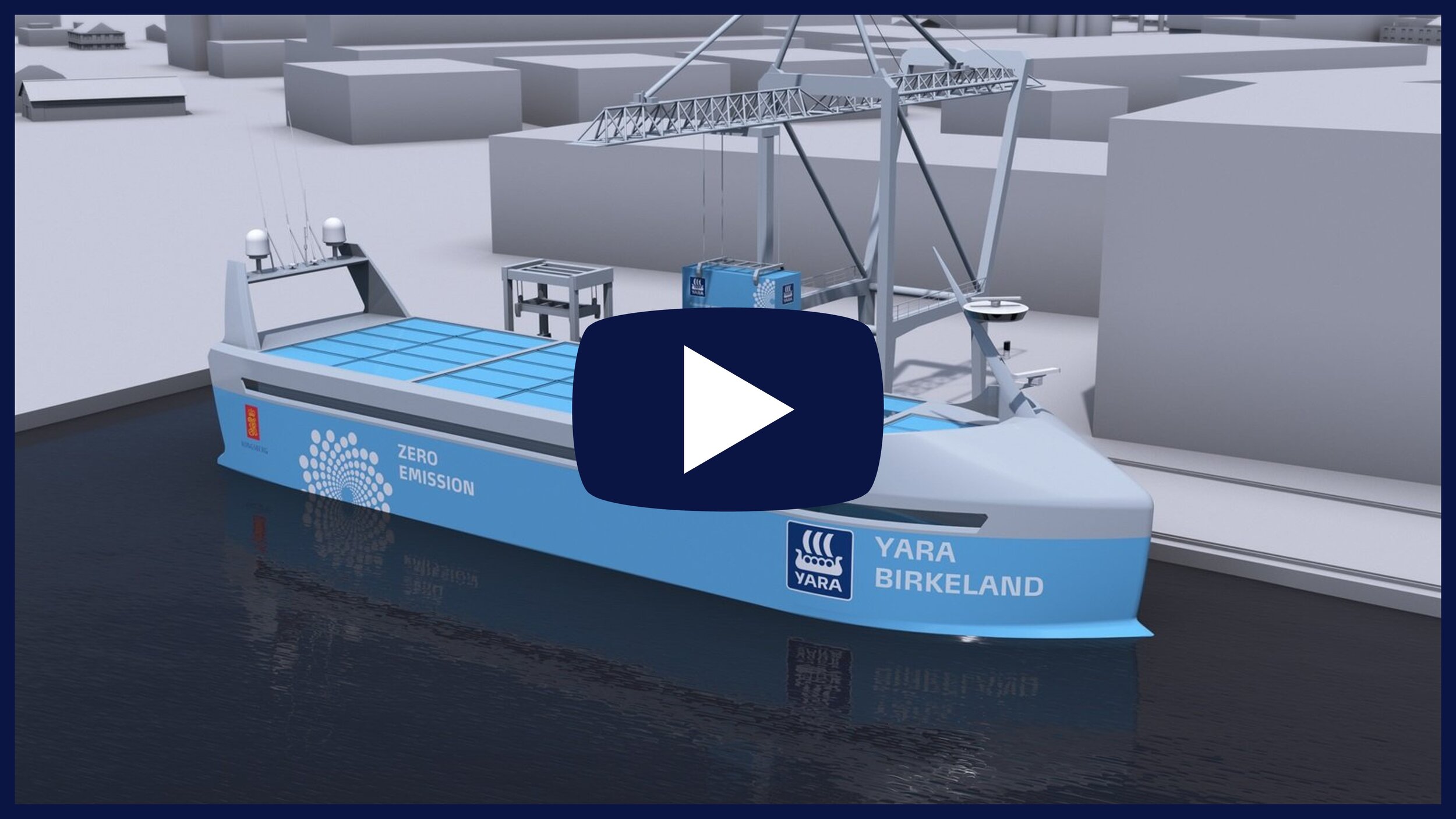
World’s ‘first’ autonomous, zero emission container ship
The world’s first zero-emissions, autonomous ship. This is a game changer and a result of collaboration with Kongsberg, a global technology company, that will eventually change the world of maritime transport.