-
The Shore Power Terminal Tool is designed to provide you with a business case for a shore power conversion of a singe berth terminal, the main goal being to determine proper kWh prices for both shore and ship side. Users are guided through inputting quay and ship details, operational profiles, equipment details, and other input parameters such as prices for fuel and electricity to create a customized business case for implementing shore power on your terminal. The tool includes:
CAPEX calculations for shore and ship infrastructure, which can be validated by preferred partners upon request.
OPEX calculations for both shore and ship side, including fuel and electricity, maintenance costs, FuelEU and EU ETS, plus financing costs if applicable.
Technical guidance based on applicable standards, predominantly ISO 80001-3, as well as TtW and WtW emissions calculations.
Users can fully customize quay and ship details, equipment specifications, and input parameters in the webtool to create a tailored business case.
The tool offers tooltips and guidance to assist users in understanding the calculations and making informed decisions.
Fore more customization options, download the Excel sheet and/or report. Contact the helpdesk for expert support or consultancy.
Feasibility study
The premium tool is accompanied with a feasibility study template to further accelerate your shore power developments.
How the tool works
Watch the tutorial for a step-by-step explanation of the tool, or check the case studies below. Members can contact the helpdesk for support.
Access premium tool and benefits

Premium tools and expert support at your fingertips
The Shore Power Quickscan is a comprehensive tool designed to provide a business case for a shore power refit onboard vessels, based on IEC/IEEE 80005. It includes CAPEX estimates, operational expenses including fuel costs and engine maintenance, emissions savings as well as key regulations such as FuelEU and EU ETS. This purchase allows you to store your calculations, work offline anywhere, plus print a comprehensive techno-economic feasibility that you can show off to friends or your management.
Use Apple Pay to purchase the Excel (only on iPhone) - contact helpdesk for payment by invoice
Check pay-per-use options if you don’t want to sign up
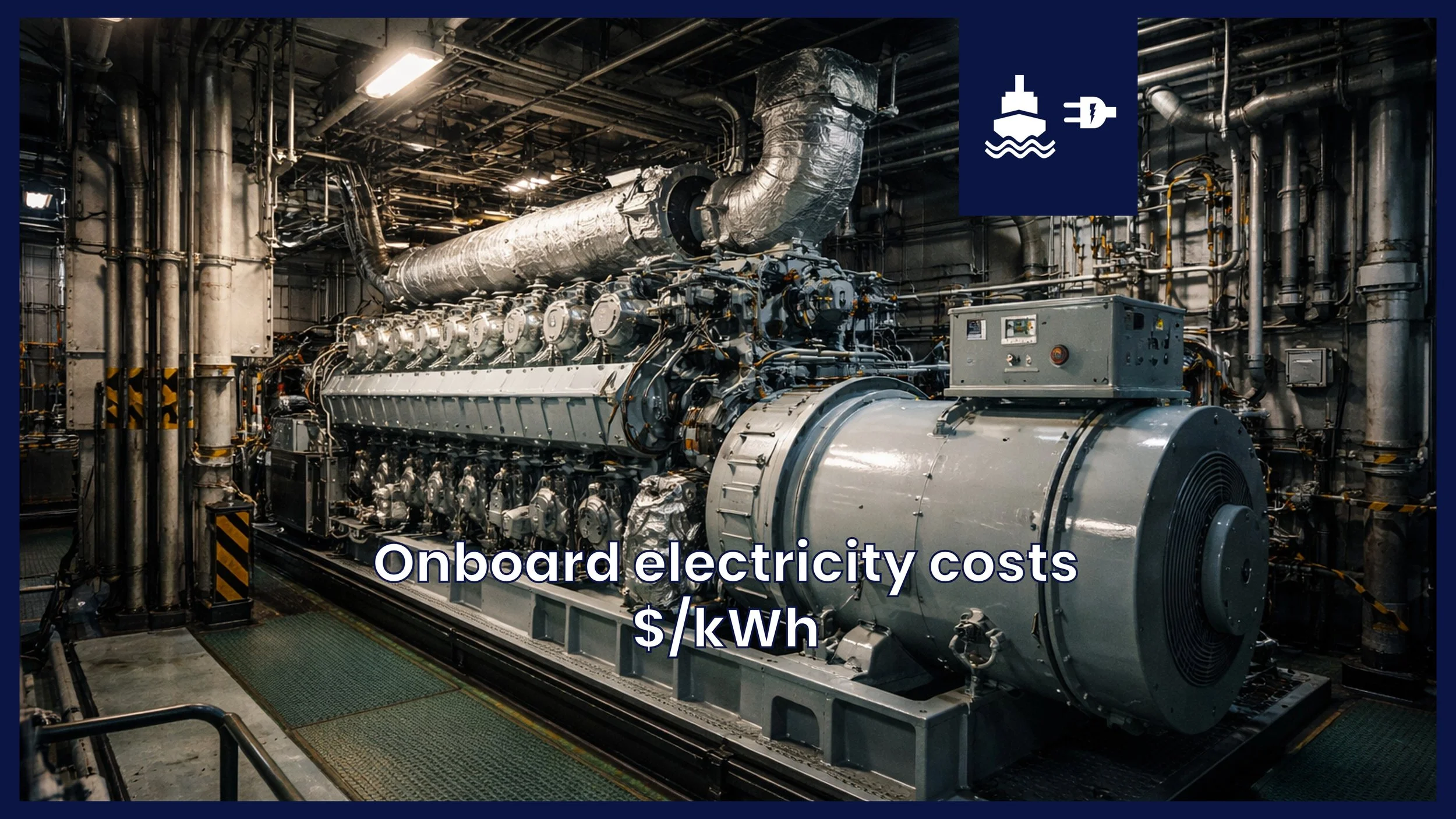
This case study determines the cost of generating electricity onboard a ship using auxiliary diesel engines to determine when it is more cost-effective to purchase electricity from the grid in port. Results show that fuel costs alone sit around $0.20 per kWh, but once regulatory compliance costs are layered on top, the total effective costs rise sharply to $1.00 per kWh by 2040.
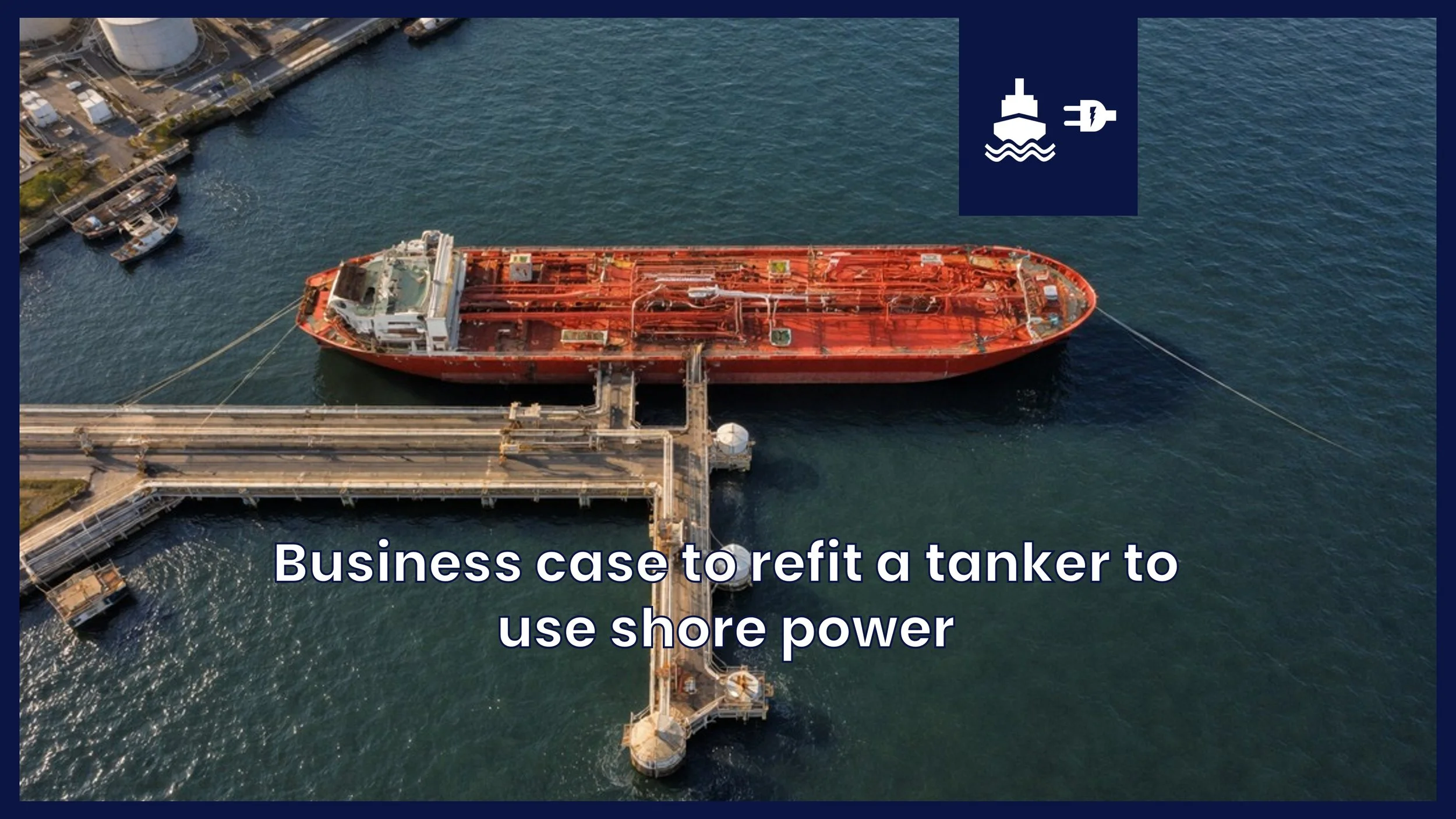
This case study explores the retrofit of the crude oil shuttle tanker Toril Knutsen to use onshore power supply (OPS) during port stays. The analysis assesses onboard retrofit requirements, power demand at berth, CAPEX, and the resulting business case. Total CAPEX is estimated at around $4M for a conservative tanker-specific configuration. Payback can fall in the range of 1 to 4 years, with most value driven by reduced FuelEU, EU ETS, and IMO-related compliance costs.
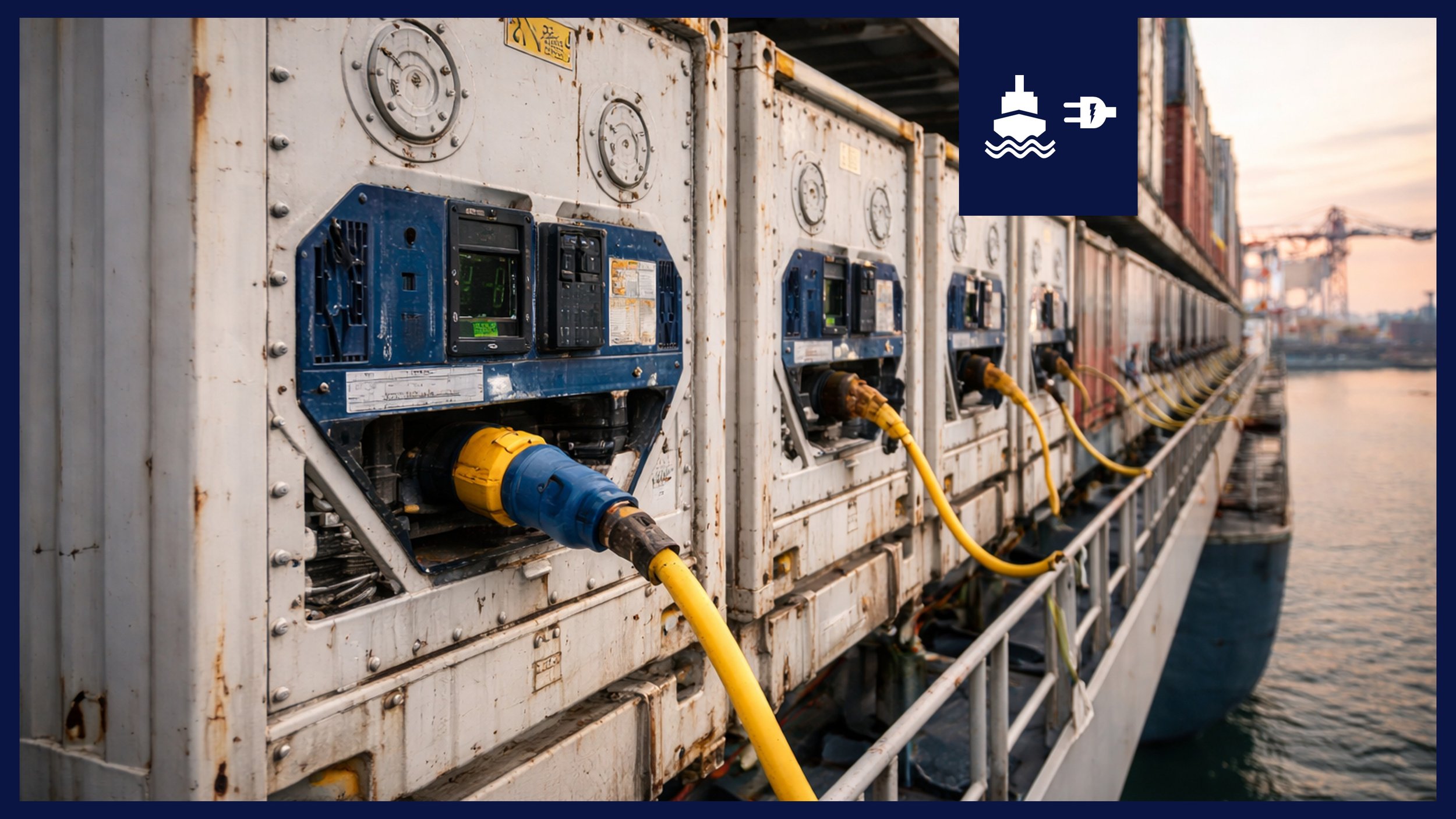
Reefers (Refrigerated Containers) increase power demand onboard container ships by approximately 4.38 kW per reefer container. The implication is material: even a relatively small share of reefers can account for a disproportionately large share of total berth power demand. Realtime measurements show that even when 1% of all containers onboard a ship are reefers, it can consume almost 20% of the ship’s total energy demand.
If shore power projects were easy, every port would already have them. Instead, developers run into the same fundamental challenges: unpredictable vessel power demand, complex infrastructure decisions, and business cases full of question marks. In this blog we look at those problems, and how our tools help you tackle them.
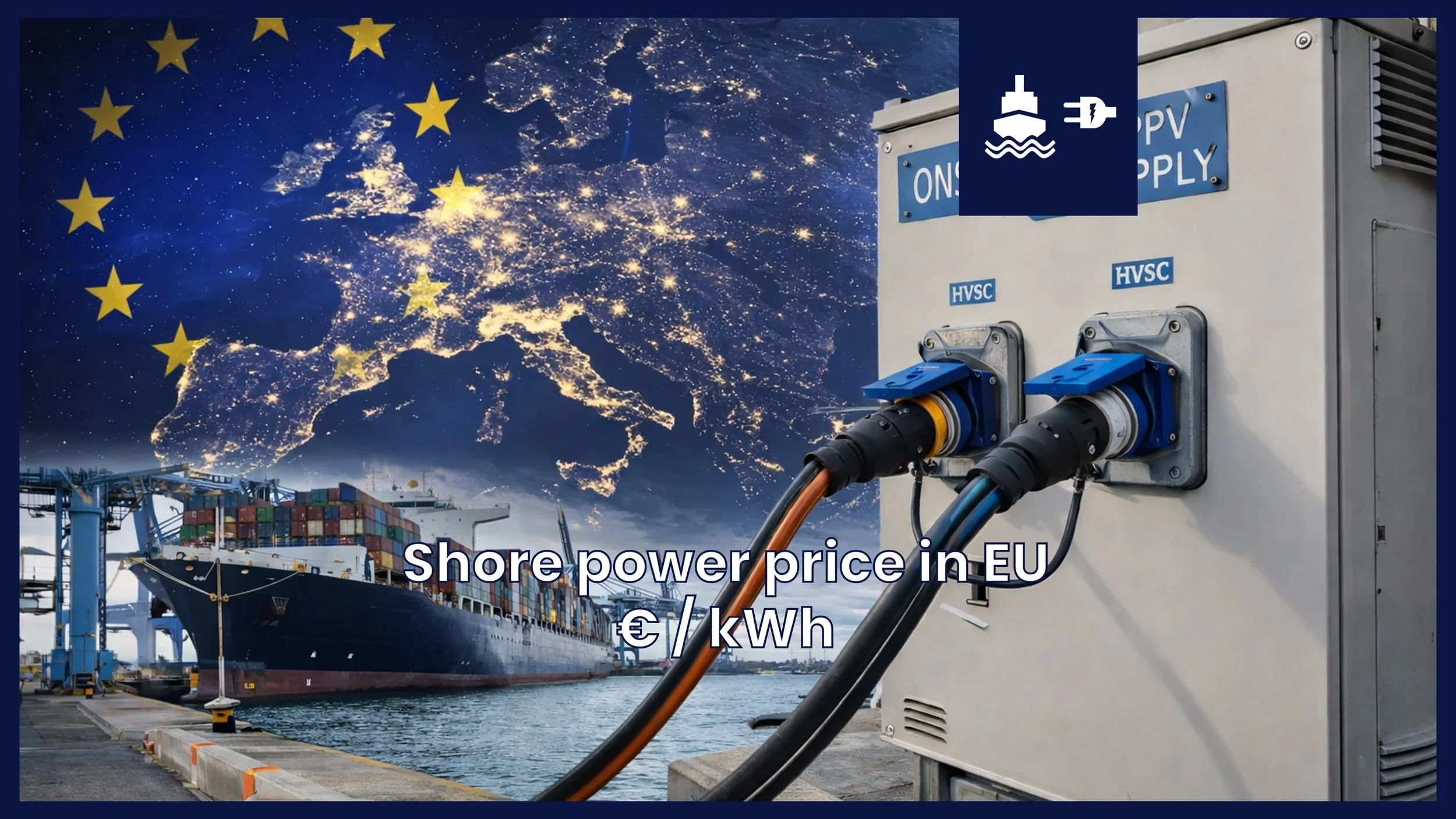
AFIR and FuelEU Maritime make the use of onshore power supply (OPS) effectively mandatory but say nothing about what it should cost or how it should be priced. The result is a patchwork of tariff designs and varying levels of transparency, making like-for-like comparisons difficult for shipowners and operators. This blog aims to provide at least some guidance on the matter.
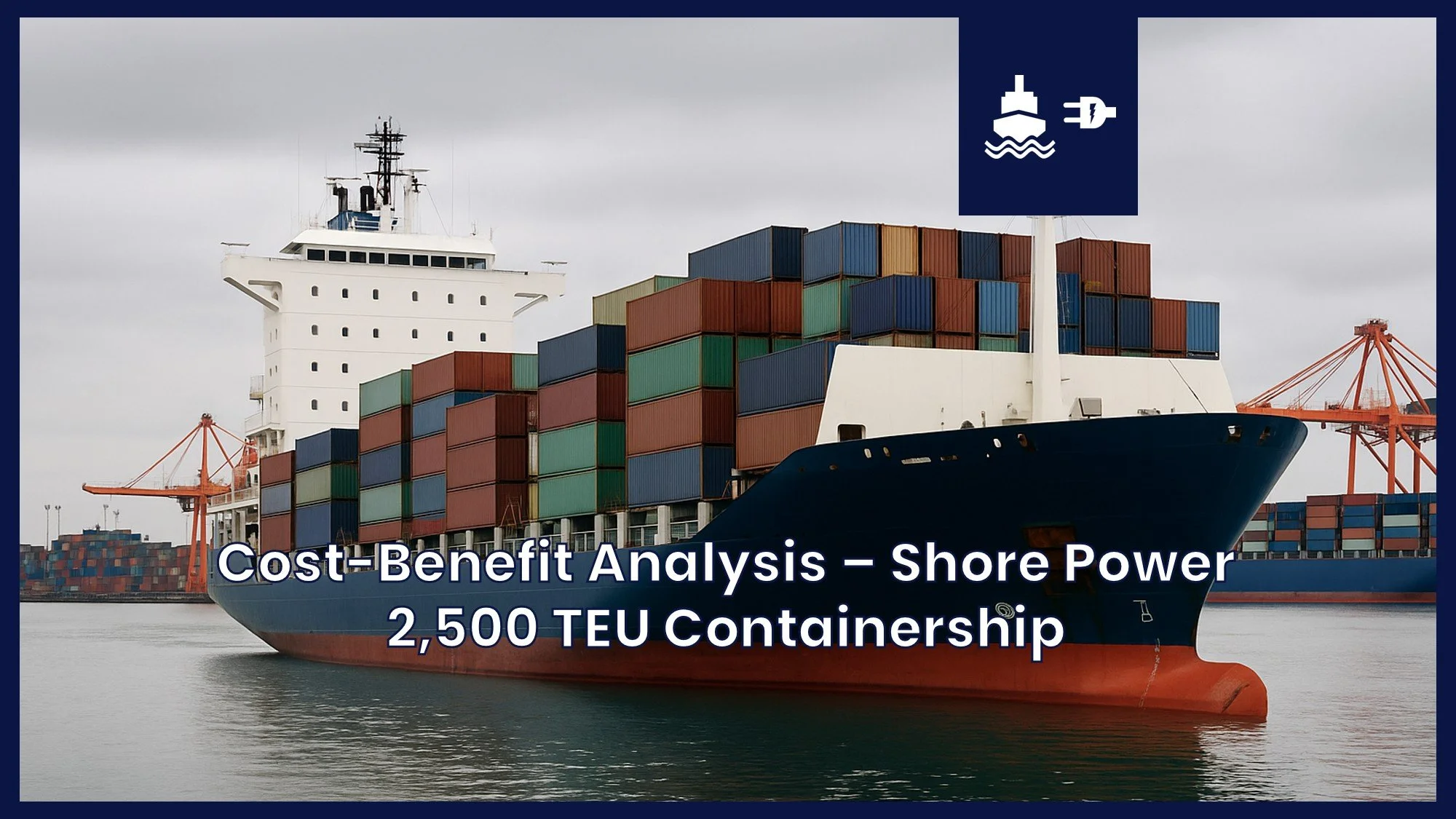
When does the use of shore power become cost-effective for shipowners under new EU and IMO regulations? Using the Shore Power Quickscan, this article breaks down key cost components such as fuel, electricity, EU ETS, FuelEU Maritime, and the upcoming IMO Net-Zero framework and compares cost impact of different routes on a 2,500 TEU containership. Results show that while shore power can already deliver savings from 2025 onwards (!), its competitiveness strengthens sharply after 2030 as compliance costs rise.
Accurate estimation of shore power demand at EU ports has become essential due to strict regulations like AFIR, which requires electrification for 90% of port calls by container and passenger ships at TEN-T ports by 2030. This blog evaluates three methods—using EU MRV fuel data, Sustainable Ships’ ship-specific power database, and ICCT research—to estimate the Total Addressable Market (TAM) for shore power. Results show the total annual electricity demand across EU ports is between approximately 6 and 13 TWh, highlighting the significant scale of infrastructure investment ahead.
Accurate estimates of containership power demand are becoming increasingly critical due to stringent regulations, such as FuelEU Maritime, in combination with technical complexities. Ship power demand varies significantly depending on size, onboard equipment installed, and operational profile. These uncertainties places considerable pressure on terminal owners, port authorities, and developers to design and implement shore power infrastructure. This blog aims to provide guidance on this issue.
This case study determines the impact of FuelEU Maritime on a shore power refit for a RoRo Cargo ship under multiple loading and operational conditions. Pending on the amount of days connected to the grid and the average load while moored, it is estimated that shore power can save €250,000 per year.
This is a case study that determines the impact of FuelEU Maritime on a shore power refit business case up to 2050, taking several ships and varying input parameters to determine the impact under multiple conditions. As FuelEU Maritime will make shore power mandatory in 2030 for passenger- and containerships, this tool will help to determine the impact of that regulation on your business case.
This is a techno-economic case study that provides guidance for decarbonizing a feeder by means of a shore power refit. Shore power will be made mandatory by 2030 for these ship types as per FuelEU Maritime regulation. A step-by-step approach is given to estimate costs, analyse technical feasibility, and create a business case for the shore power refit in general.
How much power does a ship actually draw at berth? The same vessel can vary by 300%, sister ships doing exactly the same can differ by 30%, and Tankers of the same size can differ tenfold in installed capacity. This masterclass explains the methodology we use to estimate average shore power demand per ship category, using GT-based scaling functions and calibrated load factors built on 7,102 ships and 153 measured datasets.