Case studies | Find examples on decarbonization measures, costs and regulations to benchmark your business case
Shore Power (OPS) Connections and Prices Masterclass
Shore power is becoming mandatory in the EU from 2030, but no regulation says what it should cost. This masterclass explains how an OPS connection is defined, the three pricing models used across EU ports, what shipowners currently pay per kWh, and how that compares to generating electricity onboard.
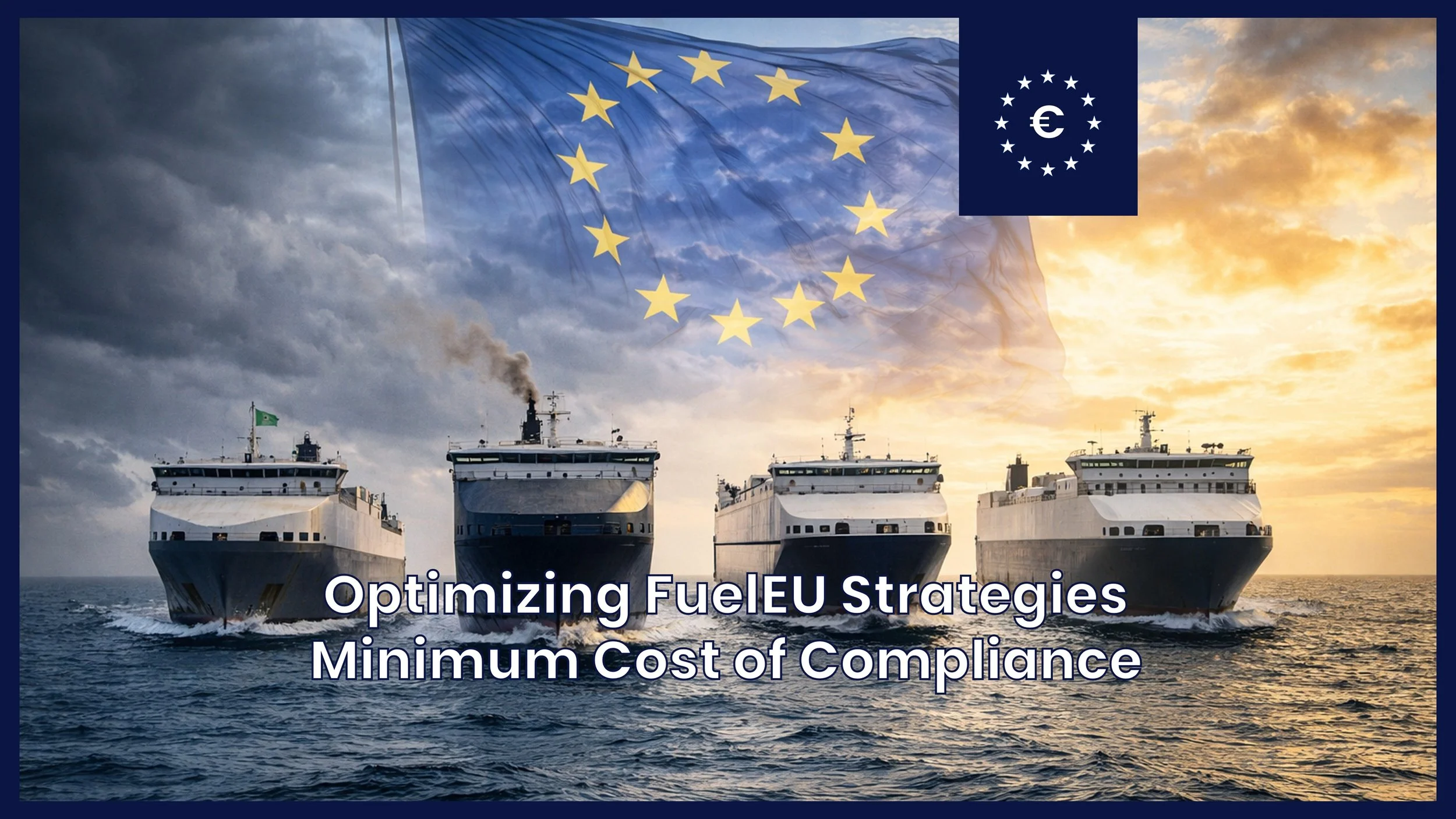
Optimising FuelEU compliance strategy for minimum cost - penalty, pooling, or biofuels?
This case study compares three compliance strategies for FuelEU (paying the penalty (business as usual), buying pool credits from a third party, and blending biofuels) for a representative 4-ship fleet over 2026–2040. Results show that pooling and biofuels both beat business as usual by 6–7%, but it is a coin toss on which is better for you. The outcome is highly sensitive to B100 price and tightens structurally in favour of biofuels after 2030, making this a tipping-point question rather than a one-off choice.
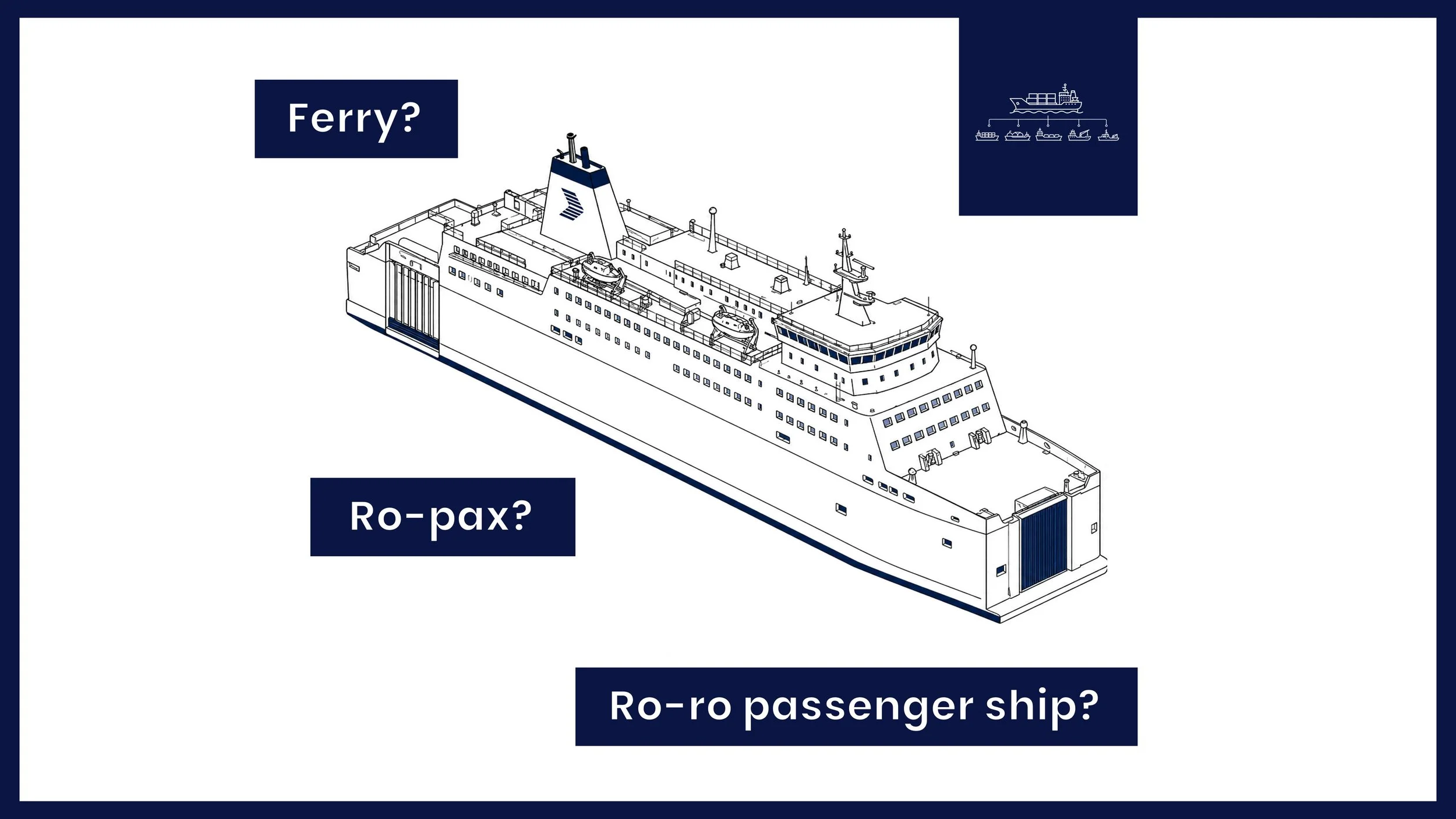
How ships are classified: a reference guide to IMO, EU, and Industry frameworks
Every regulator, classification society, broker, and data provider has its own ship-type taxonomy: the same vessel can be a Ro-pax ship to EU MRV, a Cruise Passenger Ship under IMO MARPOL Annex VI, and simply a Passenger ship in a Clarksons fleet report. None of the labels is wrong; they are the working vocabulary of different communities. This blog provides guidance by harmonizing them into the ‘Sustainable Ships framework’: 20 categories, 72 types, and 52 sizes.
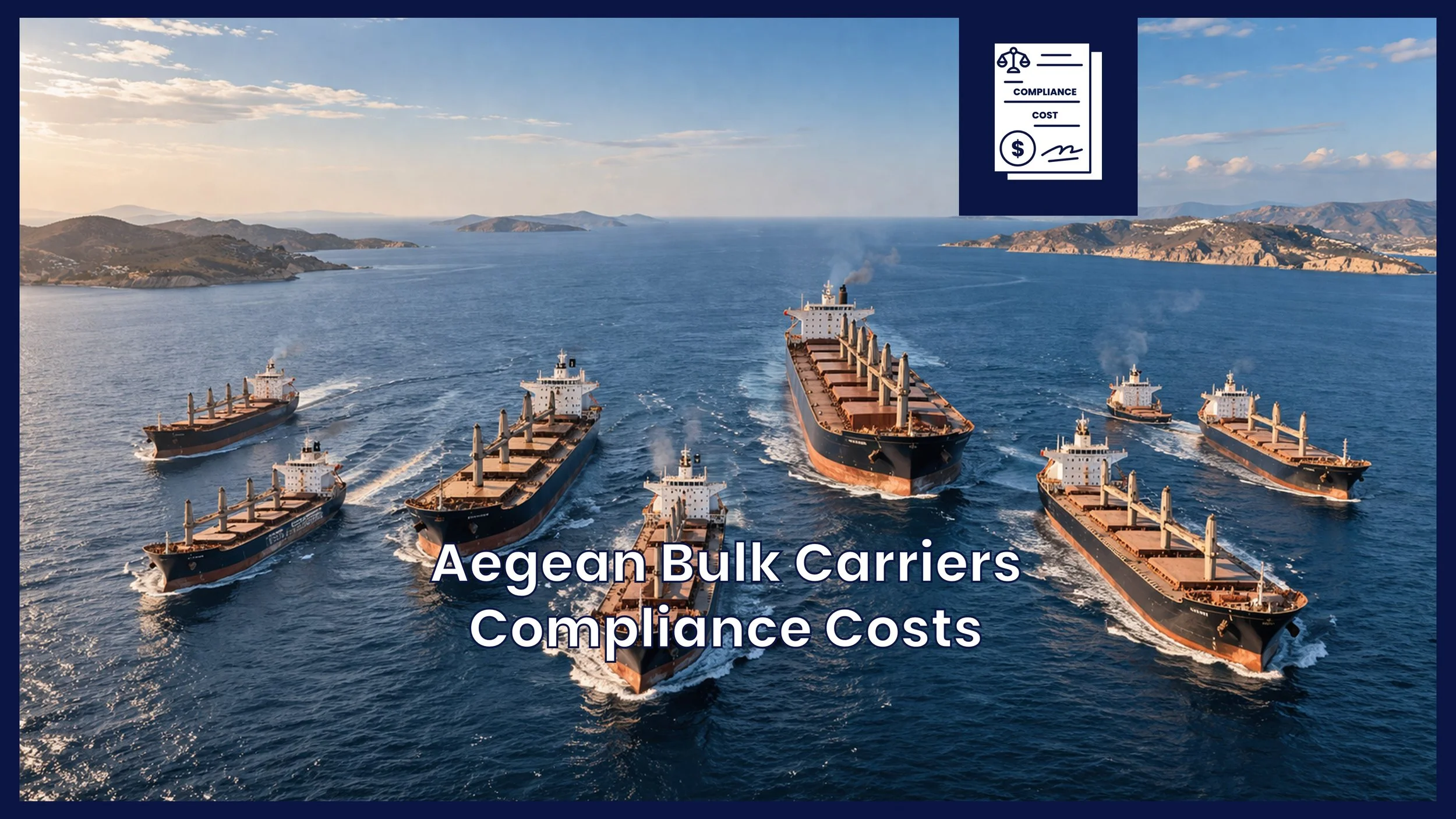
Compliance exposure costs of Greek dry bulk carriers until 2050
Shipping companies face a growing set of regulatory obligations (EU ETS, UK ETS, FuelEU Maritime, and IMO Net-Zero) that directly affect operating costs. This case study determines these costs for a representative fleet of eight Greek dry bulk vessels, calculating exposure under EU ETS, FuelEU Maritime and IMO Net-Zero from 2026 to 2050. The fleet faces a total compliance cost of $4.1 billion over the analysis period, escalating from $30 million in 2026 to $ 362 million in 2050.
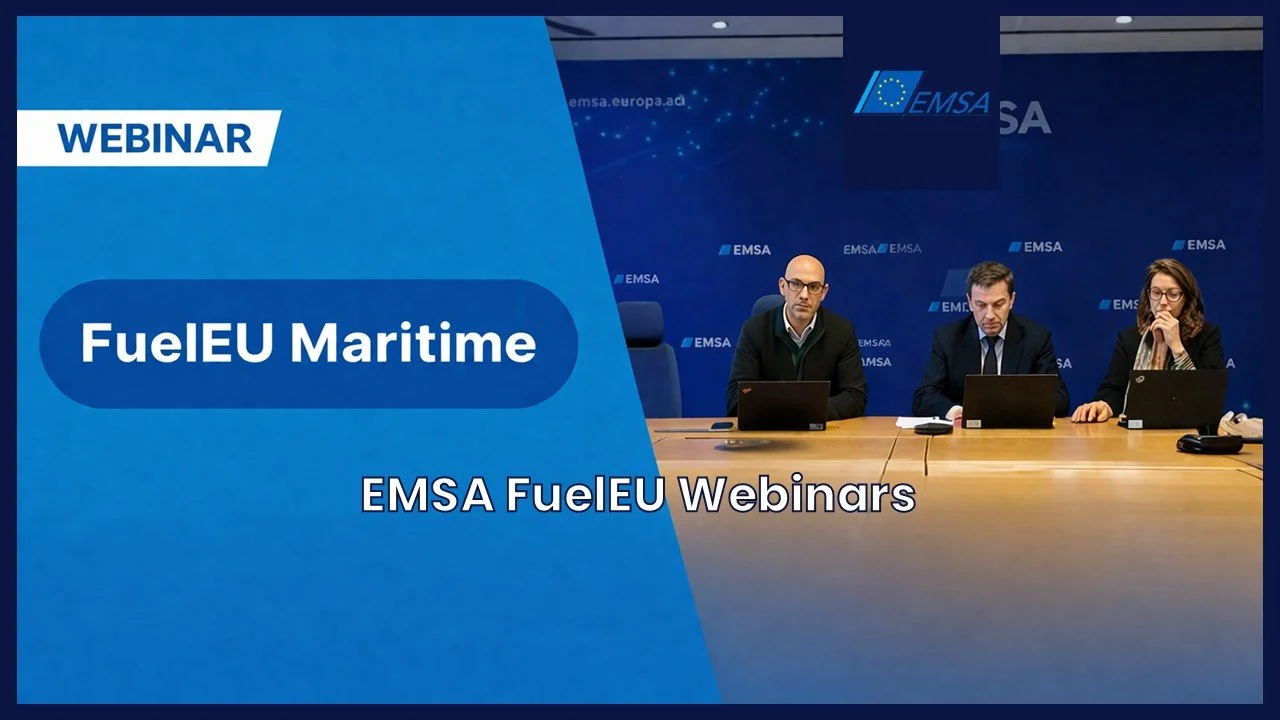
MSAR FuelEU Webinars
EMSA and DG MOVE are hosting a dedicated webinar series aimed at supporting maritime stakeholders in navigating the implementation of FuelEU Maritime and its broader regulatory context. The sessions are designed to provide practical insight into how the regulation will be applied in real-world operations, including its impact on fuel choices, compliance strategies, and commercial decision-making across different vessel types and trades.
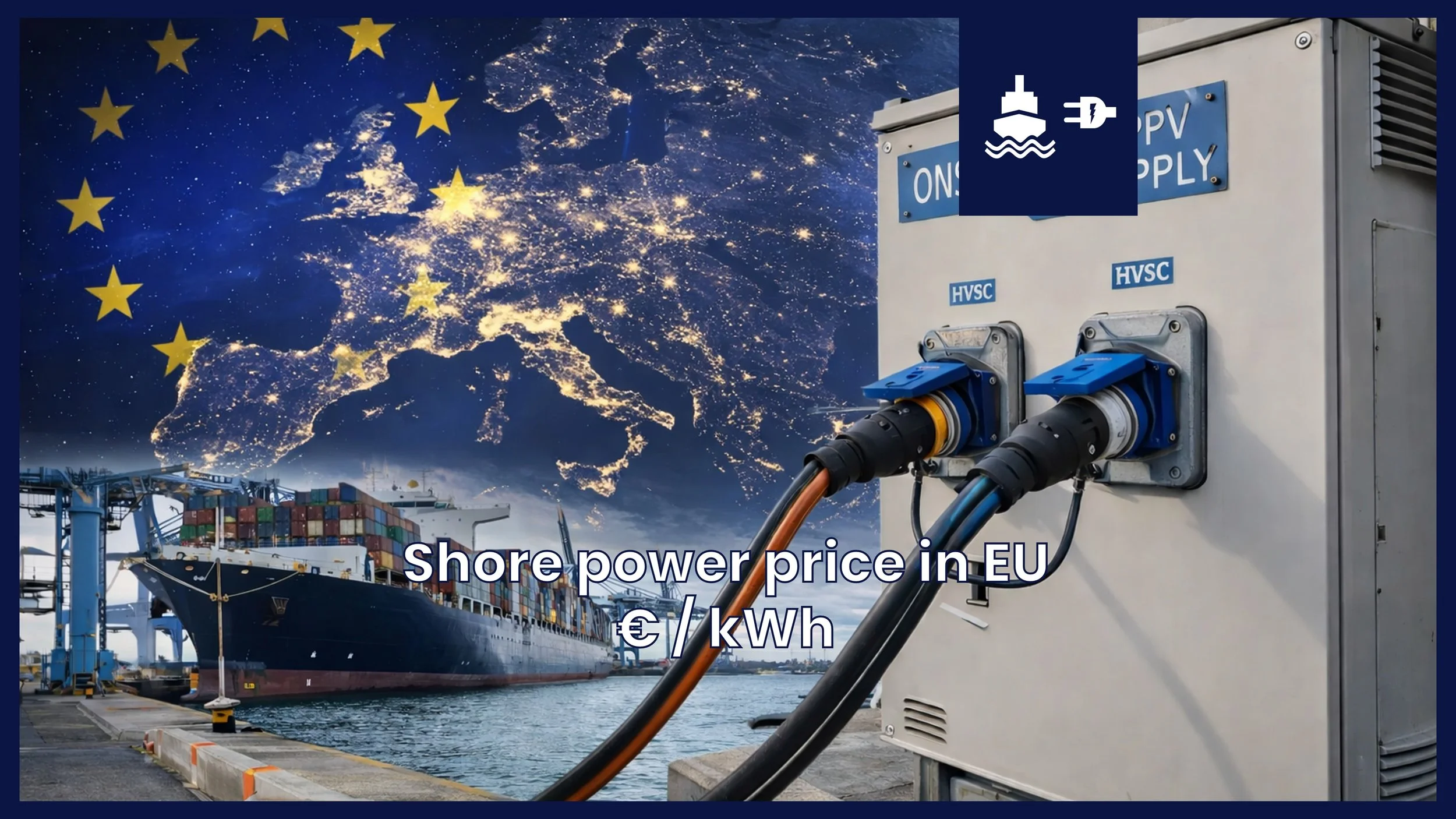
Shore Power (OPS) price per kWh in EU
AFIR and FuelEU Maritime make the use of onshore power supply (OPS) effectively mandatory but say nothing about what it should cost or how it should be priced. The result is a patchwork of tariff designs and varying levels of transparency, making like-for-like comparisons difficult for shipowners and operators. This blog aims to provide at least some guidance on the matter.
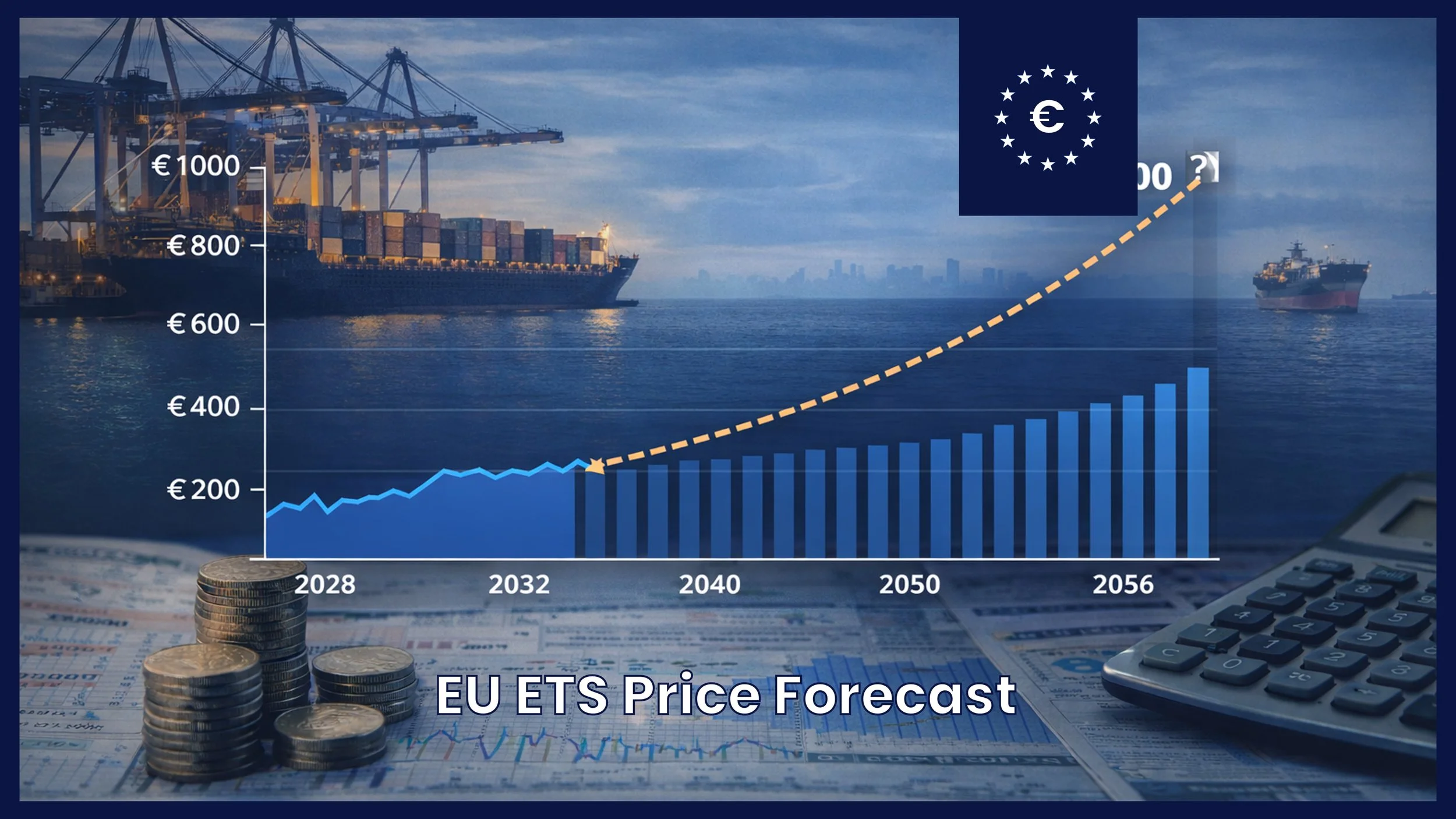
EU ETS Price Forecast - 2026
With shipping now included in EU ETS, carbon prices are becoming a major cost driver for maritime transport. As the total amount of emission allowances gradually decreases, prices are expected to rise over time. Many projections assume an increase of roughly 7% per year, potentially reaching €400–€500 per tonne of CO₂ in the long term.
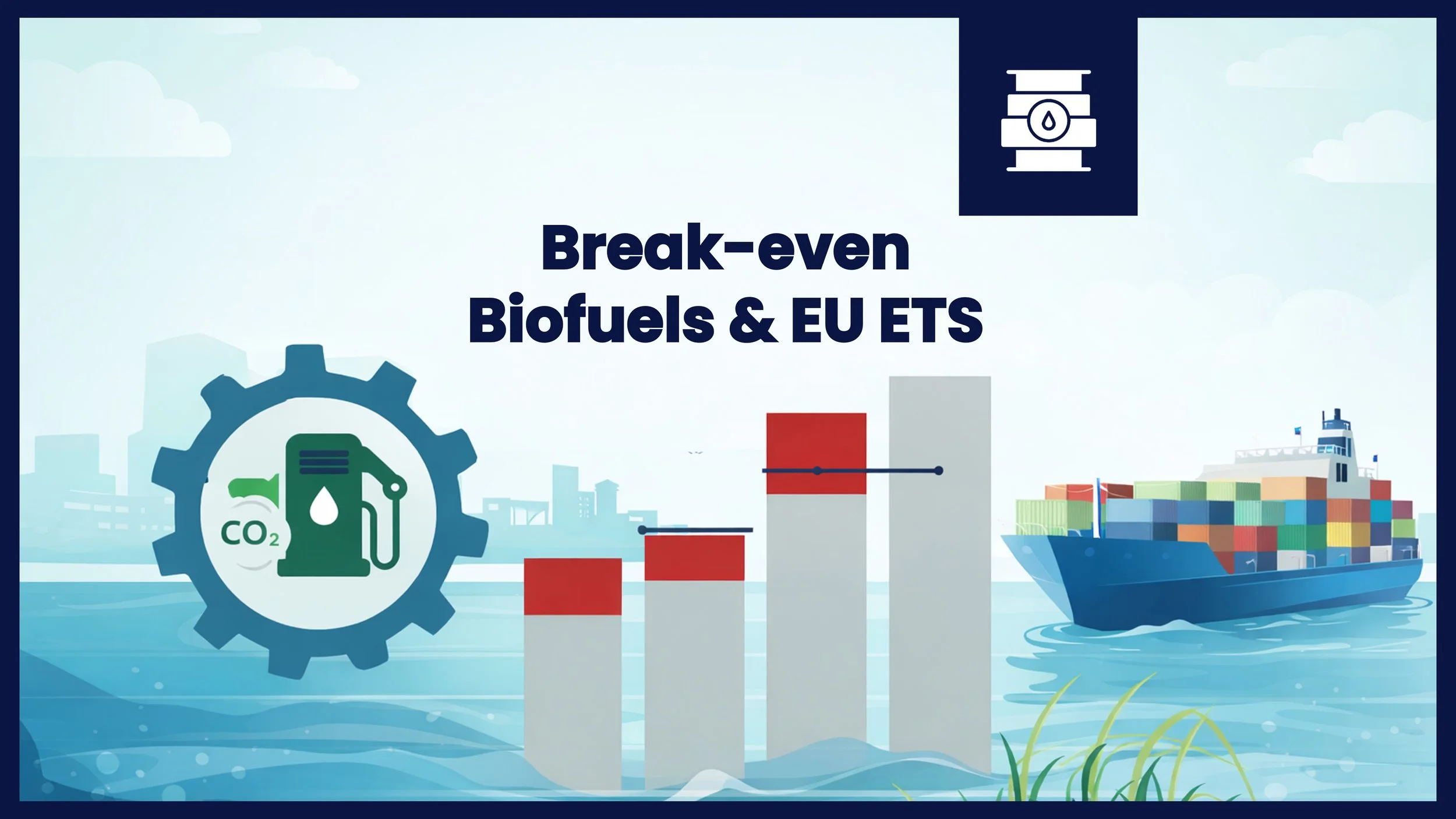
Biofuels & EU ETS - when do biofuel blends payoff?
When is it more cost-effective to use a B30 or HV30 blend as opposed to regular MDO? This article breaks down the economics of MDO versus biodiesel and HVO blends by comparing VLSFO equivalent costs of fuel over a range of EUA price scenarios. Results indicate that it becomes attractive to use blends at EUA prices above €85.
Book and Claim explained - Q&A with Vurdhaan
This Q&A session explores the role of book and claim systems in maritime decarbonization, featuring Himanshu Sharma from Vurdhaan, a platform providing independent registries for Scope 3 emission reductions. Himanshu explains how virtual crediting works, why transparency and verification are key, and how book and claim differs from compliance pooling under FuelEU Maritime.
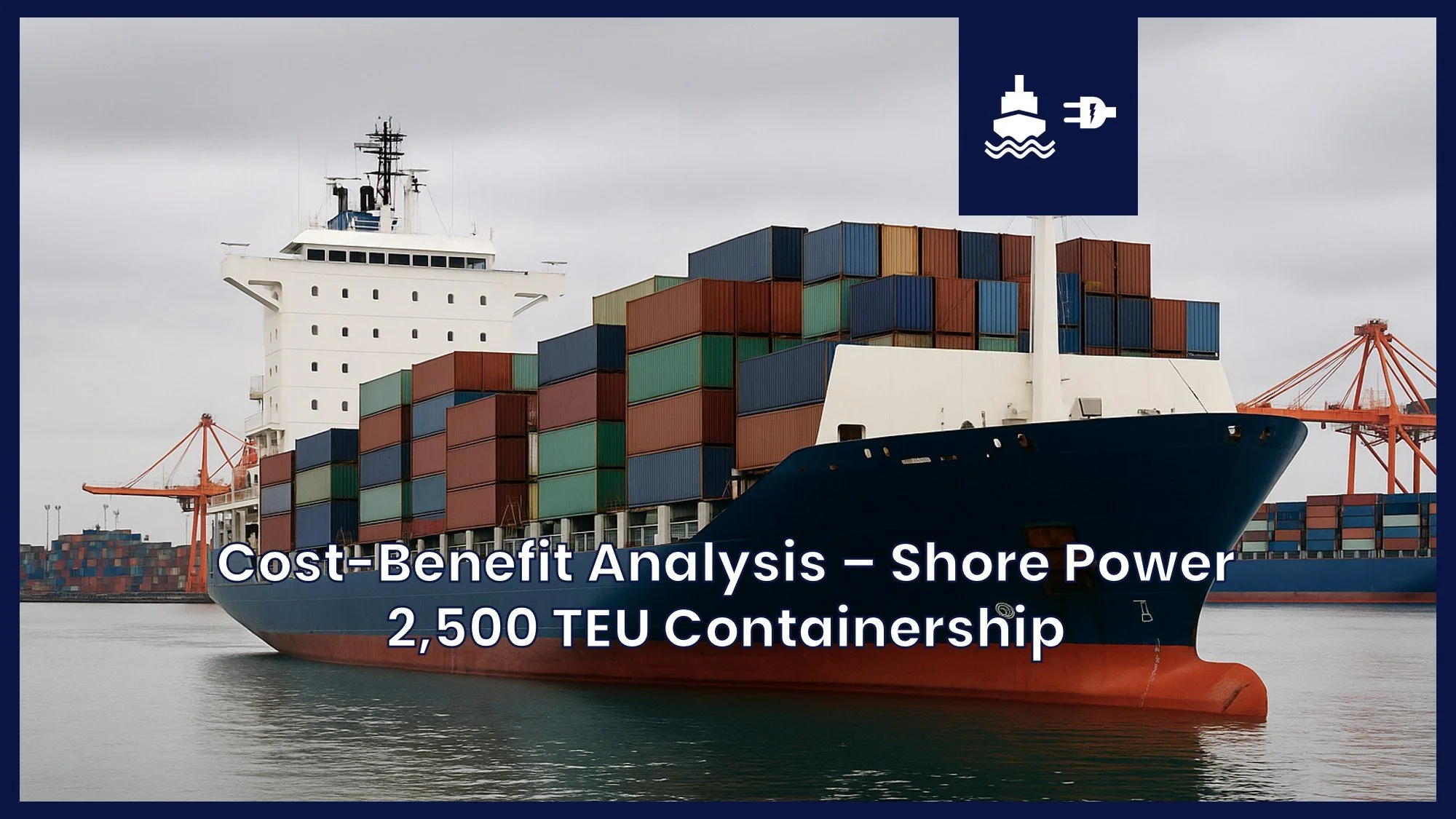
Plug in or Pay up?
When does the use of shore power become cost-effective for shipowners under new EU and IMO regulations? Using the Shore Power Quickscan, this article breaks down key cost components such as fuel, electricity, EU ETS, FuelEU Maritime, and the upcoming IMO Net-Zero framework and compares cost impact of different routes on a 2,500 TEU containership. Results show that while shore power can already deliver savings from 2025 onwards (!), its competitiveness strengthens sharply after 2030 as compliance costs rise.
Emission Properties for EU ETS, FuelEU and IMO Net-Zero
Shipowners and operators face the challenge of navigating multiple regulatory frameworks - EU ETS, FuelEU Maritime, and IMO Net-Zero - each employing distinct methodologies and emission factors for assessing fuel emissions. This blog provides clear guidance on the differing emission factors and calculation methods employed by each regulatory framework.

Compliance costs per mT of fuel from 2025 until 2050
Accurate assessment of marine fuel costs is becoming increasingly critical as regulatory pressure grows, especially given the recently announced IMO Net-Zero Framework. This blog uses a VLSFO-equivalent cost model to evaluate the impact of FuelEU Maritime, EU ETS, and IMO Net-Zero regulations on a wide range of fuels. By comparing fossil, bio-based, and synthetic fuels under realistic scenarios, the analysis shows that compliance costs - driven by emissions penalties and carbon pricing - are expected to exceed fuel prices by 2030 for many options.

FuelEU and IMO Net-Zero Framework explained - Q&A with Normec Verifavia
This Q&A session explores the upcoming IMO Net-Zero Framework, featuring Rajat Bishnoi and Yuvraj Thakur from Normec Verifavia, an accredited verifier supporting shipowners with emissions reporting and regulatory compliance. They explain the new GHG Fuel Intensity and Fuel Standard requirements, compare them to FuelEU Maritime, and discuss penalties, registry systems, and practical implications for shipowners preparing for 2027–2028 enforcement.
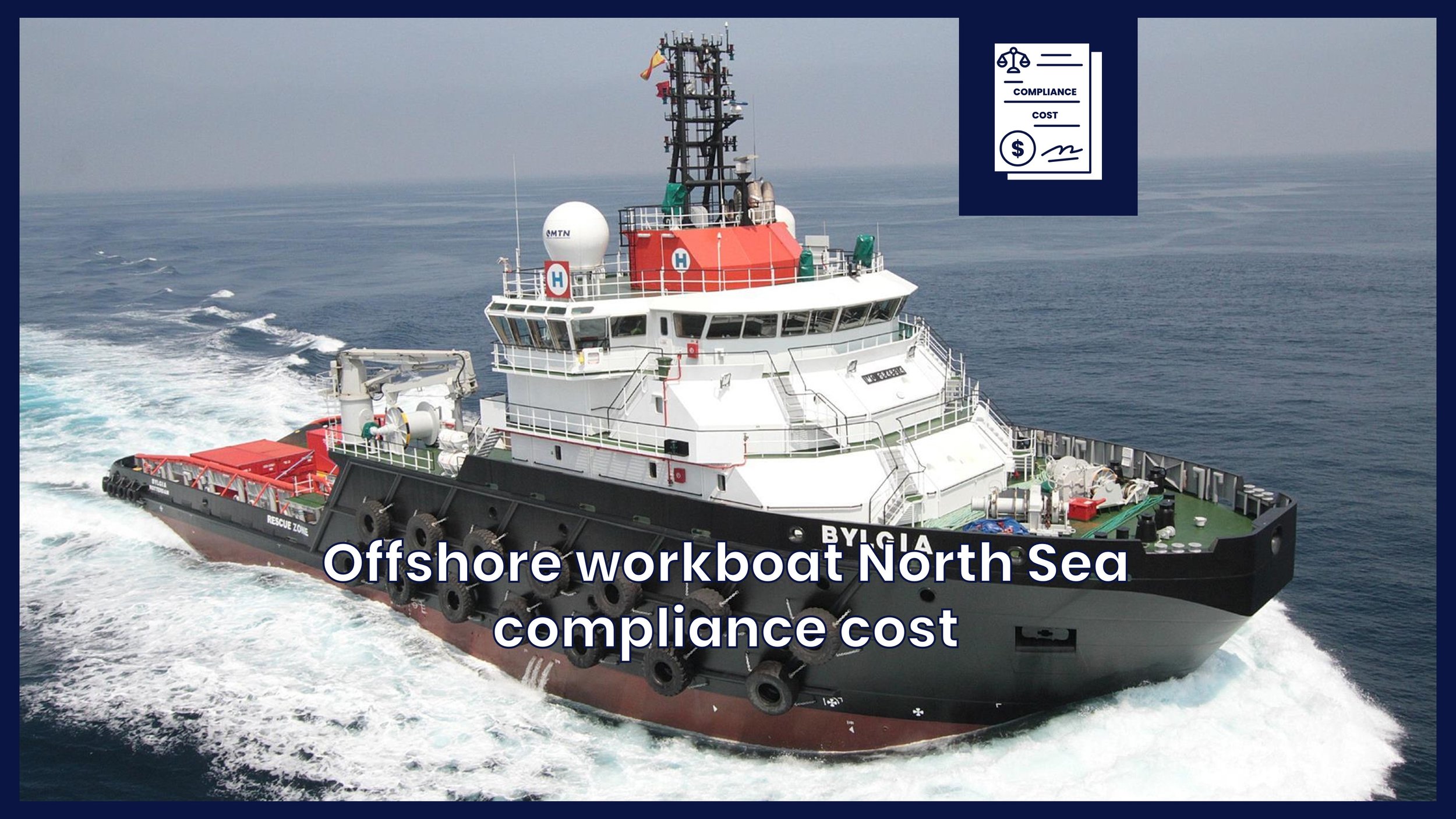
Fuel and compliance costs for offshore workboat in North Sea
Operating an offshore workboat in the North Sea area until 2050 will impose significant financial and operational pressure due to tightening environmental regulations and mounting compliance obligations. Modelling of compliance costs shows a clear tipping point in 2040, with FuelEU Maritime becoming the dominant driver, although FuelEU currently applies to vessels above 5,000 GT only. Results for a large offshore workboat operating year-round in the North Sea show that the maximum projected cost exposure could reach up to $250 million between now and 2050.

Choosing the right fuel: a brief guide to future prices and compliance costs
This case study analyzes 10 marine fuels using an HFO-equivalent model to determine their full lifecycle costs, including fuel prices and regulatory compliance costs, from 2025 to 2050. The results highlight a critical tipping point in 2040, driven by the FuelEU Maritime regulation increasing carbon intensity reduction targets sharply from 14.5% to 31%. This blog provides shipowners with guidance on how to navigate these evolving cost scenarios and maintain competitiveness to ensure future-proof investments.

FuelEU & EU ETS compliance costs for a 3,000 TEU Panamax containership
This case study determines the costs of compliance for a 3,000 TEU Panamax containership with respect to FuelEU and EU ETS. Estimated annual compliance costs for business as usual range from $2.5M in 2025 to $23M in 2050. Two different pathways are evaluated to determine mitigation options and OPEX costs: shore power and wind-assisted propulsion. Savings for shore power are approx. $400k per year in 2025, savings for wind-assisted propulsion are approx. $600k in 2025.

FuelEU + EU ETS compliance costs for CMA CGM, Hapag-Lloyd and COSCO
This case study calculates and compares EU ETS and FuelEU compliance costs for three major shipping companies: CMA CGM, Hapag-Lloyd and COSCO. From 2025 until 2050, these three companies will pay a total compliance cost of $54B (CMA CGM), $25B (Hapag-Lloyd) and $32B (COSCO).

Compliance costs of VLSFO vs. bio-methanol vs. e-ammonia
This case study calculates and compares the compliance costs with regards to EU ETS and FuelEU for VLSFO, bio-methanol and e-ammonia. Results show that the averaged compliance costs for VLSFO between 2025 and 2050 are $966 per mT.

FuelEU pooling with full electric chemical tanker
This case study determines the effects of pooling a fully electric small-sized chemical tanker with similar type vessels in the context of FuelEU Maritime. The results show that a single electric ship can include up to 69 ships in its pool in 2025, each ship consuming 2,555 mT MDO per year.

Impact of FuelEU Maritime on shore power business case
This is a case study that determines the impact of FuelEU Maritime on a shore power refit business case up to 2050, taking several ships and varying input parameters to determine the impact under multiple conditions. As FuelEU Maritime will make shore power mandatory in 2030 for passenger- and containerships, this tool will help to determine the impact of that regulation on your business case.