Shore Power
This page is all about electrifying vessels while in port or at sea, called shore power or cold-ironing. Scroll down to comment or ask us anything in the chat box. Want to know how feasible shore power is for your vessel? Use our tool to make your own business case in minutes.
Key lessons
Which technical specifications and standards apply with shore power? Download technical specs. and feasibility studies here.
Stories on shore power
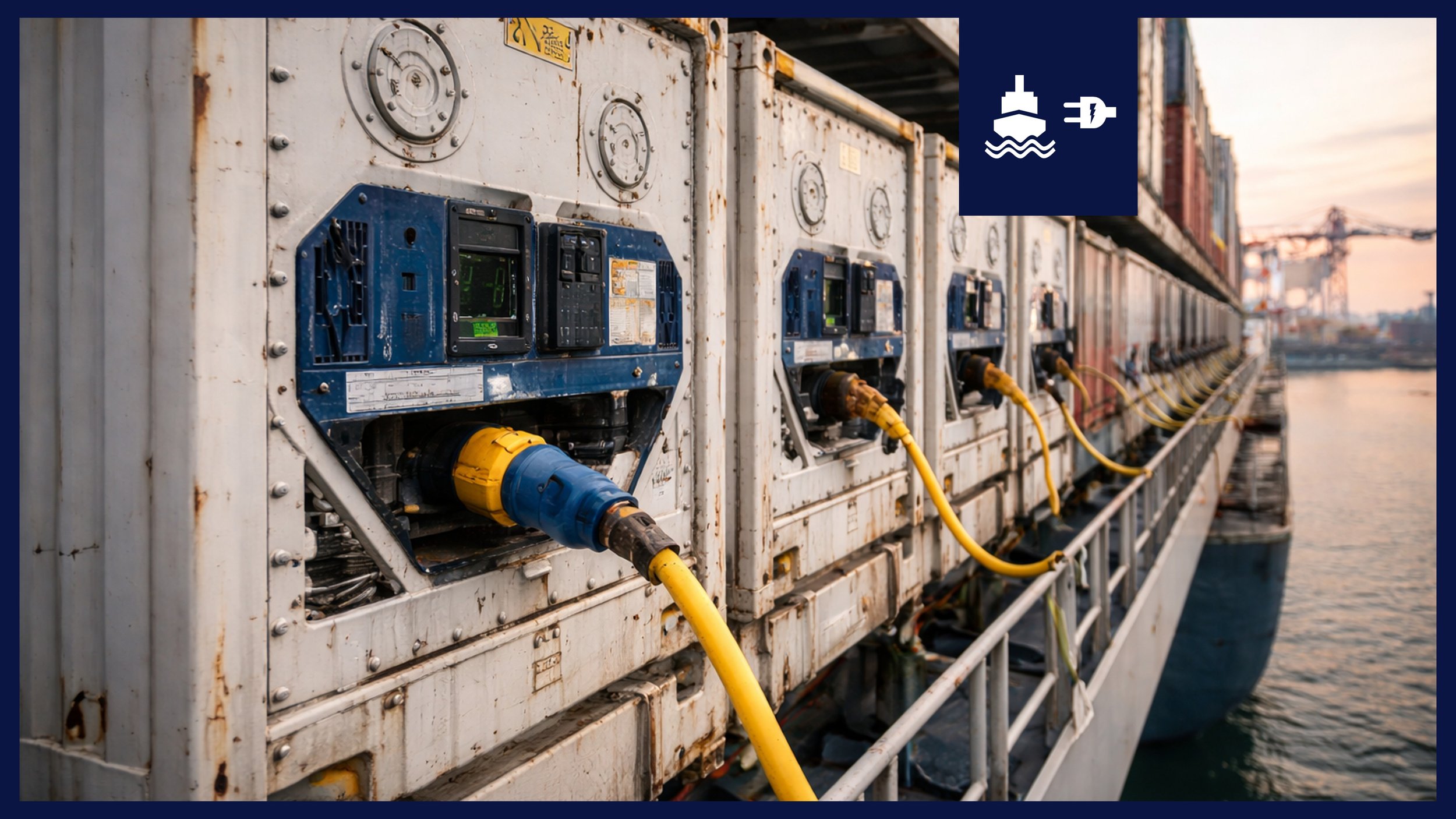
Reefers (Refrigerated Containers) increase power demand onboard container ships by approximately 4.38 kW per reefer container. The implication is material: even a relatively small share of reefers can account for a disproportionately large share of total berth power demand. Realtime measurements show that even when 1% of all containers onboard a ship are reefers, it can consume almost 20% of the ship’s total energy demand.
If shore power projects were easy, every port would already have them. Instead, developers run into the same fundamental challenges: unpredictable vessel power demand, complex infrastructure decisions, and business cases full of question marks. In this blog we look at those problems, and how our tools help you tackle them.
AFIR and FuelEU Maritime make the use of onshore power supply (OPS) effectively mandatory but say nothing about what it should cost or how it should be priced. The result is a patchwork of tariff designs and varying levels of transparency, making like-for-like comparisons difficult for shipowners and operators. This blog aims to provide at least some guidance on the matter.
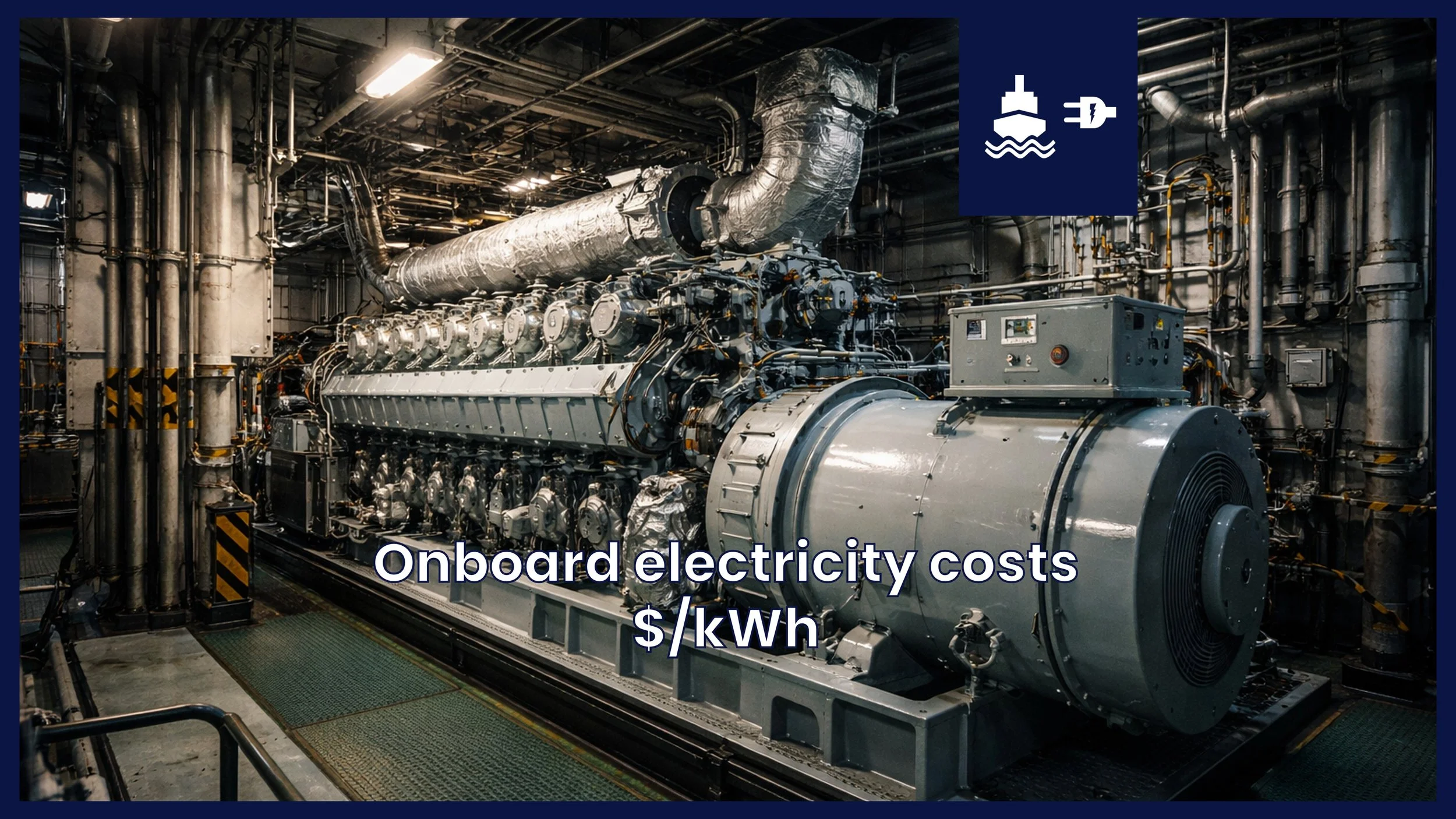
When does the use of shore power become cost-effective for shipowners under new EU and IMO regulations? Using the Shore Power Quickscan, this article breaks down key cost components such as fuel, electricity, EU ETS, FuelEU Maritime, and the upcoming IMO Net-Zero framework and compares cost impact of different routes on a 2,500 TEU containership. Results show that while shore power can already deliver savings from 2025 onwards (!), its competitiveness strengthens sharply after 2030 as compliance costs rise.
Accurate estimation of shore power demand at EU ports has become essential due to strict regulations like AFIR, which requires electrification for 90% of port calls by container and passenger ships at TEN-T ports by 2030. This blog evaluates three methods—using EU MRV fuel data, Sustainable Ships’ ship-specific power database, and ICCT research—to estimate the Total Addressable Market (TAM) for shore power. Results show the total annual electricity demand across EU ports is between approximately 6 and 13 TWh, highlighting the significant scale of infrastructure investment ahead.
This case study evaluates a mobile shore power battery barge designed for an offshore construction vessel in the Port of Rotterdam. An average power demand of 2.4 MW and a peak demand of 5 MW is assumed. This results in the requirement of twelve 20-ft containerized batteries integrated into a High Voltage Shore Connection (HVSC) system. Total costs of the power barge are estimated at $9.5M with a yearly revenue of approx. $2.5M.
This case study evaluates a mobile shore power battery barge designed for a 1,730 TEU containership in the Port of Rotterdam. An average power demand of 329 kW and a peak demand of 1 MW is assumed. This results in the requirement of two 20-ft containerized batteries integrated into a Low Voltage Shore Connection (LVSC) system. Estimated savings for the ship reach €500 per 24-hour period, primarily due to reduced FuelEU compliance costs, which could exceed €600,000 over 10 years.
Accurate estimates of containership power demand are becoming increasingly critical due to stringent regulations, such as FuelEU Maritime, in combination with technical complexities. Ship power demand varies significantly depending on size, onboard equipment installed, and operational profile. These uncertainties places considerable pressure on terminal owners, port authorities, and developers to design and implement shore power infrastructure. This blog aims to provide guidance on this issue.
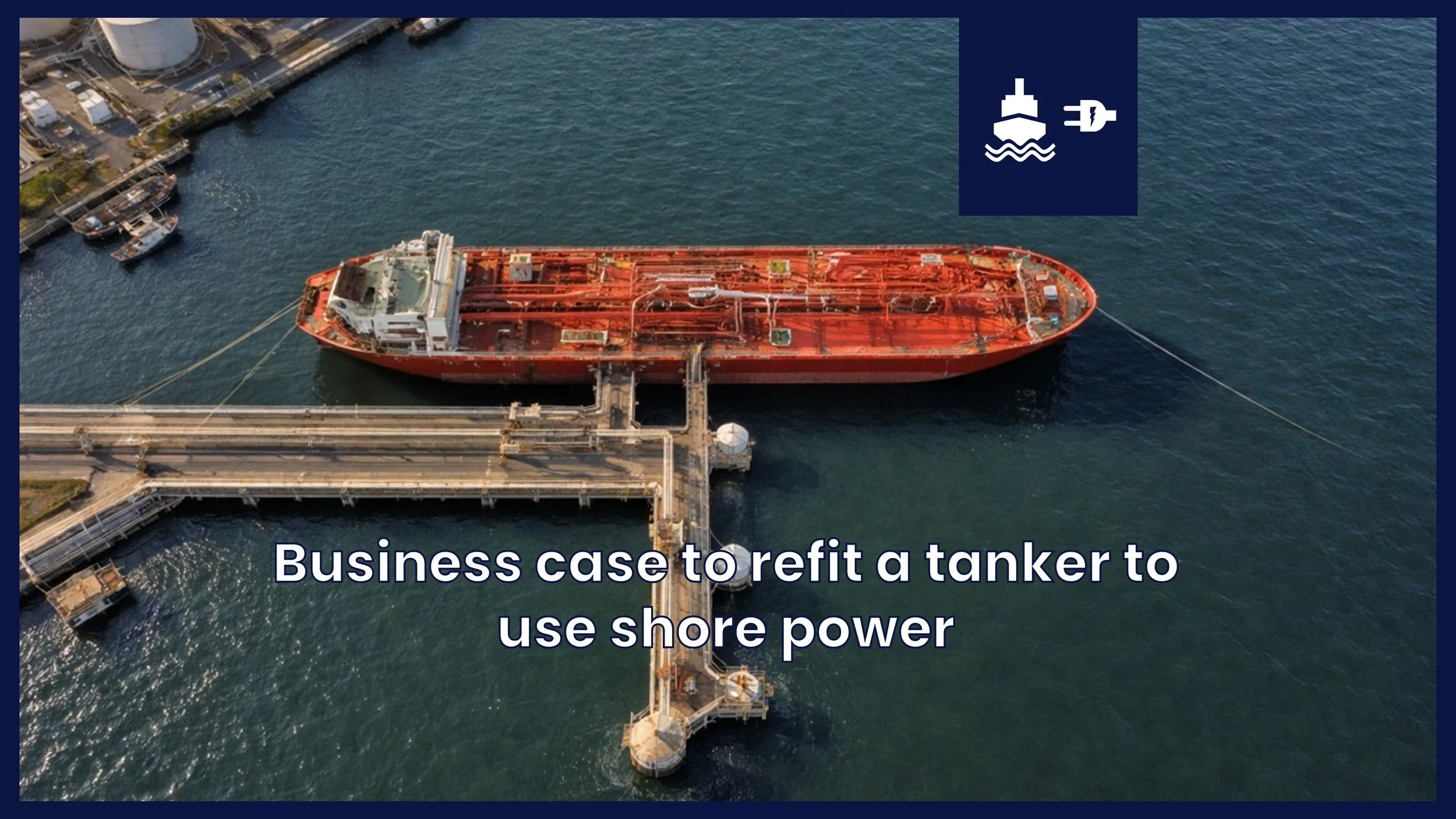
This case study determines the impact of FuelEU Maritime on a shore power refit for a RoRo Cargo ship under multiple loading and operational conditions. Pending on the amount of days connected to the grid and the average load while moored, it is estimated that shore power can save €250,000 per year.
This is a case study that determines the impact of FuelEU Maritime on a shore power refit business case up to 2050, taking several ships and varying input parameters to determine the impact under multiple conditions. As FuelEU Maritime will make shore power mandatory in 2030 for passenger- and containerships, this tool will help to determine the impact of that regulation on your business case.
Are there standardized sockets and plugs? Which standards apply? This, and more!