Case studies | Find examples on decarbonization measures, costs and regulations to benchmark your business case
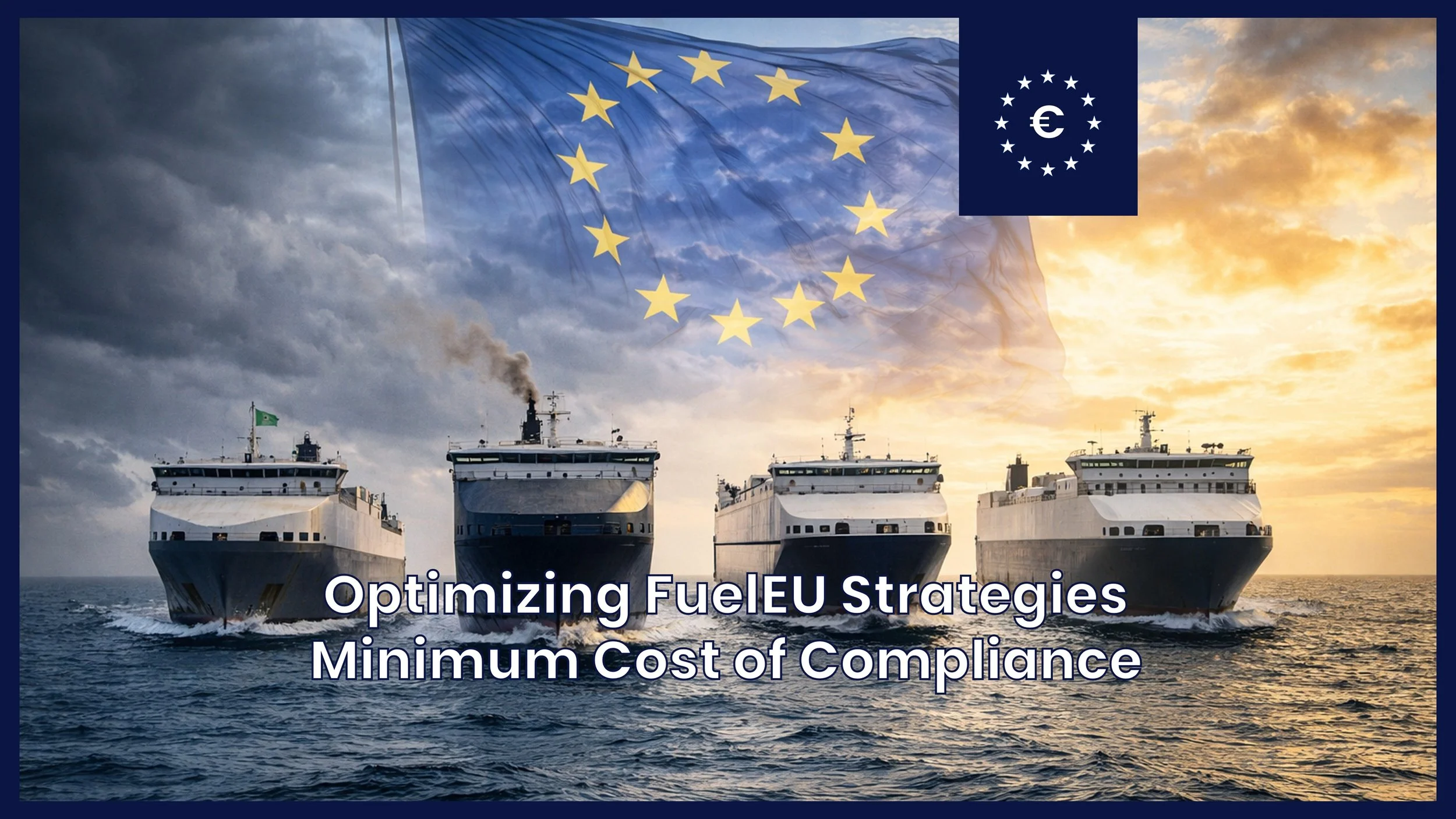
Optimising FuelEU compliance strategy for minimum cost - penalty, pooling, or biofuels?
This case study compares three compliance strategies for FuelEU (paying the penalty (business as usual), buying pool credits from a third party, and blending biofuels) for a representative 4-ship fleet over 2026–2040. Results show that pooling and biofuels both beat business as usual by 6–7%, but it is a coin toss on which is better for you. The outcome is highly sensitive to B100 price and tightens structurally in favour of biofuels after 2030, making this a tipping-point question rather than a one-off choice.
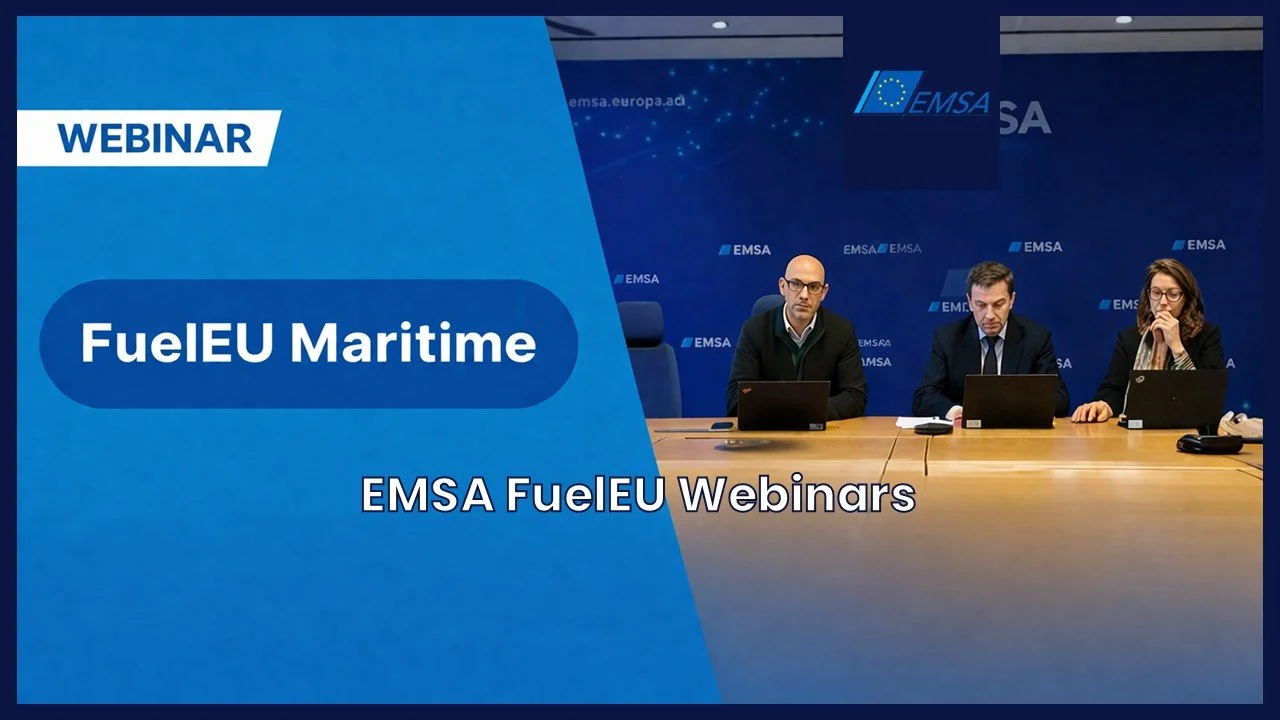
MSAR FuelEU Webinars
EMSA and DG MOVE are hosting a dedicated webinar series aimed at supporting maritime stakeholders in navigating the implementation of FuelEU Maritime and its broader regulatory context. The sessions are designed to provide practical insight into how the regulation will be applied in real-world operations, including its impact on fuel choices, compliance strategies, and commercial decision-making across different vessel types and trades.

Fundamental challenges of shore power (OPS)
If shore power projects were easy, every port would already have them. Instead, developers run into the same fundamental challenges: unpredictable vessel power demand, complex infrastructure decisions, and business cases full of question marks. In this blog we look at those problems, and how our tools help you tackle them.
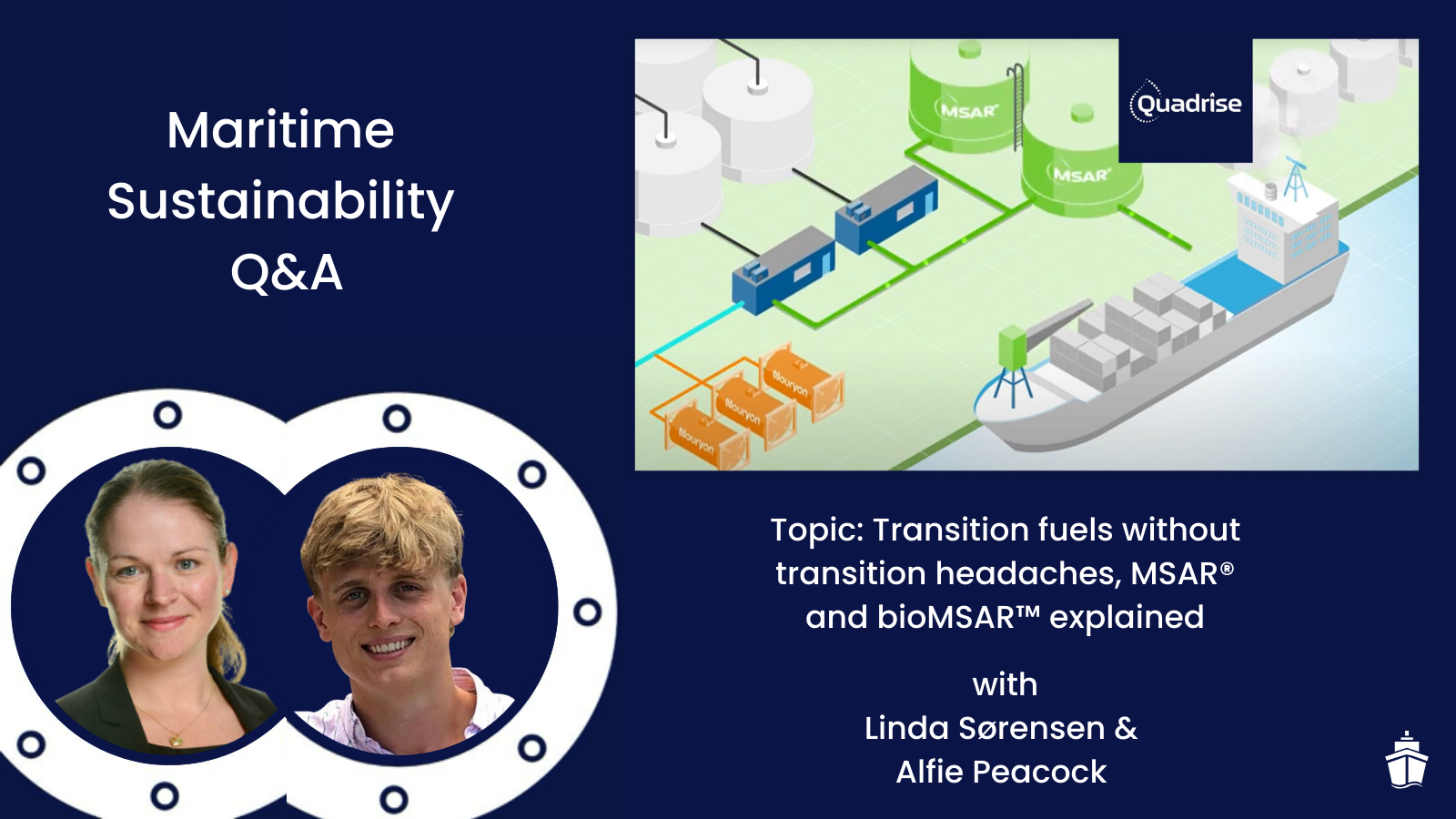
Transition fuels without transition headaches - Q&A with Quadrise
This Q&A session explores how transition fuels can support maritime decarbonization today, without major retrofits or new infrastructure. Together with Quadrise, we discussed MSAR® and bioMSAR™, oil-in-water emulsion fuels designed to improve combustion, reduce emissions, and support compliance under EU ETS and FuelEU Maritime. Relevant for shipowners and operators seeking practical solutions for the existing fleet.
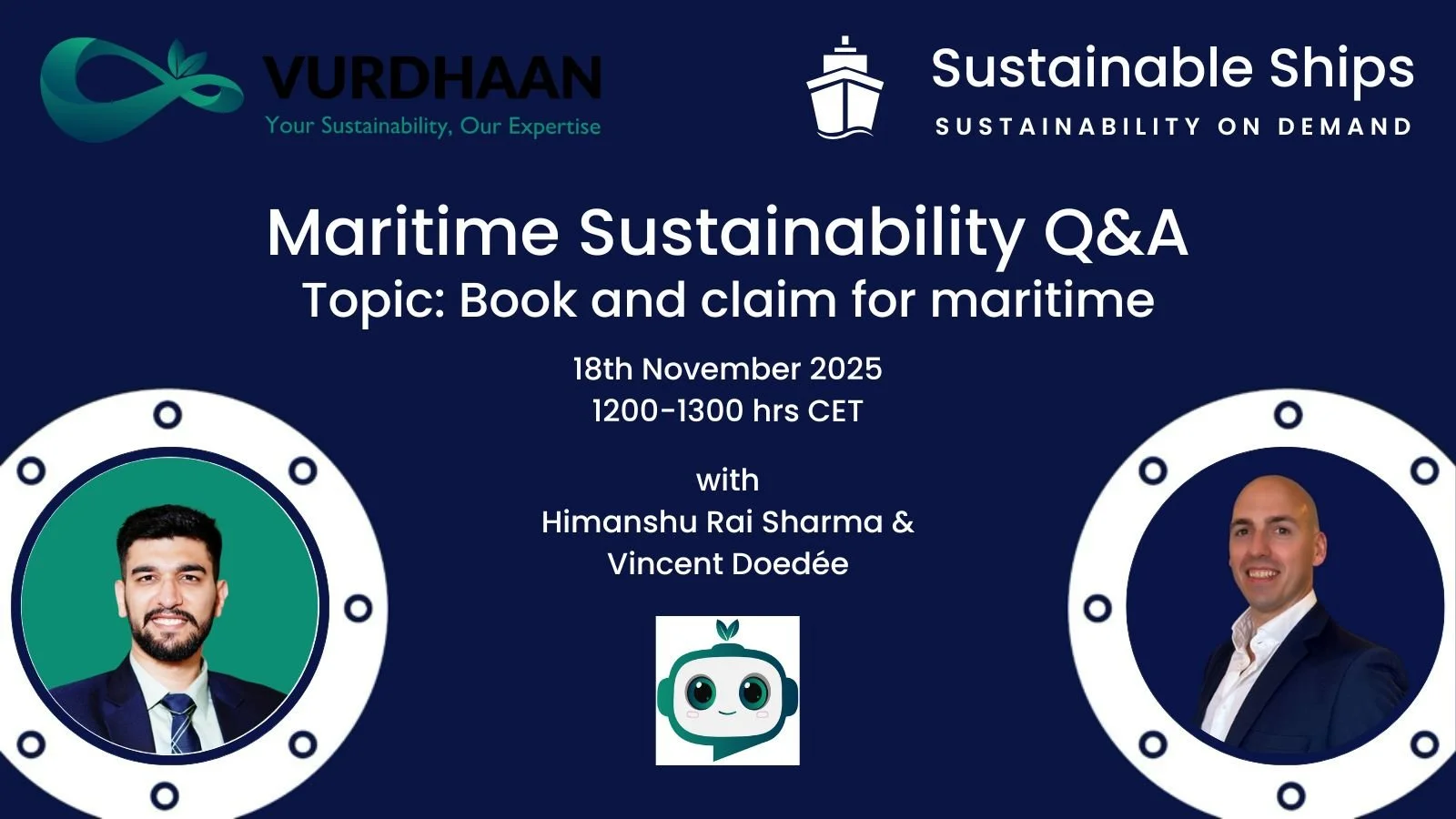
Book and Claim explained - Q&A with Vurdhaan
This Q&A session explores the role of book and claim systems in maritime decarbonization, featuring Himanshu Sharma from Vurdhaan, a platform providing independent registries for Scope 3 emission reductions. Himanshu explains how virtual crediting works, why transparency and verification are key, and how book and claim differs from compliance pooling under FuelEU Maritime.

FuelEU and IMO Net-Zero Framework explained - Q&A with Normec Verifavia
This Q&A session explores the upcoming IMO Net-Zero Framework, featuring Rajat Bishnoi and Yuvraj Thakur from Normec Verifavia, an accredited verifier supporting shipowners with emissions reporting and regulatory compliance. They explain the new GHG Fuel Intensity and Fuel Standard requirements, compare them to FuelEU Maritime, and discuss penalties, registry systems, and practical implications for shipowners preparing for 2027–2028 enforcement.

Shore power electricity demand in EU ports from 2030 onwards
Accurate estimation of shore power demand at EU ports has become essential due to strict regulations like AFIR, which requires electrification for 90% of port calls by container and passenger ships at TEN-T ports by 2030. This blog evaluates three methods—using EU MRV fuel data, Sustainable Ships’ ship-specific power database, and ICCT research—to estimate the Total Addressable Market (TAM) for shore power. Results show the total annual electricity demand across EU ports is between approximately 6 and 13 TWh, highlighting the significant scale of infrastructure investment ahead.

Impact of FuelEU Maritime on solar PV for bulk carrier
This case study explores a 100 kWp solar PV system installed on the hatch covers of a handymax bulk carrier. Operating primarily in Northern Europe, the system offsets auxiliary engine load during idle periods, leading to estimated savings of ~$350,000 between 2025 and 2035. With a CAPEX of $100,000, the payback period is around three years. Most savings come from fuel reduction, with additional benefits from EU ETS and FuelEU compliance. The business case is most sensitive to engine efficiency (SFC) and fuel price.

How to decarbonize your ship - RoRo Cargo + shore power + FuelEU
This case study determines the impact of FuelEU Maritime on a shore power refit for a RoRo Cargo ship under multiple loading and operational conditions. Pending on the amount of days connected to the grid and the average load while moored, it is estimated that shore power can save €250,000 per year.

Impact of FuelEU Maritime on shore power business case
This is a case study that determines the impact of FuelEU Maritime on a shore power refit business case up to 2050, taking several ships and varying input parameters to determine the impact under multiple conditions. As FuelEU Maritime will make shore power mandatory in 2030 for passenger- and containerships, this tool will help to determine the impact of that regulation on your business case.

Optimize your FuelEU Maritime pooling strategy
The FuelEU Maritime pooling mechanism is complex. The FuelEU Pool Tool makes it simple. Use this tool to compare cost impact of FuelEU, EU ETS and the fuel itself when pooling up to ten different ships. Blend different quantities of fuel, change fuel properties and compare the cost outlook until 2050 to make your very own FuelEU pooling strategy.

FuelEU compliance penalty for all fuels
FuelEU is complex. The FuelEU Case Maker makes it simple. Use this tool to compare cost impact of FuelEU, EU ETS and the fuel itself for up to five different cases. Blend different quantities of fuel, change fuel properties and compare the cost outlook until 2050 to make your very own FuelEU strategy.

Fuel EU with Poul Woodall
Join Poul Woodall as we discuss the challenges of the upcoming Fuel EU regulations. It is one of the most stringent upcoming rules and regulations in terms of emissions for the shipping industry.