Case studies | Find examples on decarbonization measures, costs and regulations to benchmark your business case
Marine Fuel Properties and Costs Masterclass
Choosing a marine fuel is no longer about price per metric ton, it is about total regulatory exposure. This masterclass covers 22 marine fuels across three groups and six families, how EU ETS, FuelEU Maritime and IMO Net-Zero each calculate costs differently, and why 2035 is the tipping point that should drive your decision.
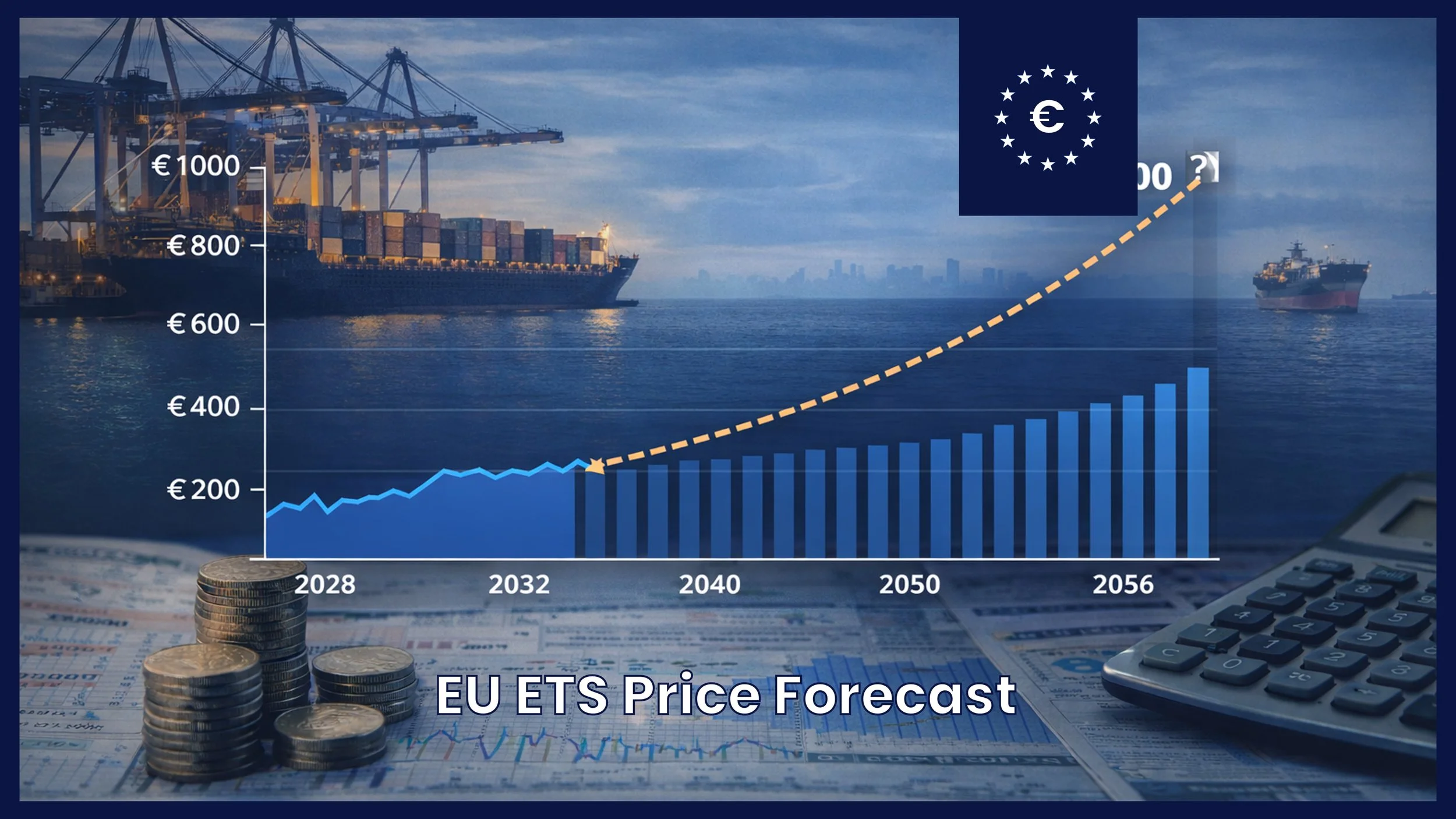
EU ETS Price Forecast - 2026
With shipping now included in EU ETS, carbon prices are becoming a major cost driver for maritime transport. As the total amount of emission allowances gradually decreases, prices are expected to rise over time. Many projections assume an increase of roughly 7% per year, potentially reaching €400–€500 per tonne of CO₂ in the long term.
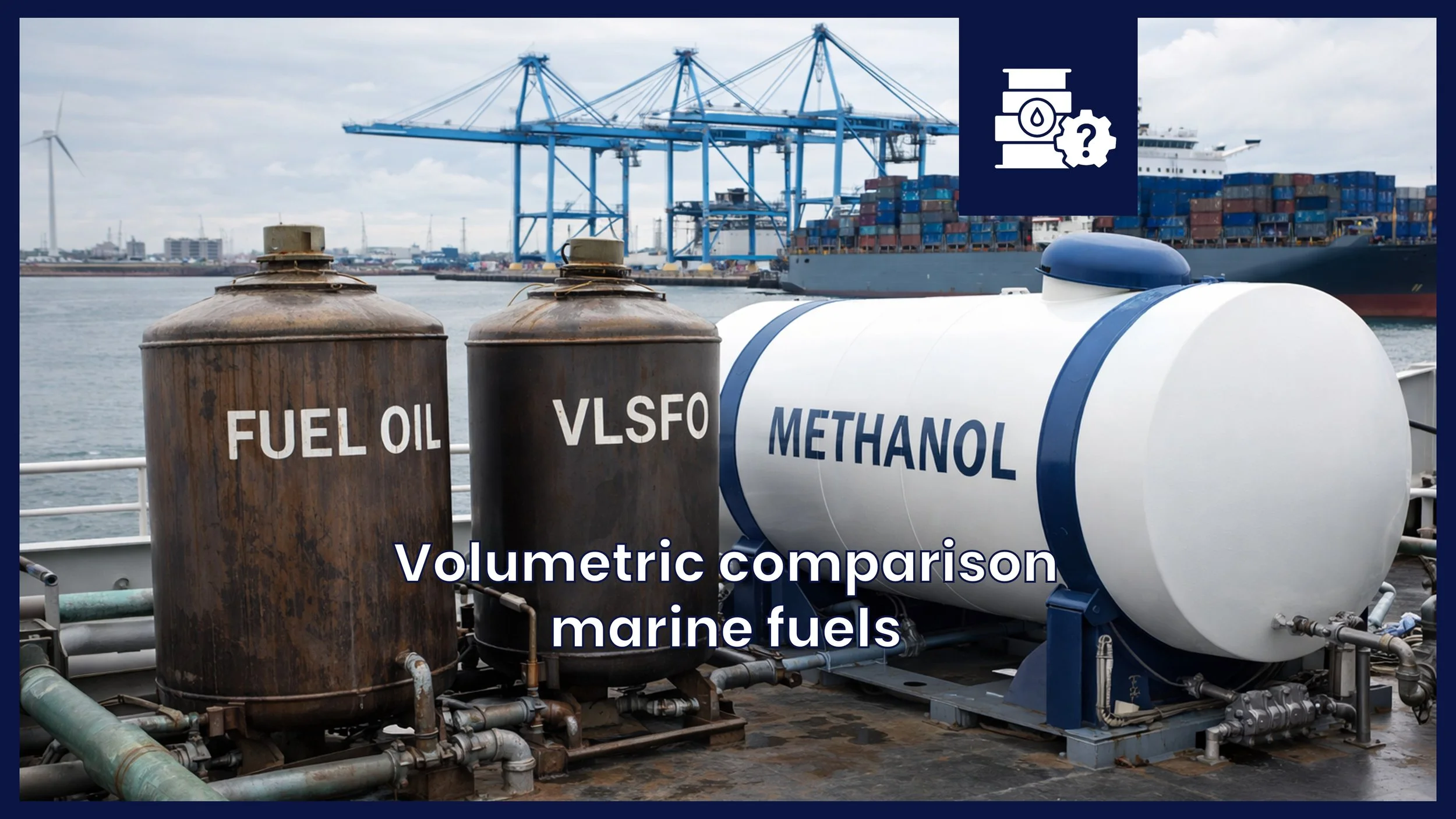
Volumetric comparison marine fuels
Fuel selection is not only about emissions or cost - tank space often becomes the limiting factor. This article compares marine fuels by volumetric energy density (VLSFO as reference), shows why HFO/LFO have historically dominated, and why methanol is a practical alternative fuel from a ship design perspective. Methanol still requires roughly 2–2.5× the tank volume of conventional fuels, but performs better than ammonia or hydrogen for volume-constrained ships.

Emission Properties for EU ETS, FuelEU and IMO Net-Zero
Shipowners and operators face the challenge of navigating multiple regulatory frameworks - EU ETS, FuelEU Maritime, and IMO Net-Zero - each employing distinct methodologies and emission factors for assessing fuel emissions. This blog provides clear guidance on the differing emission factors and calculation methods employed by each regulatory framework.

Compliance costs per mT of fuel from 2025 until 2050
Accurate assessment of marine fuel costs is becoming increasingly critical as regulatory pressure grows, especially given the recently announced IMO Net-Zero Framework. This blog uses a VLSFO-equivalent cost model to evaluate the impact of FuelEU Maritime, EU ETS, and IMO Net-Zero regulations on a wide range of fuels. By comparing fossil, bio-based, and synthetic fuels under realistic scenarios, the analysis shows that compliance costs - driven by emissions penalties and carbon pricing - are expected to exceed fuel prices by 2030 for many options.