Case studies | Find examples on decarbonization measures, costs and regulations to benchmark your business case

Business case to convert a Cruise Ship to full electric propulsion
This case study determines what it takes to remove the fuel from a cruise ship, comparing a 50,000 GT ocean cruise ship with an inland river cruise vessel. The ocean cruise ship obtains a payback of around five years, but only with very cheap electricity, battery prices of $150 per kWh, long-term financing and the sale of FuelEU surplus (many caveats!). The river cruise ship is technically easier, but is extremely challenging to make a business case for because EU ETS and FuelEU do not apply to it.

Ship-Based Carbon Capture Techno-Economic Guide
This blog provides techno-economic guidance for the use of SBCC onboard your vessel, including operational impact, logistics and of course the costs for implementation. Key points include the following; SBCC is applicable to virtually all ship types, sizes and fuel type but LNG is preferred. SBCC produces 2 m3 of CO2 per day per MW. SBCC costs €115 per ton CO2, is a CAPEX dominated technology and costs €175k per MW.

How to decarbonize your ship - Inland Waterways + Shore Battery
This is a case study on the ‘Skoon Skipper’, a general cargo large Rhine vessel, with an average of 40 [kW] power demand while moored to which a shore battery is applied. Batteries can help you comply with shore power regulations where no infrastructure exists with limited to no CAPEX investments. CAPEX is €0 for this case study as the battery pack is rented at an estimated €400 dayrate. Purchase cost for battery pack are approx. €350.000. This case study is powered by our preferred partner Skoon.
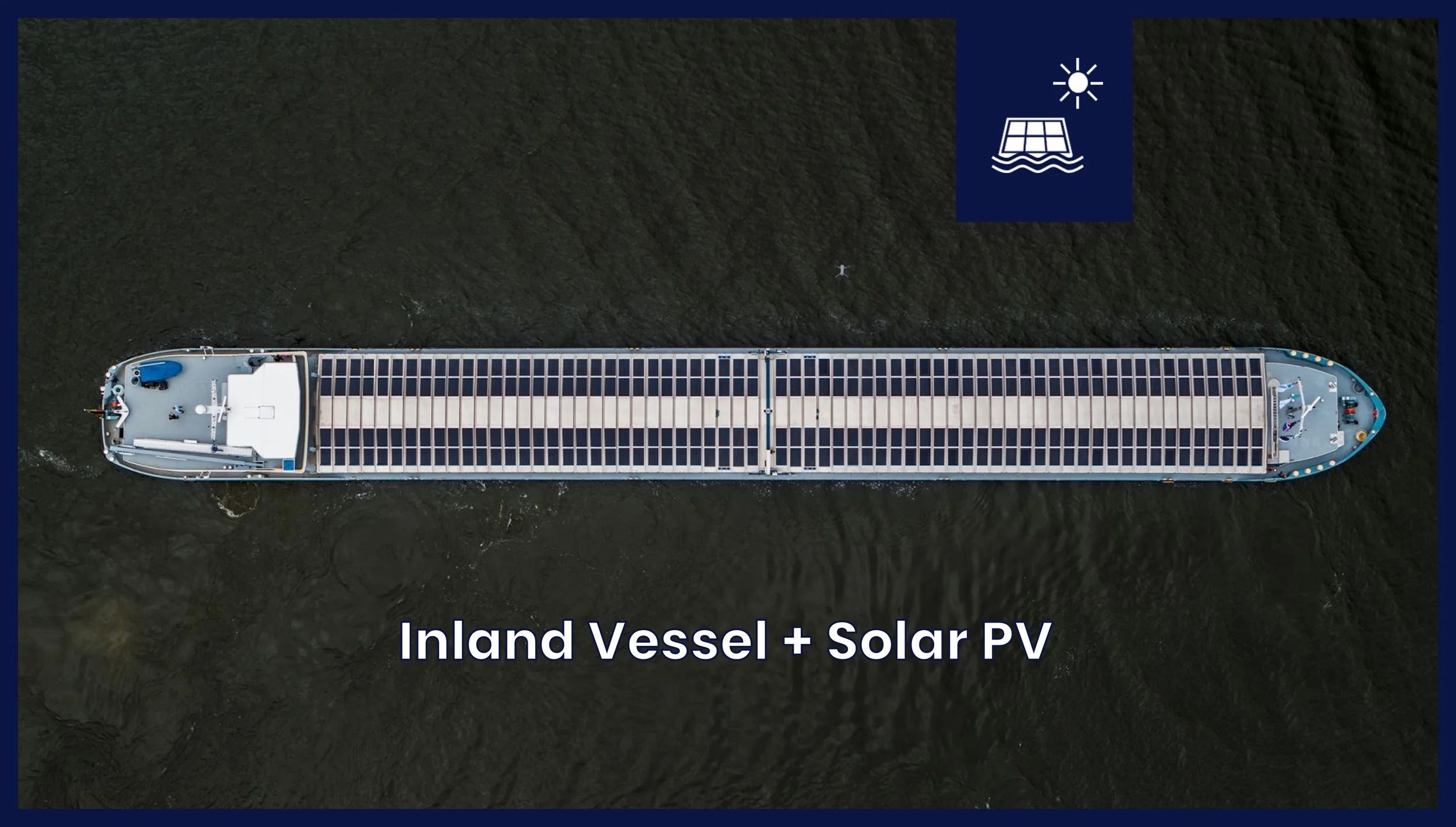
How to decarbonize your ship - Inland Waterways + Solar PV
This is a case study on how to decarbonize an inland waterway ship with solar PV technology. Flexible solar PV panels from Wattlab are placed on an inland ship’s hatches in order to reduce fuel consumption while idling or moored. In some cases, the auxiliary generators can be switched off, resulting in an expected CO2 reduction of 26% - 100%.

Battery for inland vessels
In February 2022, Skoon placed a battery system on Noordereiland for the Port of Rotterdam to boost shore power for stationary inland vessels. Addressing power shortfalls, the battery supported shore power cabinets, successfully delivering up to 63A without tripping fuses, benefiting both vessels and residents. This solution also enabled supplying power to larger ships, aligning with sustainability goals and showcasing potential expansion across the city center.

Which will be the First Hydrogen-Powered Inland Vessel in Rotterdam?
A curious coincidence In Rotterdam. Two vessels - the ‘MS Antonie’ and ‘the Maas’ claim to become ‘the first hydrogen inland vessel’ in Rotterdam. We have translated their claims from two Dutch news outlets and made a comparison which might help you on your hydrogen journey. The race is on for the first hydrogen-powered inland vessel in Rotterdam!