
Battery for inland vessels
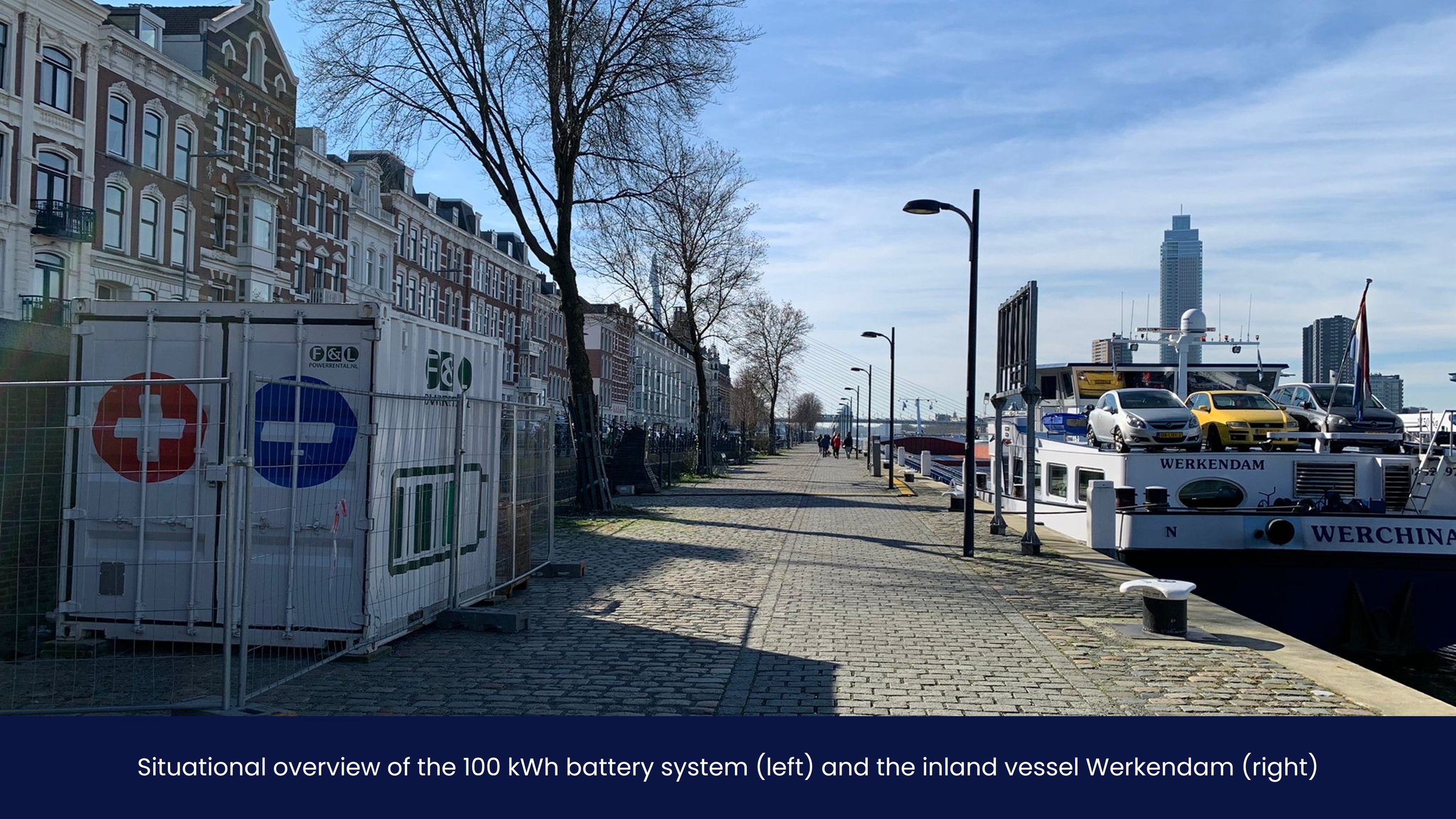
Shore power provided by battery at Maaskade in Rotterdam for inland vessels (63A / 100 kWh)
In February 2022, Skoon Energy placed a battery system on Noordereiland for the Port of Rotterdam to boost shore power for stationary inland vessels. Addressing power shortfalls, the battery supported shore power cabinets, successfully delivering up to 63A without tripping fuses, benefiting both vessels and residents. This solution also enabled supplying power to larger ships, aligning with sustainability goals and showcasing potential expansion across the city center.

Shore power by battery
In February 2022, Skoon Energy installed a battery system on Noordereiland on behalf of the Port of Rotterdam Authority to strengthen the local shore power supply for inland vessels. In the centre of Rotterdam, running an onboard generator is prohibited for stationary inland vessels to avoid noise pollution and harmful emissions. Inland vessels are therefore obliged to use shore power facilities, but some vessels require more power than the existing facilities can supply. This led to blackouts for shipowners, and them running on generators instead of shore power.
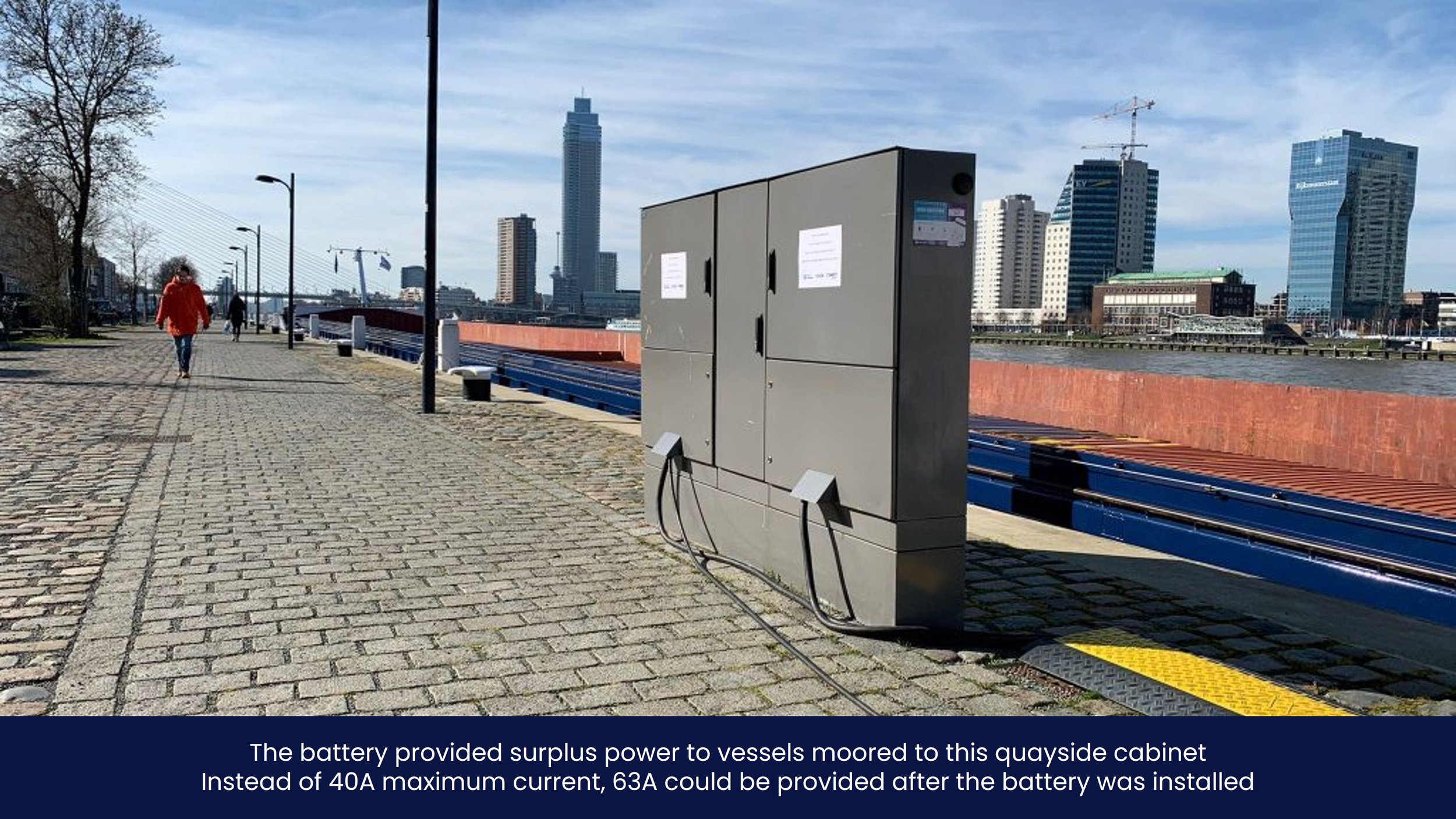
The battery supported the shore power cabinets that are located on the quay by making more power available to the moored vessels. The project lasted until March 31, 2022, and showed that the battery system in combination with the local shore power cabinet could meet the power demand of the vessel.
63 Ampere instead of 40
Since 2010, shore power cabinets for inland vessels have been installed at about 60 locations in the centre of Rotterdam. These cabinets can supply shore power to four to six inland vessels up to a maximum of 40 Ampere. Some larger inland vessels (in CEMT class V and above) require more power. To meet this demand without having to take drastic measures, the Port Authority has opted for this flexible solution.
By placing the battery between the existing shore power cabinet and the inland vessel, the battery will supply additional power to reach up to 63A if more than the basic 40A is needed. In such a case, without the battery in between, the fuses would blow and the connected vessels would experience a power outage. That means the vessel in question and those coming afterwards would not be able to connect to shore power until the repairs are finished.
In addition to solving this power problem, linking the battery system also made it possible to supply larger ships with shore power.
Community benefits for Rotterdammers
Not only inland vessels benefit from the use of the battery system. Local residents on Noordereiland were also satisfied with this step. With generators turned off, there is less noise nuisance at the quays. In addition, this also contributed to cleaner air in the immediate vicinity, which is an important reason for the current generator ban. The Port Authority is happy to look further into how this solution contributes to a better living environment and the achievement of sustainability objectives in other places in the centre of Rotterdam.
About Skoon Energy
Skoon is accelerating the energy transition with a software platform for mobile clean energy. Ships, ports, festivals, events, construction sites, grid operators and many other applications can now easily access clean energy, through our online marketplace called Skoon Sharing. Skoon Suite is a SaaS tool for the supply side of our platform, making rental management scalable for the owners of mobile energy assets.
References
Skoon - Battery installed to supply extra strong shore power for inland vessels
You might also like

This case study evaluates a mobile shore power battery barge designed for an offshore construction vessel in the Port of Rotterdam. An average power demand of 2.4 MW and a peak demand of 5 MW is assumed. This results in the requirement of twelve 20-ft containerized batteries integrated into a High Voltage Shore Connection (HVSC) system. Total costs of the power barge are estimated at $9.5M with a yearly revenue of approx. $2.5M.
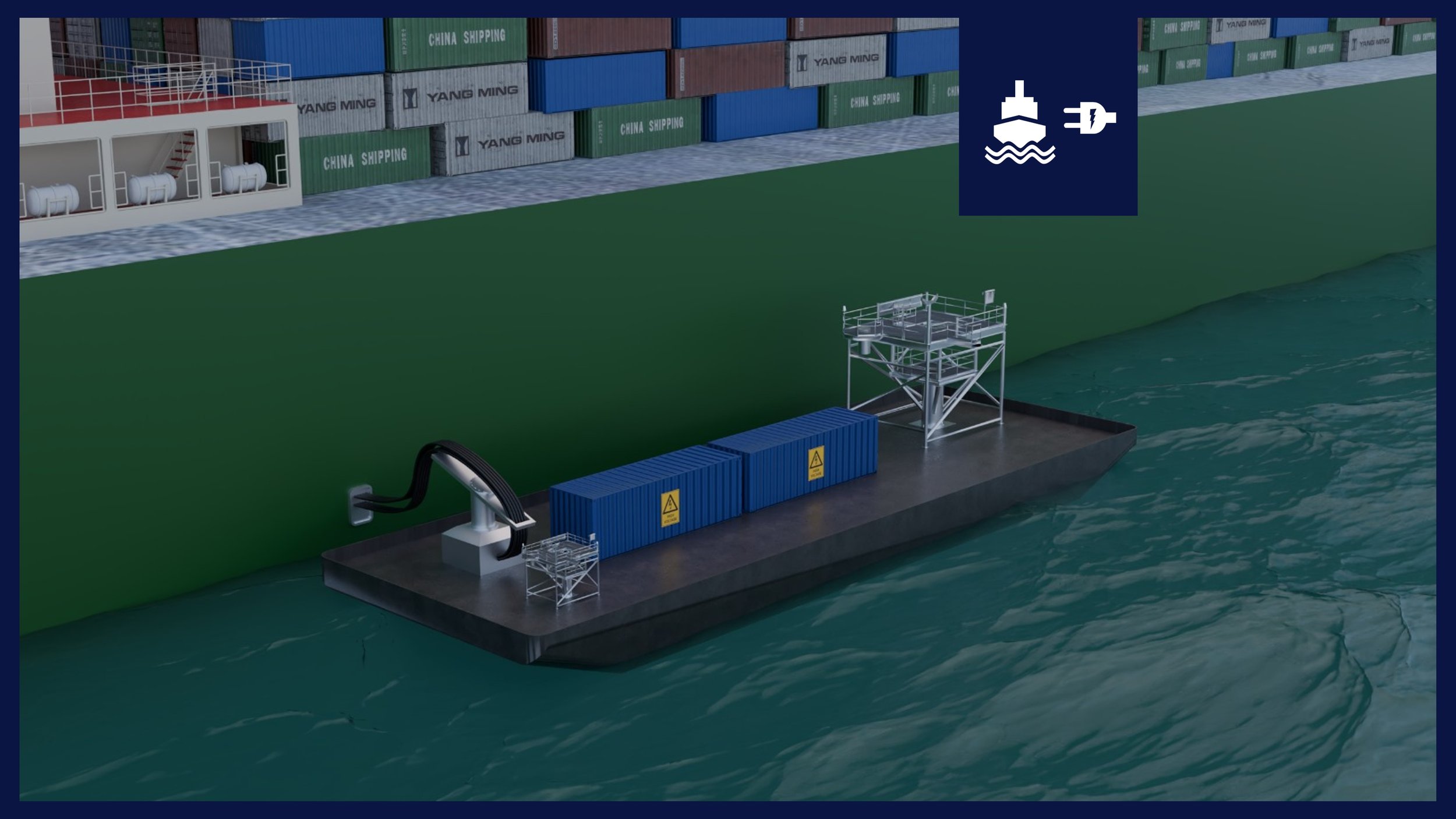
This case study evaluates a mobile shore power battery barge designed for a 1,730 TEU containership in the Port of Rotterdam. An average power demand of 329 kW and a peak demand of 1 MW is assumed. This results in the requirement of two 20-ft containerized batteries integrated into a Low Voltage Shore Connection (LVSC) system. Estimated savings for the ship reach €500 per 24-hour period, primarily due to reduced FuelEU compliance costs, which could exceed €600,000 over 10 years.

This case study determines the effects of pooling a fully electric small-sized chemical tanker with similar type vessels in the context of FuelEU Maritime. The results show that a single electric ship can include up to 69 ships in its pool in 2025, each ship consuming 2,555 mT MDO per year.

This case study also examines a general cargo ship with an auxiliary engine of 116 kW that is outfitted with a battery to make it a ‘battery hybrid’ while at berth. Again the battery pack powers the ship for several hours while idling or moored and is recharged using the auxiliary engines. This time however, engine load is varied in different loading scenarios to determine the impact of different operational profiles on the business case.

This case study examines a general cargo ship with an auxiliary engine of 116 kW that is outfitted with a battery to make it a ‘battery hybrid’ while at berth. The battery pack powers the ship for several hours while idling or moored and is recharged using the auxiliary engines. Cost savings generally occur with an average engine load below 50%, but are mostly dependent on engine maintenance costs, spares and consumables as well as total battery pack costs.
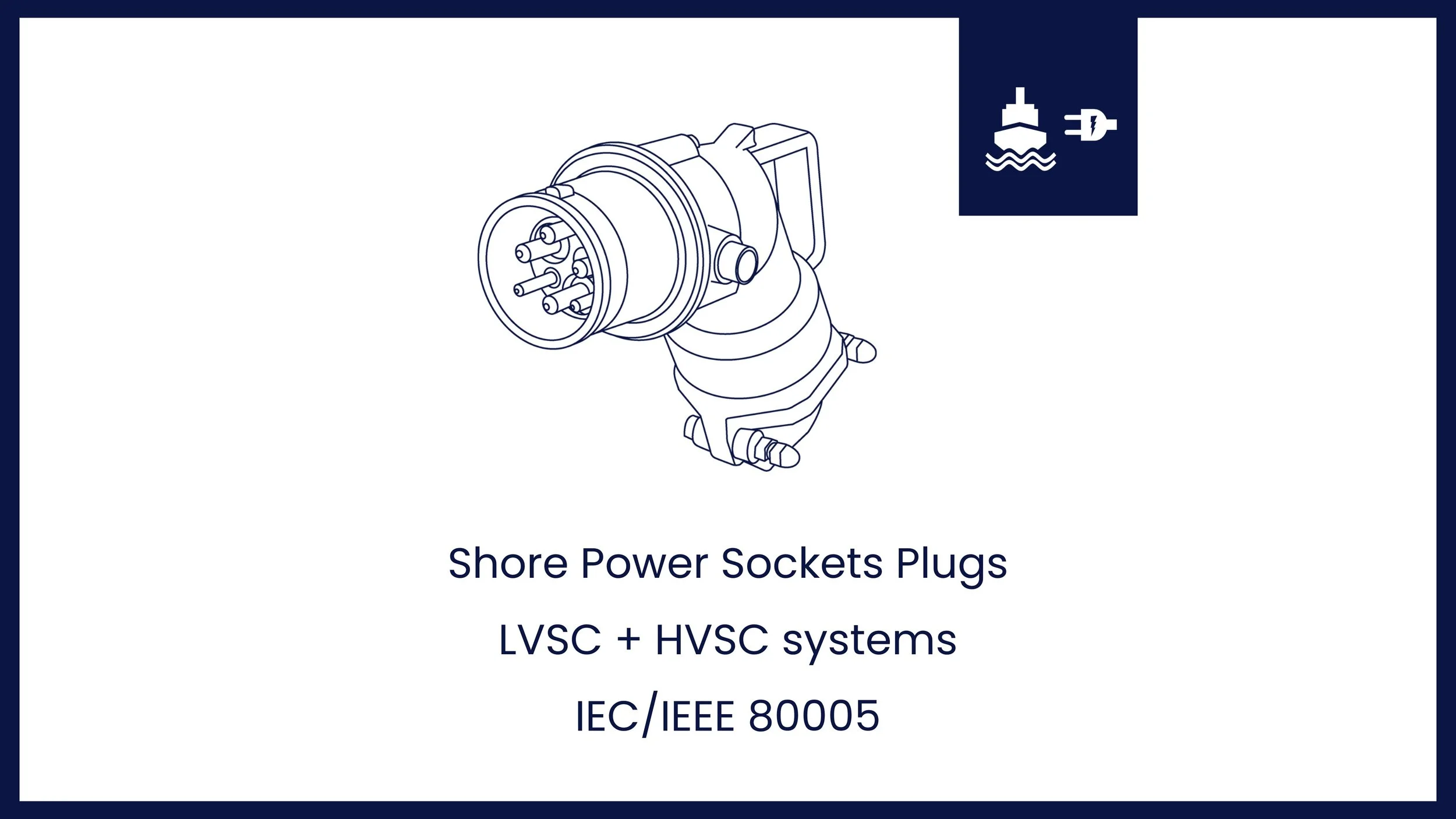
IEC/IEEE 80005 is the main standard for shore power. This standard categorically divides shore power plugs and sockets into low voltage shore connection systems (LVSC < 1 MVA) and high voltage shore connection systems (HVSC > 1 MVA). LVSC systems are governed by IEC/IEEE 80005-3 for operability and IEC 60309-5 for dimensions. HVSC systems are governed by IEC/IEEE 80005-1 for operability and IEC 62613-2 for dimensions.

Renewable Energy Units - Hernieuwbare Brandstof Eenheden - are a Dutch system of certificates based on the EU Renewable Energy Directive (RED). Under the system, parties that produce liquid fossil fuels for transport have an obligation from the government to purchase REUs. Per year, €1 billion REUs are traded in the Netherlands. You can earn between 4.5 and 18 eurocents per kWh ‘sold’ to a vessel, for example when using shore power.

This is a case study on the ‘Skoon Skipper’, a general cargo large Rhine vessel, with an average of 40 [kW] power demand while moored to which a shore battery is applied. Batteries can help you comply with shore power regulations where no infrastructure exists with limited to no CAPEX investments. CAPEX is €0 for this case study as the battery pack is rented at an estimated €400 dayrate. Purchase cost for battery pack are approx. €350.000. This case study is powered by our preferred partner Skoon.

The N997 has two propulsion motors with a capacity of 900 [kW] each and a total battery capacity of 50 [MWh] - best estimate currently available. The 120 meter long ship has a fully electric drive, can carry up to 700 TEU and is able to swap battery packs en route. The vessel is designed for Chinese inland and coastal waters, covering over 600 nautical miles of routes on the Yangtze River.

Maersk’s Stillstrom and North Star have signed a Memorandum of Understanding (MoU) to accelerate the adoption of offshore charging and vessel electrification technologies for Offshore Support Vessels (OSVs) in the offshore wind sector. Offshore charging hubs will enable the vessels to recharge their battery systems using wind energy while in the field.
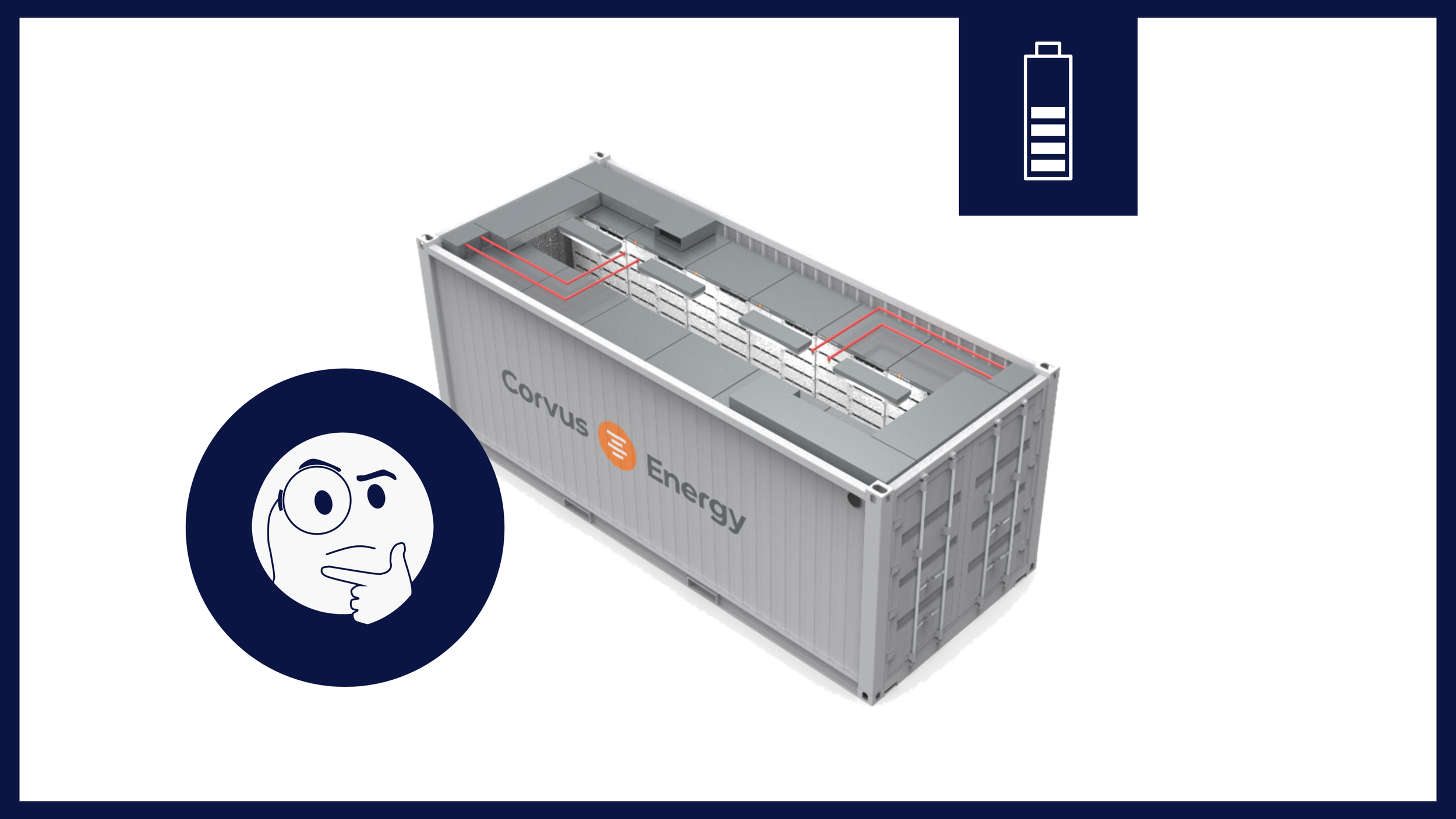
The Corvus BOB (Battery On Board) is a standardized, class-approved, modular battery room solution available in 10-foot and 20-foot ISO high-cube container sizes. The complete system comes with battery, monitoring system, HVAC , TR exhaust, plus firefighting and detection system. The plug and play battery room simplifies integration into any system integrator’s power management system on board a ship. The battery cells have passive thermal runaway protection, and are type-approved according to DNV.

During the lunch and learn, current forum Director Syb ten Cate Hoedemaker will exchange knowledge and experience from the usage of batteries within the shipping and offshore industries. You will learn which batteries will suit your vessel, plus discover the costs and payback for different operational modes. Which battery suits your vessel, your needs, your operational profile? This is the key question discussed in this lunch and learn with Maritime Battery Forum.

This is a case study on how to decarbonize a tug by making it full electric. It is an homage to Damen’s electric tug ‘Sparky’. In practice, fully electrifying a vessel means to install a - very large - battery pack, in this case at least 3 MWh. This would also be the largest cost component, outweighing switchboard modifications, inverter and other electrical equipment. Cost reductions in OPEX/dayrate are high, between 50% to 90% in extreme cases.

Damen’s first all-electric harbour tug, the RSD-E Tug 2513, is a high-powered tug with 70-tonnes bollard pull, capable of manoeuvring even the largest vessels. It can undertake two or more assignments before being recharged, which takes just two hours. The battery pack size is 2,800 kWh, resulting an approximately 1,400 kW of charging power required. The battery pack is design for the vessel’s 30 year lifetime.

Ports are the start and end of every vessel’s journey. Because of this, onshore power supply undeniably plays a big part of the decarbonization of the maritime industry. Creating a network of onshore power supply in ports around the world is a tremendous but necessary task. One of the companies providing the technology for this transition is ShoreLink. Watch this lunch and learn by Shorelink, presented by Levan Chikviladze, to learn more.

This blog provides an overview of (European/Dutch) shore power sockets and plugs. They are categorized into three groups, depending on a ship’s installed power: below 100 kW, below 2.000 kW and above 2.000 kW. Especially below 100 kW, there is great diversification of plugs which would merit the creation of a ‘universal adapter’ for ships. Share your experience to help other shipowners.

In February 2022, Skoon placed a battery system on Noordereiland for the Port of Rotterdam to boost shore power for stationary inland vessels. Addressing power shortfalls, the battery supported shore power cabinets, successfully delivering up to 63A without tripping fuses, benefiting both vessels and residents. This solution also enabled supplying power to larger ships, aligning with sustainability goals and showcasing potential expansion across the city center.
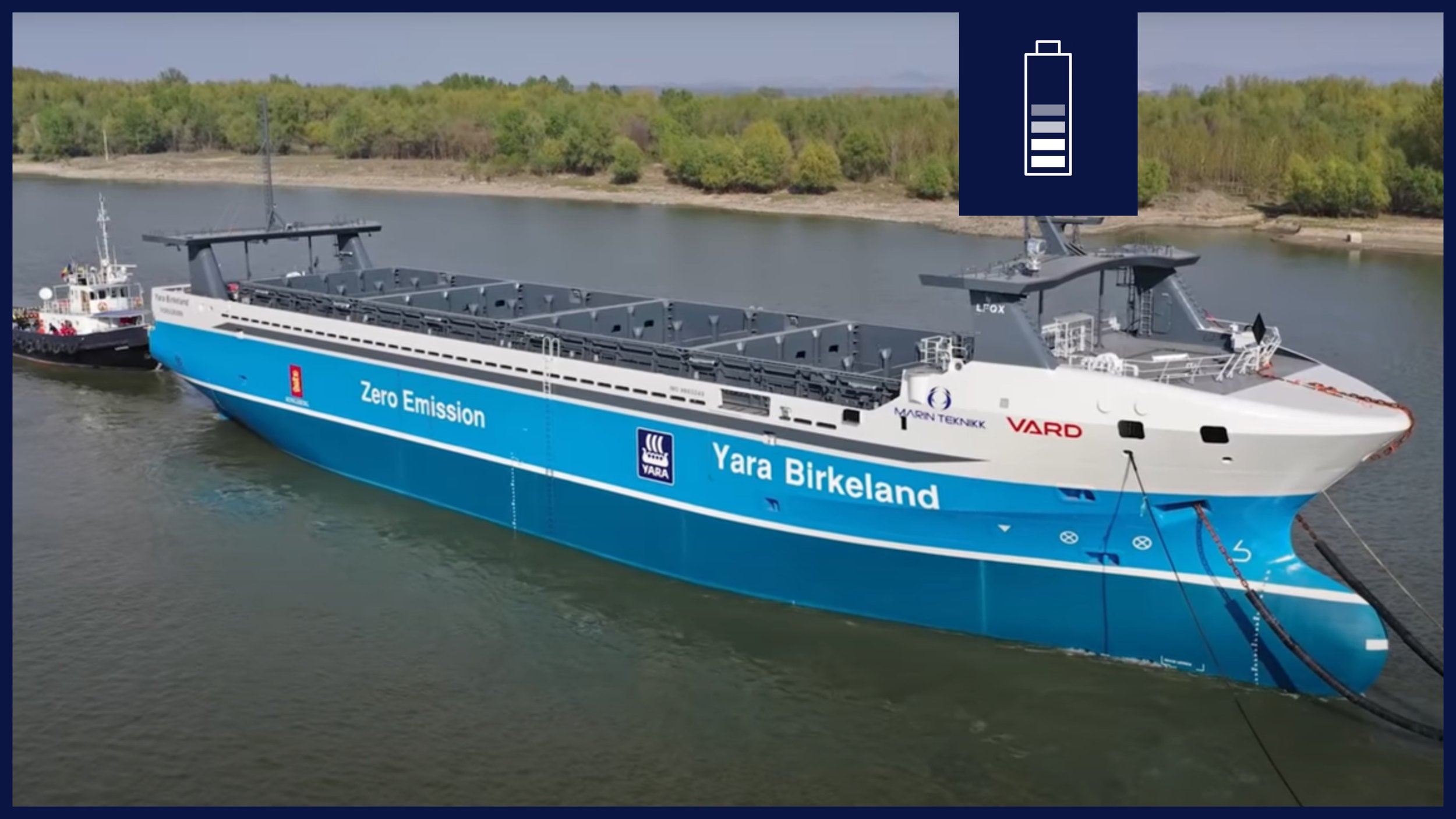
Dubbed ‘the Tesla of the seas’ this fully-electrified, fully-autonomous cargo ship is already making waves. The Yara Birkeland has a 7MWh battery, charged by Norwegian hydro power. She can carry a little over 100 containers. The ship cost about 25 million dollars, about three times a “conventional ship price”, but will nonetheless cut OPEX for Yara by 90%.

The Alfa Lift, a new build heavy lift crane vessel owned by Offshore Heavy Transport, is on track to enter service by early 2022. The vessel features a 3,000 ton main crane, 10,000+ m² smart deck which can be fully submerged to a depth of 15 meters and a electric-hybrid battery system made by Kongsberg.

In 2020, Wärtsilä was awared a combined contract by Therma Marine Inc. (TMI) for a barge-mounted 54 MW / 32 MWh energy storage system. The power barge consists of ten Wärtsilä GridSolv Max systems, supported by the the GEMS energy management platform. Total costs of this power barge are estimated at €16M for the battery packs plus €8.1M for the power equipment excluding engineering and installation.

Northvolt has partnered with Hydro to establish a first-of-its-kind battery recycling facility. The recycling plant will come online in 2021 in Fredrikstad, outside of Oslo. At commissioning, the Hydro Volt plant will have initial capacity to process more than 8,000 tonnes of batteries per year – roughly the equivalent of 23,000 moderately sized EV batteries. Northvolt is aiming for 50% recycled material in new cells by 2030.

The price of a lithium-ion battery pack used to power an electric vehicle has plunged 89% in the last decade, from $1,100 per kWh to $137 per kWh. Marine batteries still cost significantly more, ranging between $800-$1,000 per kWh for retrofits to $500 per kWh for newbuilds. DNV expects the cost of batteries to be reduced by 56% by 2025.

Volkswagen-backed QuantumScape is building a solid-state lithium metal battery for electric vehicles that it says should allow a car to charge to 80% of its full capacity in 15 minutes.

Designed in 2017 and launched in 2018, Hurtigreten has launched two new hybrid cruise vessels, the MS Roald Amundsen and MS Fridjof Nansen, that can sail fully electric for up to 30 minutes. Not only will it significantly reduce emissions, a hybrid system is also extremely quit. Arctic exploration has never been so much fun!

Using Tesla’s announcements of Battery Day, DNV expects the cost of batteries to be reduced by 56% (measured in $/kWh) by 2025. Worldwide, DNV predicts that passenger electric vehicles are likely to start outselling their internal combustion engine counterparts from 2032 onwards. In North America, Europe and China this will take place well before 2030. Tesla’s success could spill over from land-based vehicles into adjacent transport sectors. On the assumption of success on all fronts, Tesla will achieve the critical battery density for short range electric airplanes – namely 400 Wh/kg with high cycle life.

Solid-state lithium batteries do not have a traditional anode, but one made up of pure lithium when charged.
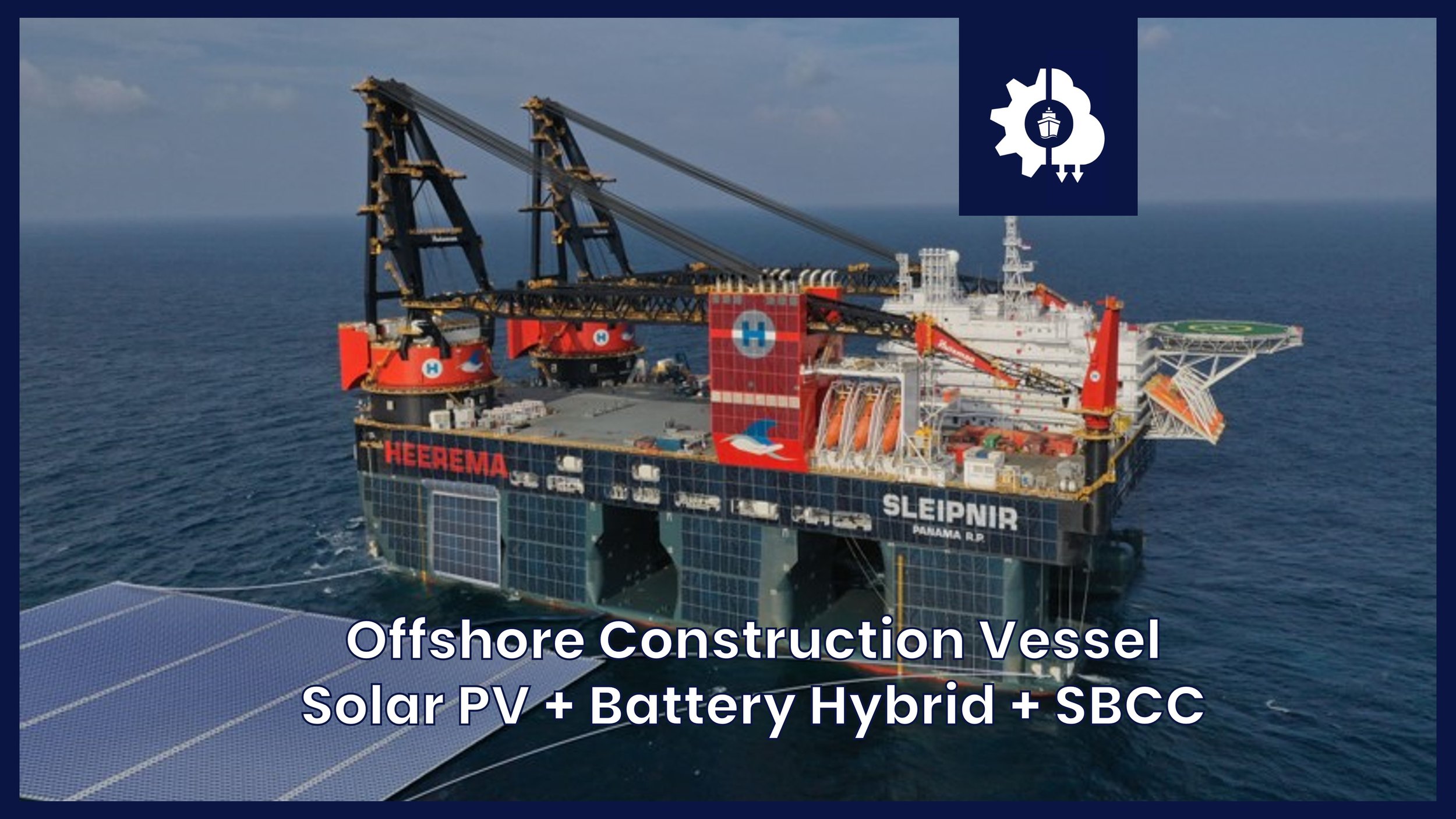
This blog sketches a vision on how to convert the largest crane vessel in the world - Sleipnir - owned by Heerema Marine Contractors, to a zero-emission vessel. Several promising carbon reduction measures are combined which are technically viable and based on matured technology including electrification and BES, solar panels, synthetic fuels, CCS and possibly hydrogen combustion.

Maersk and Ørsted are building a ‘power-buoy’ that can act as both a mooring point and a charging station for vessels, enabling them to turn of their engines when laying idle.

Helen Czerski went to Wendeburg in Germany to see if it really is possible to recycle the materials in vehicle batteries. She shows how this new and rapidly growing industry is developing and coming up with some interesting results, with lithium-iron batteries being economically recycled up to 70% (91% including graphite). Please send this to all the people you know who say 'what about when we throw all these fancy batteries into landfill.
This case study determines what it takes to remove the fuel from a cruise ship, comparing a 50,000 GT ocean cruise ship with an inland river cruise vessel. The ocean cruise ship obtains a payback of around five years, but only with very cheap electricity, battery prices of $150 per kWh, long-term financing and the sale of FuelEU surplus (many caveats!). The river cruise ship is technically easier, but is extremely challenging to make a business case for because EU ETS and FuelEU do not apply to it.