Case studies | Find examples on decarbonization measures, costs and regulations to benchmark your business case
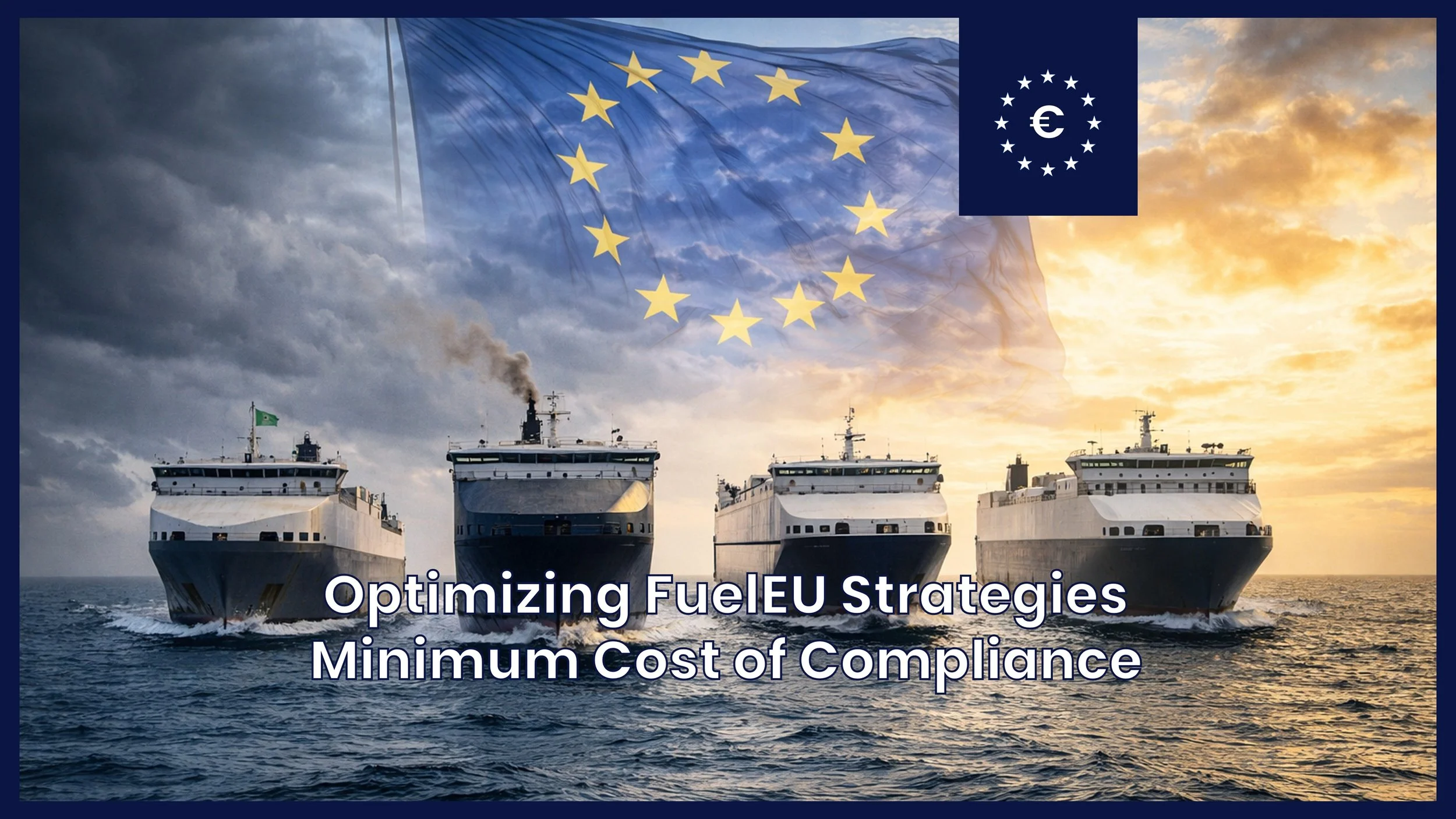
Optimising FuelEU compliance strategy for minimum cost - penalty, pooling, or biofuels?
This case study compares three compliance strategies for FuelEU (paying the penalty (business as usual), buying pool credits from a third party, and blending biofuels) for a representative 4-ship fleet over 2026–2040. Results show that pooling and biofuels both beat business as usual by 6–7%, but it is a coin toss on which is better for you. The outcome is highly sensitive to B100 price and tightens structurally in favour of biofuels after 2030, making this a tipping-point question rather than a one-off choice.

FuelEU pooling with full electric chemical tanker
This case study determines the effects of pooling a fully electric small-sized chemical tanker with similar type vessels in the context of FuelEU Maritime. The results show that a single electric ship can include up to 69 ships in its pool in 2025, each ship consuming 2,555 mT MDO per year.

Optimize your FuelEU Maritime pooling strategy
The FuelEU Maritime pooling mechanism is complex. The FuelEU Pool Tool makes it simple. Use this tool to compare cost impact of FuelEU, EU ETS and the fuel itself when pooling up to ten different ships. Blend different quantities of fuel, change fuel properties and compare the cost outlook until 2050 to make your very own FuelEU pooling strategy.