Technical Review OPS HVSC Container Terminal
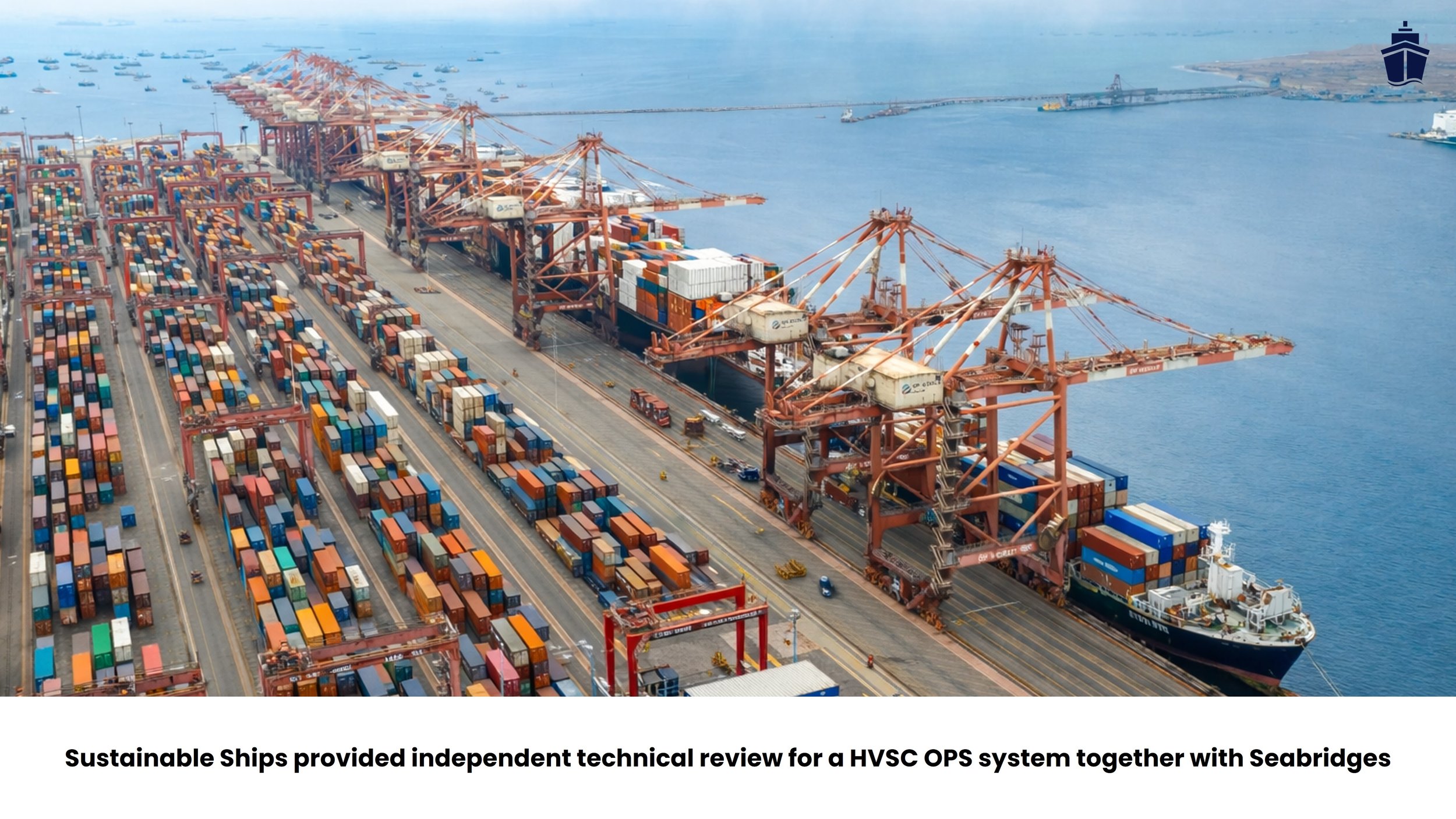
Seabridges subcontracted Sustainable Ships to provide independent technical review for a HVSC OPS installation at a container terminal
Project summary
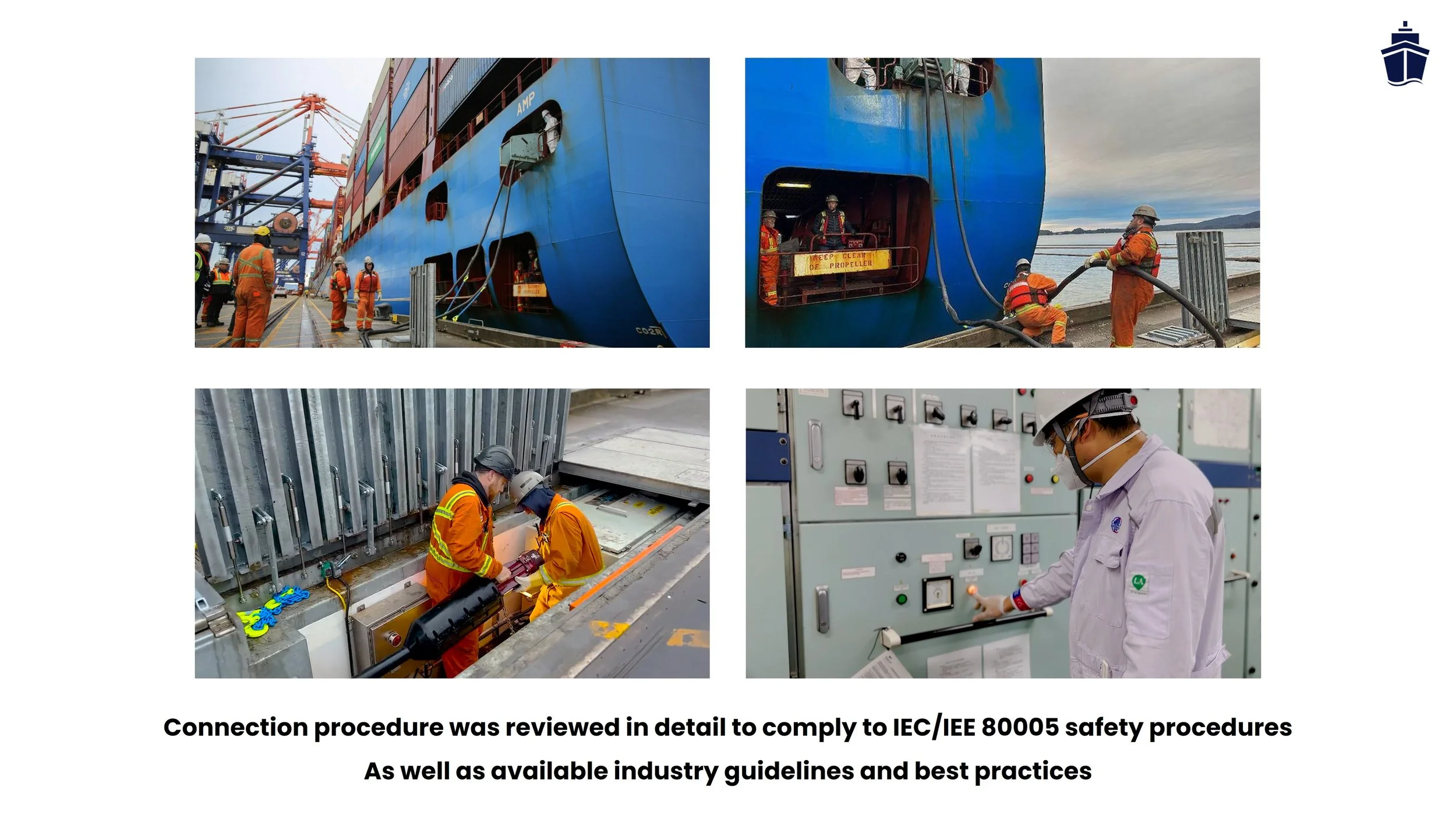
A container terminal operator engaged Seabridges to support the development of a high-voltage shore power installation (HVSC) for large container vessels. Given the technical complexity and strategic importance of the project, an independent review of the proposed design was required to support informed decision-making and reduce implementation risk. Sustainable Ships provided this technical review, covering both ship-side and shore-side aspects of the HVSC system.
Within the wider project team, Seabridges acted as project management and coordination partner, while Sustainable Ships provided independent technical review of the shore power concept, system architecture, and integration approach. The independent review supported the terminal operator in validating the technical architecture of the shore power installation and ensuring alignment with international HVSC standards and operational requirements for large container vessels.
Key highlights
Client was a terminal operator, project was executed together with Seabridges
Sustainable Ships provided verification on HVSC architecture, compliance with IEC/IEEE 80005 standards, communication and system integration review
Ship types considered were Large Panamax+ containerships (HVSC 8 MW) plus corresponding onshore infrastructure
Technical details
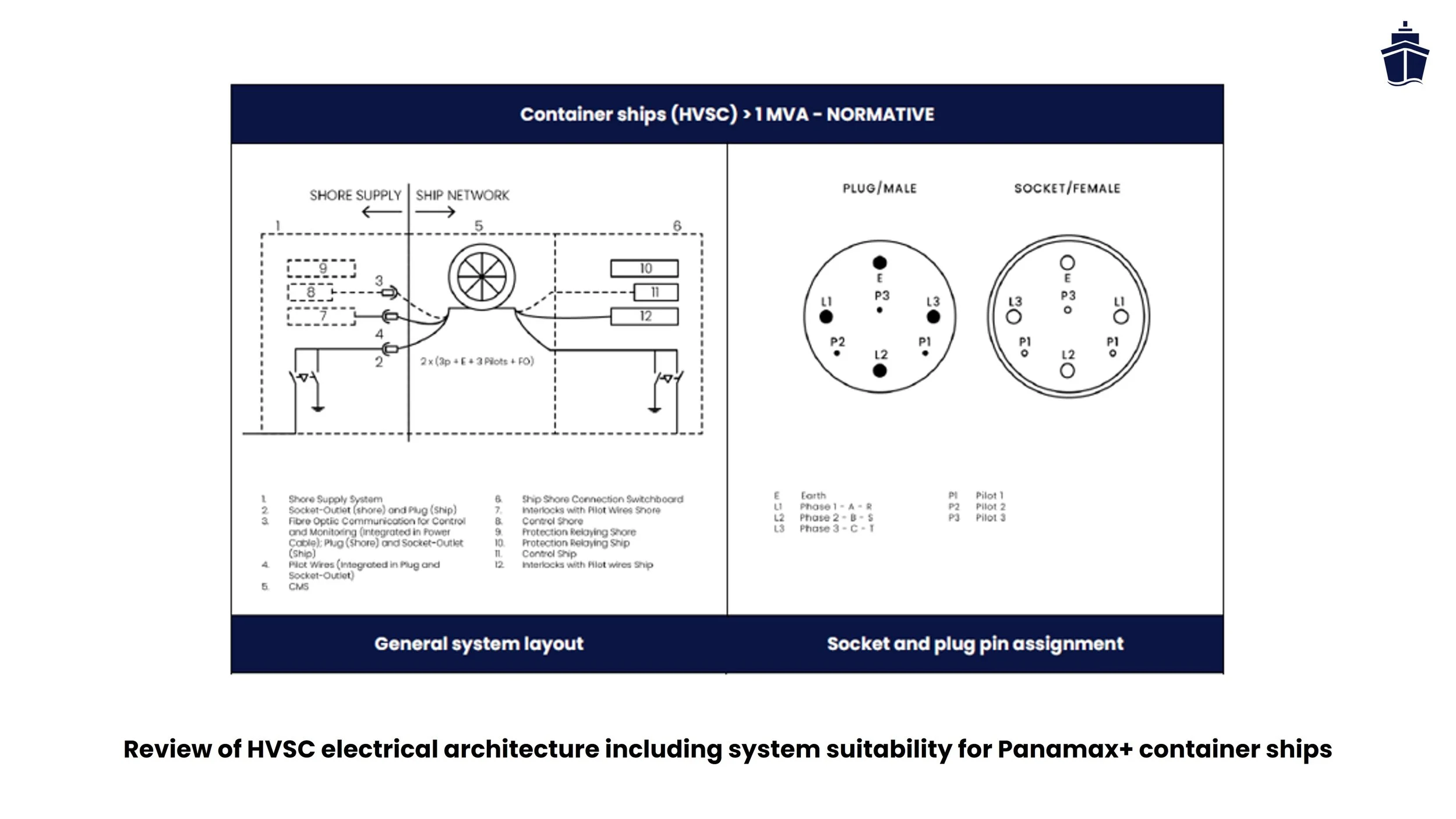
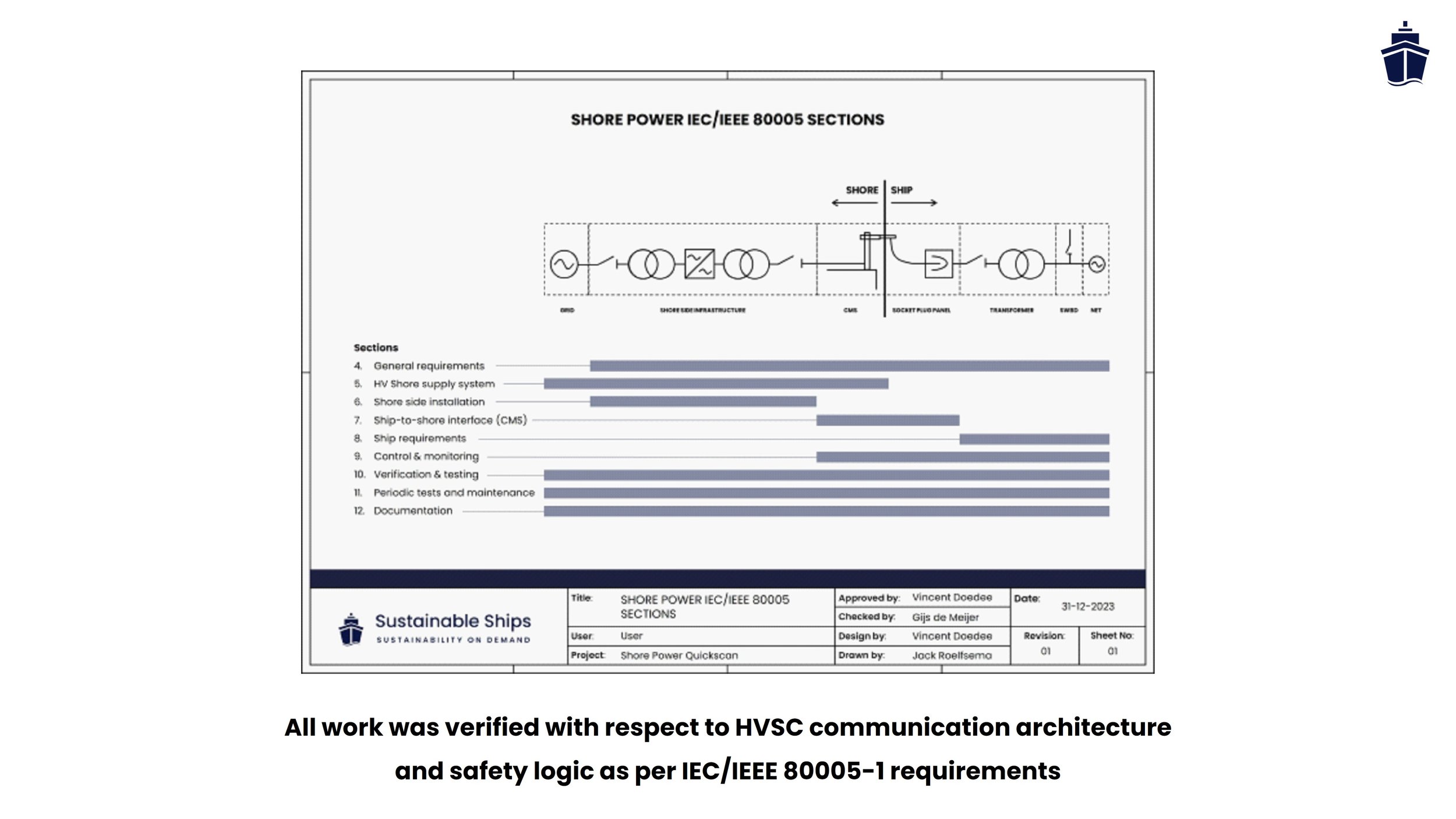
The review covered the proposed high-voltage shore connection architecture for large container vessels, including the selected 6.6 kV / 60 Hz design basis, the overall suitability of the voltage level and power envelope for the intended vessel segment, and the allocation of functions between onshore substations, shore pits, cable interfaces, and vessel-side systems in line with IEC/IEEE 80005-1 requirements.
Sustainable Ships assessed the electrical backbone of the installation, including integration with the existing terminal grid, step-down transformation from the utility connection to the shore-side supply, the distribution concept toward multiple connection points, and the extent to which the proposed redundancy and functional separation were appropriate for safe and reliable terminal operations.
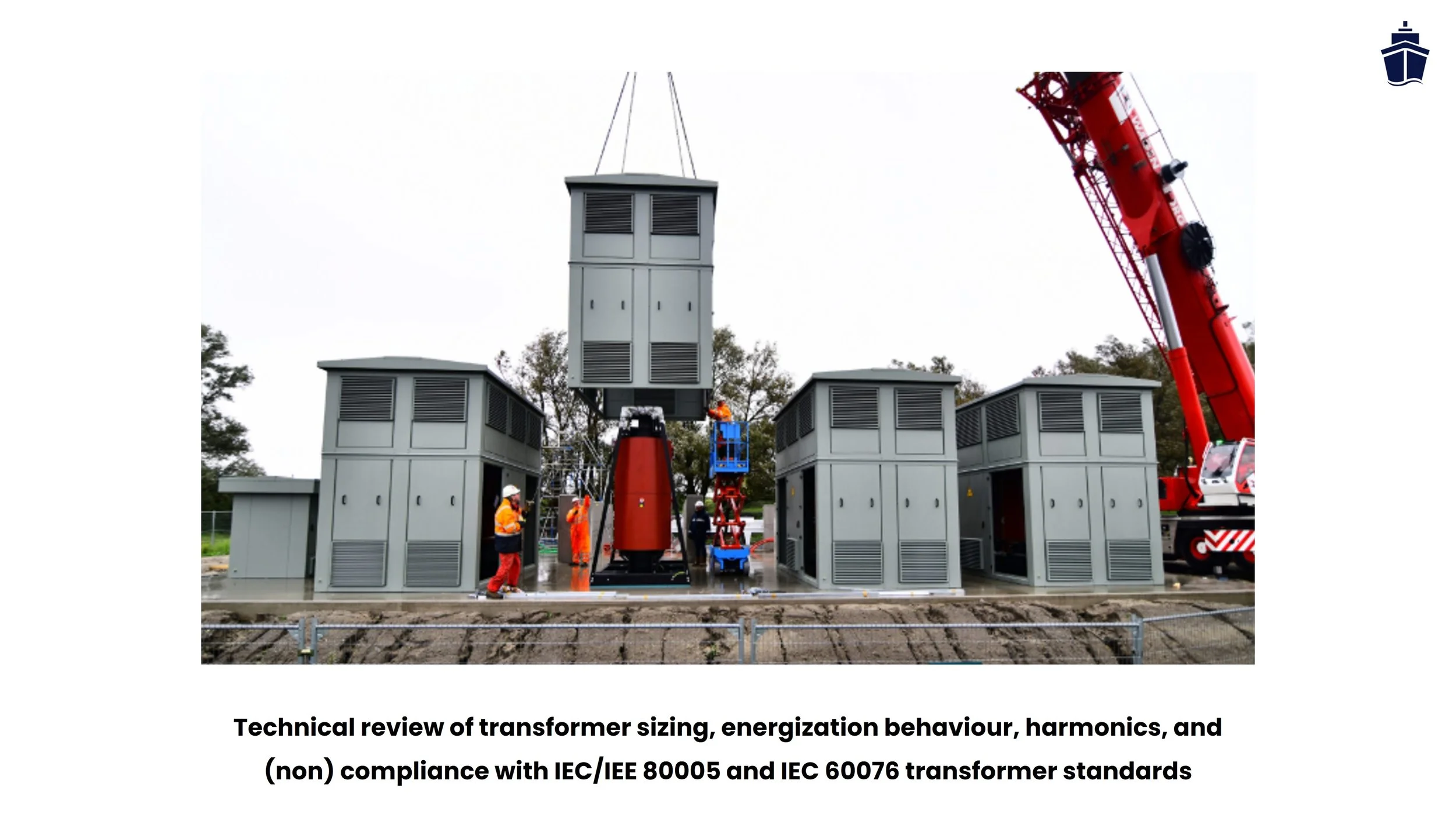
A dedicated review was performed on the transformer application, focusing on energization duty, magnetization and inrush behaviour, harmonic suitability, K-factor assumptions, and the neutral earthing philosophy, as this was identified as the principal unresolved technical risk requiring further clarification and mitigation before acceptance.
The communications and control review examined the safety philosophy of the ship–shore interface, including start and restart logic, fibre-optic communication architecture, synchronization behaviour, switching test requirements, and the separation between hard-wired safety interlocks and digital control signals, with the objective of confirming that communication loss or malfunction would always result in a safe non-energized state.
The review also addressed protection coordination and operational safety systems, including equipotential bonding, breaker interlocks, pilot-line functionality, emergency shutdown logic, DC backup supply, SCADA/PLC supervision, and commissioning-related verification items, resulting in an independent design verification report with compliance observations, residual risk assessment, and implementation recommendations benchmarked against IEC/IEEE 80005-1 and relevant IEC 60076 transformer standards.